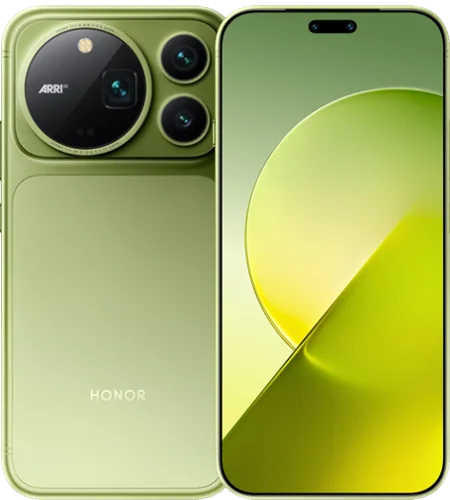
Two 200MP cameras in a 6.37-inch phone: the HONOR Magic 9 challenges the idea that serious zoom photography needs a giant flagship.
A smaller phone no longer has to mean a lesser camera. The HONOR Magic 9 is built around that proposition, pairing a 6.37-inch flat display with two 200MP rear cameras. The more interesting question is not how many pixels HONOR can fit inside it, but whether the second 200MP sensor changes the pictures people actually take.
The first minute of the supplied Magic 9 video is unusually direct. The presenter takes the phone out of its box, admires its bright finish and immediately turns to the cameras. There is little interest in synthetic benchmarks or a checklist of software tricks. Instead, the video asks viewers to look at distant signs, building textures and portraits photographed in daylight and near dusk.
That emphasis makes sense. Most compact flagship buyers already expect fast processors and good screens. What they have traditionally been asked to give up is the camera hardware reserved for oversized premium phones. The standard Magic 9 tries to overturn that trade-off.
The main camera uses a 200MP sensor measuring 1/1.4 inches, with an f/1.9 lens and optical image stabilization. Beside it sits a 200MP periscope telephoto camera with a 1/1.56-inch sensor, f/2.6 aperture, optical stabilization and 3.5x optical zoom. A 50MP ultrawide completes the rear system.
These are the standard Magic 9 specifications, not the larger Magic 9 Pro Max configuration. HONOR's published product specifications confirm the two 200MP cameras, and the 3.5x telephoto is particularly important: this is not simply a second high-resolution camera that produces the same perspective as the first.
The distinction becomes obvious when photographing a street scene. A wide camera tells the story of the whole setting. A telephoto isolates the sign across the road, a person farther down the pavement or an architectural detail that would otherwise disappear into the background. Both cameras having substantial resolution potentially leaves room for cropping after the shot.
But the pixel count is only one ingredient. Lens quality, stabilization, sensor readout, exposure choices and image processing all determine whether fine details survive. A 200MP label is not a guarantee of 200 million distinct pieces of usable information, particularly in dim light.
The presenter compares main-camera and telephoto photographs taken from the same position. He directs attention to signs, buildings and distant silhouettes, then zooms into the images to illustrate the retained detail. It is a persuasive way to demonstrate the intended benefit of the camera pairing because the framing changes while the shooting position stays fixed.
Still, this is a curated sample reel, not a controlled comparison. The video does not supply downloadable original files, matched shots from rival phones or a repeatable low-light test. Viewers can judge the appearance of the images on screen, but not the full-resolution output, processing artifacts or consistency across difficult scenes.
That distinction is worth keeping. The footage suggests a phone designed to make zoom photography a normal part of everyday use. It does not yet prove that its telephoto camera outperforms every competing flagship.
The 3.5x optical lens is likely to be most useful for street details, travel photographs and portraits taken from a comfortable distance. More extreme digital zoom settings may be convenient, but they should not be confused with the optical performance of the lens.
For all the attention given to distant signs, the video becomes more interesting when it switches to people. The presenter shows daylight portraits and flash-assisted images around twilight, drawing attention to skin tone, subject separation and the mood of the scene.
These are sensible criteria. A good portrait should not look as though the person has been cut out and pasted over a blurred background. Hair edges, glasses, shoulders and uneven lighting can expose aggressive processing. Equally, preserving atmosphere after sunset is difficult: a phone can brighten the face so much that the evening disappears.
The selected samples look designed to make a point about ease of use. The presenter argues that users should be able to open portrait mode and obtain an appealing result without learning lighting technique. That is a compelling goal, although the edited video cannot establish how often the phone succeeds on the first attempt.
The standard Magic 9's dedicated telephoto camera gives HONOR a strong starting point for portraits. A longer perspective can produce more flattering framing without forcing the photographer close to a subject. Whether the processing preserves natural skin texture is a question for more extensive testing.
The video also highlights a 55MP front camera built around a square-format sensor. It is an unusual feature with a straightforward use case: capture once, then decide later whether the image needs to be horizontal or vertical.
Think about a group selfie that has to serve two purposes. One version belongs in a portrait-oriented social story; another is needed for a landscape thumbnail or a wider post. A square capture provides a more flexible starting composition than a frame committed to one orientation.
The presenter demonstrates the idea by describing crops for different platforms. That is more useful than another promise of flawless AI selfies. It addresses a real workflow problem for people who regularly publish images.
There is a trade-off, of course. Cropping removes pixels and can alter the composition. A square sensor does not guarantee that every subject will remain in frame after a wide crop, nor does it establish superior dynamic range or autofocus. Its value lies in flexibility, not magic.
The video transcript refers to Leica cameras and LogC3, but that terminology is muddled. HONOR's documented imaging collaboration for the Magic 9 family is with ARRI, the professional cinema-camera company associated with LogC3 workflows. Treating the transcript's Leica references as a confirmed HONOR partnership would mislead readers.
Cinema-inspired color tools can be valuable for creators who want consistent footage or greater control in editing. They do not automatically make a smartphone's video look like footage from a dedicated cinema camera. Sensor size, optics, motion handling, rolling shutter and sound still matter.
The more useful way to read HONOR's positioning is as an ambition: put some of the flexibility of professional image workflows into a phone that remains convenient to carry. The supplied video spends far more time showing photographic samples than testing professional video files, so it cannot settle how well that ambition works in production.
The Magic 9's 6.37-inch flat display is a deliberate choice in a market where premium phones often grow larger with every generation. The video emphasizes narrow bezels, one-handed handling and a glass back that flows toward the raised camera area. The presenter also points out that the camera module sits high enough to reduce the chance of fingers obstructing it when shooting horizontally.
That last detail deserves attention. Camera ergonomics are not just about the shutter button or software interface. A phone can have excellent optics and still be awkward to hold without covering a lens. The reviewer's observation is practical, even if comfort will depend on hand size and case choice.
Compact is also relative. Published specifications put the Magic 9 at approximately 209g, so this is a smaller-screen flagship rather than an exceptionally lightweight phone. Buyers who want a genuinely featherweight device should not confuse the two.
The bright yellow finish shown in the video adds personality to an otherwise serious camera-focused design. Color preference is subjective, but it helps distinguish the phone from the restrained black-and-silver styling common in the premium segment.
The standard Magic 9 has an 8,000mAh typical battery, according to HONOR's published specifications. It supports 80W wired and 50W wireless charging. This is a striking capacity for a device with a 6.37-inch display, and it addresses another familiar compromise of smaller phones: less internal room for a large battery.
It would be tempting to translate that number directly into a claim of two-day or three-day endurance. The supplied video does not perform a battery rundown, however, and capacity alone cannot predict runtime. Display brightness, camera use, mobile reception and software behavior all influence the outcome.
For a phone marketed around photography, endurance under camera load matters more than a standby figure. Long sessions of image processing, zoom shooting and video recording can be demanding. Those are the tests that would tell us whether the battery advantage is as meaningful as the specification suggests.
HONOR pairs the Magic 9 with Qualcomm's Snapdragon 8 Elite Gen 5 platform. The phone's 120Hz OLED display, flagship processing hardware and modern connectivity reinforce its position as a high-end device rather than a camera experiment built on midrange foundations.
Yet the supplied video offers no measured frame rates, thermal testing or software longevity assessment. Those omissions do not diminish the camera-first story; they simply define the limits of this particular source.
A buyer who mainly wants a smaller phone for portraits, travel and everyday photography may find the camera system the deciding factor. Someone who spends hours gaming should wait for sustained-performance data before assuming the compact body can dissipate heat as effectively as a larger one.
| Feature | HONOR Magic 9 |
|---|---|
| Display | 6.37-inch flat OLED, 120Hz |
| Processor | Snapdragon 8 Elite Gen 5 |
| Main camera | 200MP, 1/1.4-inch sensor, OIS |
| Telephoto | 200MP periscope, 3.5x optical zoom, OIS |
| Ultrawide | 50MP |
| Selfie camera | 55MP, square-format sensor |
| Battery | 8,000mAh typical |
| Charging | 80W wired, 50W wireless |
| Starting configuration | 12GB RAM / 256GB storage |
| China launch price | CNY 4,999 for 12GB / 256GB |
Specifications are based on HONOR's China product listing and launch coverage. Prices, configurations and availability can differ by region.
The most obvious customer is someone who wants the reach of a proper telephoto camera without carrying a giant phone. The combination of 200MP main and 200MP zoom cameras is unusual in a 6.37-inch handset, and the square selfie sensor adds a genuinely different form of flexibility.
Travelers who photograph architecture, parents who often shoot people from a little distance, and creators who need multiple social-media crops may all appreciate the design. They should also understand what the video does not establish: consistency in low light, natural skin processing, moving-subject autofocus and long-term battery life.
Buyers who care more about gaming temperatures, software support in their region or the lowest possible weight will need additional evidence before choosing it.
The HONOR Magic 9 is interesting not because 200MP is a large number, but because HONOR has given the standard model two cameras that serve different photographic purposes. The main camera covers the everyday scene. The periscope reaches into it. The square selfie sensor lets a single composition work across different formats. Together, those choices form a coherent idea of what a camera-first compact flagship should be.
The supplied video illustrates that idea through a handful of attractive images and practical design observations. It is strongest as a visual first look, not as definitive proof of camera supremacy. Its soundtrack-heavy second half adds little measurable evidence beyond the opening demonstration.
The Magic 9 deserves attention because it challenges the assumption that serious zoom photography belongs only on the biggest flagship. Whether it deserves a purchase depends on the unedited photos, difficult lighting and real-world endurance tests still to come.
Belliste analyzed the supplied HONOR Magic 9 video, focusing on the unboxing, sample-photo presentation, portraits, selfie framing and ergonomics. The video's later music montage is not treated as additional testing. Technical specifications were cross-checked against HONOR's published Magic 9 product listing and independent launch coverage.
This is an editorial analysis of a third-party demonstration, not an independent Belliste hands-on review. No camera performance scores or battery results have been invented.
Sources: HONOR China product specifications; GSMArena launch coverage; Notebookcheck launch report; video: https://www.youtube.com/watch?v=ScWE5iKgGHU
Yes. HONOR lists a 200MP main camera and a separate 200MP periscope telephoto camera with 3.5x optical zoom. A 50MP ultrawide completes the rear camera system.
The standard Magic 9 has a 3.5x optical periscope telephoto camera. Higher digital zoom figures do not represent additional optical magnification.
The standard HONOR Magic 9 uses a 6.37-inch flat OLED display with a 120Hz refresh rate.
HONOR lists an 8,000mAh typical battery, with 80W wired and 50W wireless charging. The supplied video does not independently test endurance.
The 55MP square-format front camera provides flexibility to crop a captured image for portrait, square or landscape sharing formats.
The supplied Magic 9 video does not include a controlled comparison with the Pro Max. The two models have different camera hardware, so a reliable verdict requires matched real-world tests.