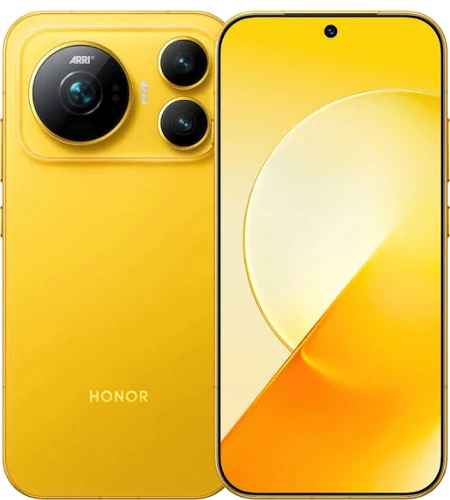
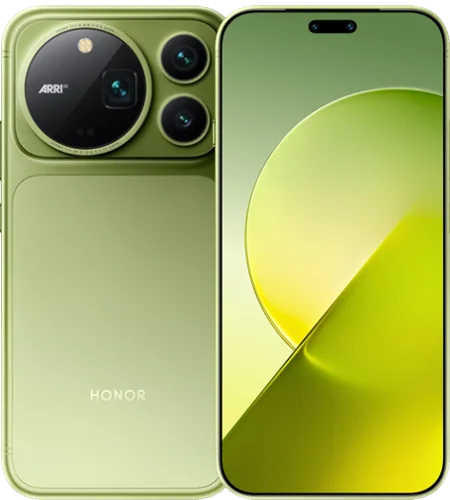
The regular HONOR 600 keeps much of the Pro's everyday experience. The real upgrade starts when you zoom, play demanding games or record at 4K/60fps.
The most useful moment in this HONOR 600 vs HONOR 600 Pro comparison arrives during the camera discussion. After explaining the Pro's additional tracking features, the reviewer says the cheaper phone still kept up when photographing his family. An upgrade that looks important in a camera menu did not create the difference he expected in his everyday pictures.
That observation makes the buying decision more interesting than a list of missing features. The regular HONOR 600 gives up a telephoto camera, flagship-class processing and wireless charging, yet retains much of what its owner will see and touch every day. The question is how often those omissions will interrupt something you want to do.
The supplied video provides useful first-hand comparisons of photography, gaming and handling. Belliste has combined those observations with checked specifications and regional product information. We have not tested these devices ourselves, and the reviewer's experiences below should be read as his findings rather than our measurements.
Imagine photographing a child on a stage from several rows back. Walking closer is not an option, and an ultrawide camera is no help. This is where the Pro's extra lens becomes a purchase argument rather than an extra circle on the back.
The HONOR 600 Pro has a 50MP telephoto camera with 3.5x optical zoom. The standard HONOR 600 has no dedicated telephoto camera. It relies on its main camera and processing when you zoom in. A high-resolution main sensor provides room to crop, but it does not make the two camera arrangements equivalent at longer distances.
In the video, the reviewer sees the difference become particularly obvious around 6x to 7x. The Pro retains pleasing detail, while images from the regular phone become visibly rougher. He also notices differences in color as the cheaper phone pushes its digital zoom further. These are observations from his samples, rather than a guarantee that every scene will produce the same gap.
The important point is the distance at which the advantage becomes useful. You do not have to care about HONOR's maximum digital-zoom claims to benefit from a proper telephoto camera. Holiday architecture, a performer across a room and a pet that will not let you approach are ordinary situations where more reach helps.
The video makes a sensible distinction between having an extreme zoom option and wanting to use it. The Pro can go much farther digitally, but the reviewer advises stopping well before its advertised limit. Buying it for useful medium-distance photographs is easier to justify than buying it for a maximum magnification number.
At ordinary distances, the reviewer's verdict is much less favorable to spending more. He describes the two phones as producing very similar main-camera photographs, with bright rendering and rich colors. His experience photographing family members is especially relevant: the standard model performed well despite lacking some of the Pro's additional capture tools.
Both specification sheets list a 200MP main camera with a 1/1.4-inch sensor and optical stabilization, alongside a 12MP ultrawide. Shared headline hardware does not guarantee identical output, because processing and capture behavior also matter. In this comparison, however, the reviewer does not find a compelling everyday image-quality divide from those cameras.
He is also more critical of the shared look than a simple “good camera” verdict would suggest. He prefers the shadows and contrast he gets from some Vivo and Xiaomi rivals, and finds HONOR's default rendering rather bold. A more natural color option is available, but choosing the Pro does not automatically escape the aesthetic he dislikes.
That is valuable context for buyers who rarely zoom. If your photographs are mostly people around a table, food, landscapes and occasional group shots, this video gives you little reason to assume the Pro will transform them. Its premium buys a more versatile camera system, while the regular model preserves much of the main-camera experience.
The reviewer notices slightly slower capture when taking several pictures in quick succession on the HONOR 600. Someone photographing an unpredictable moment may care about that even when the final images look similar. It is a smaller distinction than the missing telephoto, but one that a megapixel comparison would overlook.
The Snapdragon 7 Gen 4 in the HONOR 600 and Snapdragon 8 Elite in the Pro serve different performance ambitions. For messages, browsing and ordinary navigation through the interface, the reviewer finds both smooth. The Pro's extra power does not announce itself every time an application opens.
Demanding games expose it more clearly. With Wuthering Waves pushed to high graphical settings, he notices occasional obvious frame-rate drops on the regular phone. The Pro delivers the more enjoyable experience in his comparison. Players who regularly ask a phone to run elaborate open worlds have a practical reason to pay for the faster processor.
There is a tradeoff in his observations: the standard HONOR 600 remains cooler during an extended session, while the Pro becomes warmer. That does not establish a comprehensive thermal ranking. The transcript includes no matched temperature readings, frame-time traces or standardized sustained-performance test. It does show why “faster” and “more comfortable to hold” deserve separate consideration.
For an occasional player, adjusting a game's settings may be an acceptable compromise. For someone spending hours in demanding games, accepting visible drops immediately after buying a new phone may be harder to tolerate. The distinction is frequency and expectation, rather than whether the cheaper phone can launch the game at all.
The reviewer ultimately recommends the Pro to committed mobile gamers and sees much less need for it among other users. That conclusion fits his observations more closely than claiming everyone will notice the chipset gap.
One reason the regular HONOR 600 makes such a strong case is that the Pro does not reserve a larger or sharper display for itself. Both have a 6.57-inch AMOLED screen, a 2728 × 1264 resolution and a refresh rate up to 120Hz. You do not have to buy the more expensive model simply to avoid a visibly lower-resolution panel.
The reviewer finds outdoor visibility, nighttime dimming and speaker output very similar. He likes the narrow borders and rounded corners, although he also finds both phones slippery. His handling impressions suggest that moving down to the standard model does not mean accepting an obviously less polished object.
There are smaller differences. In his software, the Pro offers an ambient-light color adjustment feature absent from the regular handset. Someone particularly attentive to screen color may appreciate that, but it is a narrow distinction beside the shared display fundamentals.
Two details in the transcript need careful handling. Its dimming-frequency wording is garbled; the published specification is 3,840Hz PWM, rather than the number the automatic transcript appears to suggest. And the reviewer's observation that Netflix did not report HDR support came from a pre-launch context. HONOR's current UK page advertises Netflix HDR certification, so that early observation should not be presented as a confirmed permanent limitation.
Display comfort also remains personal. High-frequency dimming and night settings are reasons to try the devices, rather than a promise that either will eliminate eye strain.
The reviewer describes excellent endurance from both review units. His reported gaming runtime is a little over five hours on the regular HONOR 600 and just under five and a half hours on the Pro. Those figures suggest a fairly close result in his use, rather than a large endurance reward for buying the more expensive phone.
They should not be treated as a controlled efficiency measurement. The transcript does not establish that both phones rendered identical workloads at identical frame rates, brightness and temperatures. A faster phone can consume power differently while delivering more performance. The comparison is useful as an account of practical use, with those limits.
There is also a regional qualification. The video discusses 7,000mAh models, matching HONOR's global advertising. The UK product pages list 6,400mAh for both phones, and European buyers should check the version they are purchasing. The review units' endurance does not automatically transfer to a smaller-battery model.
Both support 80W wired charging and 27W reverse wired charging. The meaningful distinction is that the Pro adds 50W wireless charging, while the regular HONOR 600 does not offer wireless charging.
For someone with a charging pad beside the bed or on a desk, losing that routine may be irritating every day. Someone who always plugs in a cable loses little. The Pro's maximum wireless speed also requires suitable equipment; an existing generic charging pad should not be assumed to deliver it.
The regular model therefore preserves much of the battery proposition while changing how you can recharge. That makes charging habits a better guide than assuming “Pro” means much longer life.
A buyer can be satisfied with the regular model's photographs and still want the Pro for recording. The standard HONOR 600's rear-camera specification tops out at 4K at 30fps, while the Pro adds 4K at 60fps. That gives the more expensive model a concrete advantage for people who prefer smoother motion or work with a 60fps timeline.
It is not an automatic image-quality victory in every setting. A higher frame rate changes the recording choices available; it does not guarantee better footage in dim light. The source comparison does not provide the controlled video testing needed for a universal verdict.
The telephoto camera can matter here as well. Recording a distant subject with the Pro offers another framing option, while the regular phone must rely on digital enlargement. For buyers who film performances, travel details or subjects they cannot approach, this can be more valuable than the still-photo headline.
The reviewer also discusses a dedicated night-video mode on the Pro, but regards its restricted recording format as limiting its usefulness. His assessment is a helpful reminder that an additional mode can exist without becoming a reason to spend more.
The supplied transcript contradicts itself briefly over selfie HDR support. This article does not turn that unclear line into a buying claim. The firmer distinction is rear-camera 4K at 60fps and the Pro's additional lens.
The software experience is broadly shared. Both launch with Android 16 and MagicOS 10, and the reviewer finds much of the customization, security interface and AI feature set familiar across the pair. He identifies a handful of Pro extras, but nothing that changes the character of the everyday interface.
He also describes a six-year update commitment for both. Buyers should confirm the applicable policy with HONOR in their own market rather than assume that a support promise discussed in one region applies to every imported version. Software longevity is worth checking, but the video does not make it a reason to choose one of these two models over the other.
Price comparisons need the same attention to detail. Match storage capacity, warranty coverage, seller and any bundled charger before deciding how large the upgrade cost really is. The standard model is not limited to a universal starting capacity: GSMArena also lists a 128GB version, while the configurations discussed in the video begin higher. Local availability determines which comparison is relevant.
A useful way to judge the premium is to name the first thing you would do differently with the Pro. Photograph farther-away subjects? Play demanding games at higher settings? Record at 4K/60fps? Keep using a wireless charger? Each is a defensible answer. Hoping that all your ordinary photographs and applications will suddenly improve is less well supported by this comparison.
The standard HONOR 600 is the more convincing choice for someone whose phone use revolves around the main camera, messaging, media and occasional gaming. The reviewer's experience suggests that it preserves the parts of the Pro most people encounter constantly, including the screen, much of the camera rendering and strong battery endurance.
The Pro earns its place when you regularly go beyond those shared strengths. Its telephoto camera supplies an option the cheaper device cannot reproduce simply by having a high-resolution sensor. The processor, 4K/60fps recording and wireless charging reinforce that argument for more demanding users.
The most revealing result is still the family-camera observation. The reviewer expected the Pro's extra features to help more, yet found the regular phone capable enough for those moments. That puts the burden of proof on the upgrade: buy the Pro because you need its reach, performance or charging options, and save the money when the shared experience already covers your day.
The Pro adds a Snapdragon 8 Elite processor, a 50MP 3.5x telephoto camera, rear-camera 4K recording at 60fps and 50W wireless charging. The regular model uses Snapdragon 7 Gen 4, lacks a dedicated telephoto and wireless charging, and records rear-camera 4K at up to 30fps.
Both list a 200MP main camera with a 1/1.4-inch sensor and optical stabilization. The source reviewer finds their everyday main-camera results very similar, although capture behavior and processing can still differ.
The reviewer finds it smoother in demanding games at high settings. The regular HONOR 600 remains suitable for less demanding play, but shows more noticeable frame-rate drops in his comparison.
No. Wireless charging is a Pro feature, rated up to 50W with compatible equipment. Both phones support 80W wired charging.
The global versions advertised by HONOR have 7,000mAh batteries, while the UK pages list 6,400mAh for both models. Check the specification for the market and version you are buying.
The regular HONOR 600 is a reasonable choice for everyday main-camera family photographs, based on the reviewer's experience. The Pro is more useful when you often photograph from farther away and need its dedicated telephoto camera.