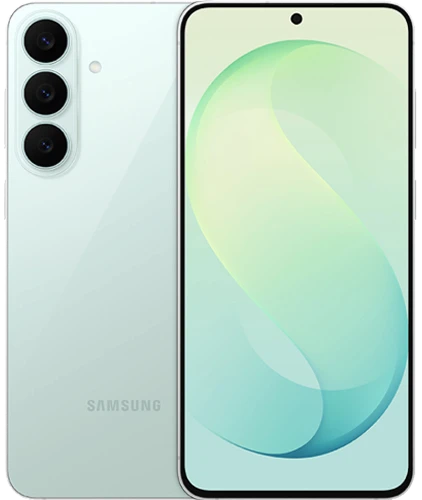
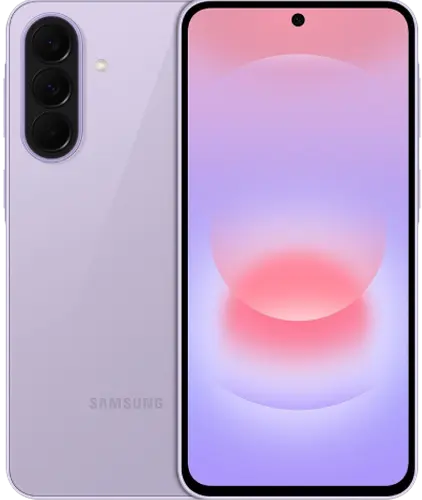
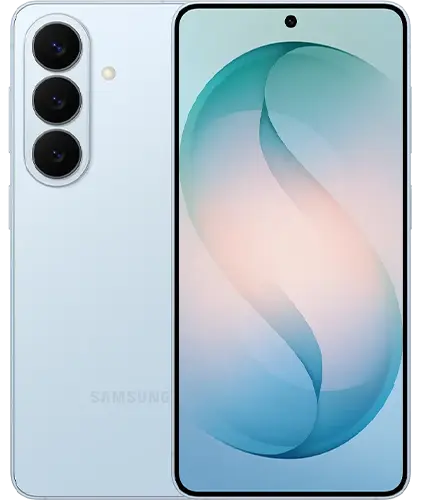
The Galaxy S26 FE looks like the kind of Samsung phone that should be easy to recommend: a large OLED screen, three rear cameras, IP68 protection and a familiar One UI experience without the flagship price tag. But the closer you look, the less straightforward the upgrade becomes.
In the supplied hands-on testing, the Exynos 2500 delivers stronger sustained performance and the unchanged 4,900mAh battery lasts noticeably longer than the Galaxy S25 FE's. Those are meaningful improvements. Yet Samsung has also downgraded the USB port, removed wired video output and made the speakers quieter.
Then there's the higher launch price. The S26 FE is a better phone in some of the ways that matter most, but it has become a harder purchase to justify.
This review is Belliste's editorial analysis of the linked third-party video review and its reported measurements. Belliste did not independently perform the tests.
A Familiar Design With a Glossier Finish
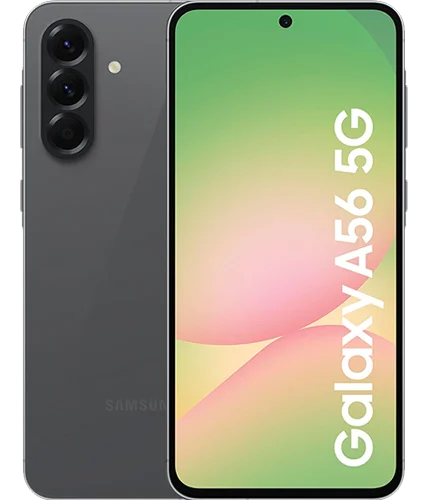
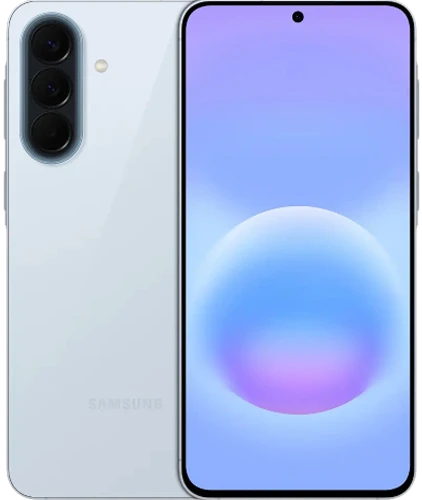
Samsung hasn't redesigned the Fan Edition formula. The Galaxy S26 FE still looks and feels like a premium Galaxy, with IP68-rated dust and water resistance and a construction that the reviewer describes as largely unchanged.
The visible differences are modest: the finish is now glossy rather than matte, and a transparent-looking camera island links the rear lenses.
Neither change fundamentally alters how the phone works. The glossy finish may appeal to buyers who like a shinier appearance, but it doesn't give existing S25 FE owners a strong reason to upgrade.
That familiar look sets the tone for the whole phone. Some of the biggest changes are hidden beneath the surface, while several things you interact with every day have barely moved forward.
Display: Still Good Outdoors, but Not Brighter
The S26 FE has a 6.7-inch OLED display, 1080p-class resolution and a 120Hz refresh rate. Those are the same broad display specifications as the previous Fan Edition.
In the reviewer's automatic-brightness test, the screen exceeded 1,250 nits. That's usable outdoors, although the reviewer notes that significantly brighter competitors exist. The measurement also showed little meaningful progress over the S25 FE.
Samsung uses an optical fingerprint reader beneath the display rather than the ultrasonic technology found in some more expensive Galaxy models. The reviewer reports that it works well.
This is a capable screen, not a headline upgrade. For streaming, scrolling and everyday apps, it should feel familiar to S25 FE owners. Anyone hoping Samsung had raised the FE's display to a new level of brightness or sharpness will be disappointed.
Exynos 2500: The Upgrade Is More Than a Benchmark Number
The Galaxy S26 FE switches to the Exynos 2500, a processor previously used in the Galaxy Z Flip7.
Benchmark scores improve over the S25 FE, but the reviewer highlights something more important: sustained performance is substantially better.
A short benchmark can make a processor look fast even when it slows down after a few minutes of heavy work. Sustained performance captures how well a phone maintains speed as heat builds up. That matters in demanding games, longer video-editing sessions and other workloads that don't end after 30 seconds.
The review doesn't provide enough numerical benchmark detail in the supplied transcript to justify publishing invented scores or percentages. The supported conclusion is narrower and more useful: peak performance improves, and the phone handles extended loads better than its predecessor.
For buyers who use their phone heavily, this is one of the S26 FE's most credible upgrades.
Battery Life Is the Best Surprise
The 4,900mAh battery capacity hasn't changed, but the measured endurance has.
In the reviewer's standardized testing, the S26 FE achieved an Active Use Score approaching 15 hours, considerably better than the S25 FE. That result is particularly notable because Samsung hasn't increased the battery size.
It suggests that changes to the chipset, software or power management are doing useful work. The video doesn't isolate which factor accounts for the gain, so attributing it entirely to the Exynos 2500 would go beyond the evidence.
There's a limit to the celebration: the reviewer also points out that competing phones can last considerably longer. The S26 FE improves within Samsung's own lineup without becoming a class-leading endurance phone.
Still, this is the kind of improvement owners will notice more readily than a cosmetic redesign. Fewer anxious checks of the battery percentage are worth more than another camera-ring flourish.
Charging: 69% in Half an Hour
Samsung retains 45W maximum wired charging. The reviewer's measured results were:
0–69%: 30 minutes
0–100%: 1 hour and 8 minutes
Charging is a little faster than before, but not dramatically so. The 15W wireless charging specification is also unchanged, and the phone still lacks built-in alignment magnets.
These figures make the S26 FE reasonably convenient to top up during the day. They don't establish it as a charging leader, especially when rivals compete aggressively on charging time.
Two Downgrades That Deserve More Attention
Samsung's compromises are easiest to miss if you only compare processor, screen and camera specifications.
First, the S26 FE's USB-C port uses USB 2.0, whereas the S25 FE had USB 3.2. That is a backward step for wired data transfer.
Second, wired video output is no longer available. According to the review, Samsung DeX therefore works wirelessly rather than through a direct wired display connection.
For someone who occasionally transfers photos to a laptop, USB 2.0 may be an inconvenience rather than a dealbreaker. For someone who connects a phone to a monitor for work, presentations or desktop-style use, losing wired output changes what the device can do.
This is why the downgrade matters more than the spec-sheet label suggests. A faster processor cannot compensate for a physical connection that no longer supports your workflow.
The stereo speakers also measured quieter than those of the S25 FE, although the reviewer found their sound quality broadly similar and still solid.
None of these issues ruins the phone. Together, they undermine the assumption that every new generation is an upgrade in every direction.
Cameras: Familiar Hardware, Mixed Results
The S26 FE retains the same rear-camera arrangement seen in the two preceding generations:
Main: 50MP
Telephoto: 8MP with 3x optical zoom
Ultrawide: 12MP
That doesn't automatically mean the photos are bad. In the reviewer's tests, the main camera performs well in daylight, and 2x images are respectable. The ultrawide is reasonably competitive for the class.
The 8MP 3x telephoto is the weak link. It provides genuine optical reach, which is useful, but its results are modest. The reviewer is especially critical of its soft, noisy footage in low light.
Night photography brings another trade-off. Default images can look subdued, while the optional Night mode sometimes pushes processing too far. Neither approach is consistently ideal.
Selfies are a brighter spot: the reviewer describes them positively.
Video: 8K on the Main Camera, but Zoom Falls Behind
The main rear camera can record up to 8K at 30fps, while the ultrawide and telephoto top out at 4K at 30fps in the review.
Daytime video from the main camera looks good, and the ultrawide performs better than its modest specifications might suggest. The telephoto falls behind.
At night, the pattern persists: the main camera remains useful, the ultrawide is serviceable, and telephoto footage becomes soft and noisy.
The important distinction is between versatility and quality. Samsung gives buyers several focal lengths, but they aren't equally capable. A three-camera setup shouldn't be judged solely by the number of lenses on the back.
One UI 9 and Android 17: Familiar Samsung Software
The review identifies One UI 9 running on Android 17. The reviewer sees a few refinements but no major change in the day-to-day interface.
That familiarity is not necessarily a problem. Samsung users who already like One UI won't need to relearn their phones, and buyers coming from another Galaxy should feel at home quickly.
The supplied video does not establish a detailed software-update schedule or test specific new AI features. Rather than inventing a feature list, the more defensible conclusion is that the S26 FE delivers a recognizable modern Samsung software experience.
Galaxy S26 FE vs Galaxy S25 FE: What Actually Changed?
Design: The S26 FE moves to a glossy finish and linked camera island; the overall construction remains familiar.
Chipset: The S26 FE uses Exynos 2500 and posts stronger benchmarks, with a particularly notable improvement in sustained performance.
Battery capacity: Both use 4,900mAh, but the S26 FE lasts considerably longer in the reviewer's active-use testing.
Charging: Up to 45W wired and 15W wireless remain; measured charging is slightly faster.
Display: Both offer a 6.7-inch 120Hz OLED in the same general resolution class, with no meaningful brightness gain in the review.
Rear cameras: The 50MP main, 8MP 3x telephoto and 12MP ultrawide hardware remains familiar.
USB and display output: The S26 FE drops to USB 2.0 and loses wired video output.
Speakers: The S26 FE is quieter in the reviewer's measurements.
Price: The S26 FE launches at a higher price, though the supplied transcript doesn't state a precise amount.
If you own an S25 FE and are satisfied with its endurance and performance, the S26 FE is not an automatic upgrade. You'd be trading away useful wired capabilities for better battery life and sustained speed.
The Price Problem—and Two Alternatives Worth Checking
The reviewer ends with a clear warning: the S26 FE is not especially competitive at its launch price.
That's a more consequential criticism than the familiar camera hardware. Buyers can forgive incremental upgrades when the price is right. They have less reason to do so when the new phone costs more while dropping features that were present last year.
The video points viewers toward the Galaxy S25 FE and Poco X8 Pro Max as alternatives worth considering. It doesn't provide enough price or side-by-side test data in the supplied transcript to declare either one the definitive winner.
A discounted S25 FE is especially relevant if wired DeX, USB transfer speed or simply spending less matters more to you than the improved battery result.
The S26 FE becomes easier to recommend if its street price falls. Until then, comparison shopping is the sensible move.
Verdict: Better Where It Counts, Worse Where It Shouldn't Be
Samsung deserves credit for improving the S26 FE's sustained performance and battery endurance. Nearly 15 hours in the reviewer's Active Use test, from the same 4,900mAh capacity, is a real achievement.
But a new phone shouldn't quietly lose wired display output and faster USB transfers without those omissions counting against it. The quieter speakers and largely unchanged camera system add to the sense that Samsung has made selective improvements rather than a convincing across-the-board upgrade.
The Galaxy S26 FE is a capable Samsung phone at an unconvincing launch price.
Buy it if the battery gains and sustained performance matter to you, and the price has fallen enough to make the trade-offs acceptable. Otherwise, the S25 FE and similarly priced alternatives deserve a serious look.
Source: [Galaxy S26 FE video review](https://www.youtube.com/watch?v=orMUTXIEkpw). Test results and judgments are attributed to the video reviewer, not to independent Belliste testing.