OnePlus 16 Launches With 9,000mAh Battery, 185Hz Display and 200MP Camera
Published:
OnePlus 16 launches in China with a 9,000mAh battery, 185Hz gaming display, 200MP main camera and 100W charging.
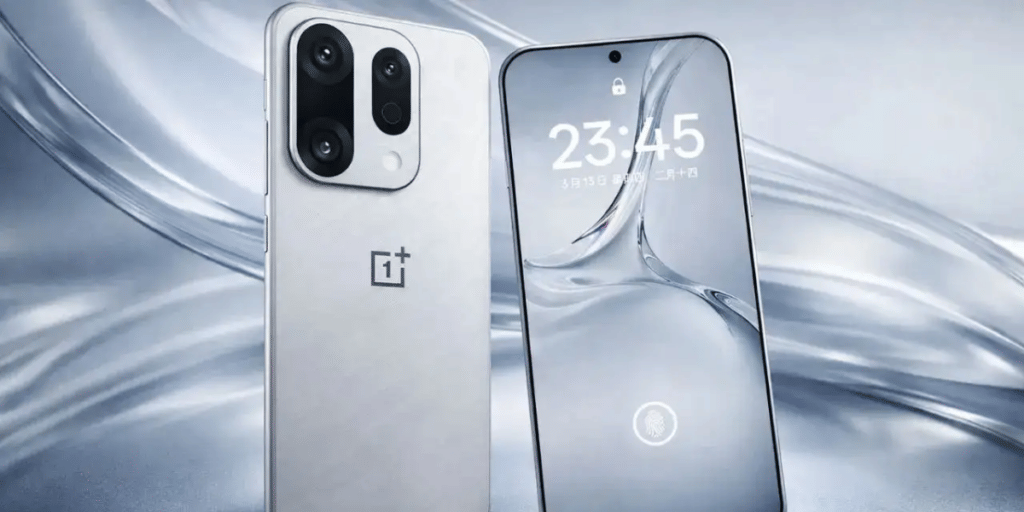
The OnePlus 16 has launched in China with a 9,000mAh battery, Snapdragon 8 Elite Extreme Gen 6 processor, 200MP main camera and a display that can reach 185Hz in supported games. The specifications are ambitious, but limited international availability is an important part of the buying decision.
OnePlus 16: Key Specifications
| Feature | OnePlus 16 |
|---|---|
| Display | 6.78-inch OLED, 2772 × 1272 |
| Refresh rate | 1–165Hz adaptive; up to 185Hz in supported games |
| Processor | Snapdragon 8 Elite Extreme Gen 6 (2nm) |
| RAM | 12GB / 16GB |
| Storage | 256GB / 512GB / 1TB |
| Main camera | 200MP, OIS |
| Ultrawide | 50MP |
| Telephoto | 50MP, 3x optical zoom |
| Selfie camera | 50MP |
| Battery | 9,000mAh typical equivalent; 8,780mAh rated equivalent |
| Charging | Up to 100W wired, 50W wireless |
| Software | Android 17 with ColorOS 17 |
| Launch market | China |
A 9,000mAh Dual-Cell Battery
The standout upgrade is battery capacity. The OnePlus 16 uses two 4,500mAh silicon-carbon cells, with a 9,000mAh typical equivalent and an 8,780mAh rated equivalent, according to the official specifications. The OnePlus 15 has a 7,300mAh battery, so the new model's typical capacity is about 23% higher.
OnePlus lists 100W wired and 50W wireless charging. Its thickness ranges from approximately 8.45mm to 8.55mm, depending on finish. The battery size is notable for a conventional flagship body, although capacity alone cannot predict real-world endurance. Brightness, gaming, signal strength and software efficiency still matter.
Snapdragon 8 Elite Extreme Gen 6
The phone runs Qualcomm's Snapdragon 8 Elite Extreme Gen 6, built on a 2nm process, paired with LPDDR5X Ultra RAM and UFS 4.1 storage. The China configurations reach 16GB RAM and 1TB storage.
The hardware is designed for demanding gaming and multitasking, but specifications do not establish sustained frame rates or thermal behavior. Those require controlled independent tests.
185Hz in Games, 165Hz Elsewhere
The 6.78-inch OLED has a 2772 × 1272 resolution. Its adaptive refresh rate covers 1–165Hz in normal supported use; 185Hz is reserved for supported games.
This distinction matters when comparing display figures. A maximum gaming refresh rate does not mean the entire interface operates at 185Hz.
A 200MP Main Camera
The rear system combines a 200MP main camera with OIS, a 50MP ultrawide and a 50MP telephoto with 3x optical zoom. A 50MP front camera completes the setup.
The main-camera resolution is a major specification change, but megapixels alone cannot establish photographic quality. Dynamic range, autofocus, low-light processing and video stabilization need independent evaluation.
Price and Availability
The OnePlus 16 starts at CNY 5,999 in China for the 12GB/256GB configuration, according to launch reporting. Introductory promotions may temporarily lower that price, so they should not be confused with the regular list price.
The phone is aimed at the Chinese market. Reports indicate that no US or European release is planned. International buyers considering imports should check network bands, Google services, language support, warranty coverage and local after-sales support.
OnePlus 16 vs OnePlus 15
The clearest change is the battery: 9,000mAh versus 7,300mAh. The OnePlus 16 also introduces a newer chipset, 200MP main camera and higher maximum refresh rate for compatible games.
Those changes are attractive on paper. For existing OnePlus 15 owners, the upgrade decision should wait for independent battery, camera and sustained-performance comparisons.
Verdict
The OnePlus 16 pairs a particularly large battery with fast charging, high-refresh-rate gaming hardware and an ambitious camera specification. The official figures make it a noteworthy flagship launch.
Availability is the limiting factor. A China-market phone can be less convenient to own and service elsewhere than a locally supported alternative. The OnePlus 16 looks promising on paper, but everyday performance still needs independent testing.
Sources
How big is the OnePlus 16 battery?
The OnePlus 16 has a 9,000mAh typical equivalent dual-cell battery, with an 8,780mAh rated equivalent.
Does the OnePlus 16 support wireless charging?
Yes. It supports up to 50W wireless charging and 100W wired charging.
Does the OnePlus 16 have a 185Hz display?
It reaches 185Hz in supported games; normal adaptive refresh reaches up to 165Hz.
Is the OnePlus 16 available globally?
It launched in China; there is no planned US or European release according to current reports.