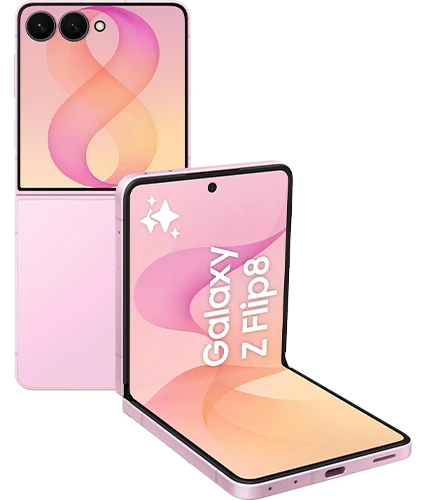
The Galaxy Z Flip8 doesn't look like a radical upgrade. Its cameras are familiar, its battery capacity hasn't changed, and Samsung is asking $100 more than it did for the Flip7. Yet the reviewer in the linked video, after several weeks with the phone, describes something harder to communicate in a spec sheet: this is a noticeably nicer Flip to carry and use.
The question isn't whether Samsung has made a better folding phone. It has made a thinner, lighter one with a more useful cover screen. The question is whether those improvements are worth $1,199 for the 256GB version, particularly when the Flip7 may now cost less.
This Belliste review combines analysis of the supplied third-party video with independent editorial interpretation of the design and buying trade-offs. The reviewer conducted the hands-on testing; Belliste did not independently test this device.
Eight Grams Make More Difference Than They Sound
The Flip8 is 6.1mm thick when unfolded, down from 6.5mm on the Flip7. Weight falls from 188g to 180g. These changes look minor written down, but the reviewer says they make the phone appreciably more comfortable in the hand and less noticeable in a pocket.
That is exactly where a clamshell foldable should improve. Its appeal isn't simply that it can close; it's that a full-size smartphone can become a compact object you actually enjoy carrying.
The side-mounted fingerprint reader remains fast and dependable in the reviewer's experience. The speakers are loud, with respectable depth given the compact hardware. The colors shown or mentioned are Cream, Pink, Mint and Graphite.
None of this transforms the Flip8 into a different category of device. It refines the reason people buy a Flip in the first place.
The 4.1-Inch Cover Screen Is the Most Important Upgrade
Samsung enlarged the cover-screen hardware substantially with the Flip7. The Flip8's progress is mostly in what you can do on that 4.1-inch display.
The reviewer demonstrates an app drawer accessed with an upward swipe, a redesigned quick-settings panel and more flexible Now Brief cards. His examples include checking sleep and energy information from a Galaxy Watch without opening the phone.
He also recommends installing MultiStar to make more apps available on the cover screen. That extra step matters. Samsung has made setup easier, but the reviewer still wishes the utility came installed by default.
Messages, photo browsing and navigation are compelling examples of the small-screen workflow. Set a Google Maps route on the inner screen, close the phone and follow turns outside. For short tasks, not unfolding the phone is a feature, not a compromise.
The cover screen is rated at up to 2,600 nits in the video and uses Gorilla Glass Victus 2. The reviewer finds it bright enough in most conditions. Those are useful characteristics, but software flexibility is what makes the screen more valuable than it was a year ago.
The Camera Preview Changes How You Take Selfies
The cover display also acts as a live viewfinder for the rear cameras. That means selfies and self-recorded videos can use the phone's stronger main camera instead of relying exclusively on a conventional front camera.
This is one of the clearest examples of a foldable doing something a standard phone cannot do quite as naturally. The second screen isn't just an information panel; it's part of the camera system.
A 6.9-Inch Main Display, With Familiar Foldable Compromises
Open the phone and you get a 6.9-inch display with an adaptive refresh rate reaching 120Hz. The video cites roughly 400 pixels per inch and up to 2,600 nits of brightness.
The reviewer praises its colors and sharp text. He also notices the raised bezels when swiping near the edges. They are part of the protective construction, but they still affect how the phone feels.
The crease is less visible and less noticeable to the touch than on the Flip7, according to the reviewer. That's especially useful on a clamshell, where your thumb crosses the center of the screen frequently.
Flex Mode remains one of the device's practical advantages. Prop the phone half-open and supported apps can display playback controls or a trackpad. It can also stand on a surface for hands-free photos and video.
A good flip phone is more than a slab that folds in half. Samsung's strongest features exploit the hinge instead of pretending it isn't there.
Durability: Better Engineering Isn't the Same as No Risk
The reviewer says Samsung has improved hinges, screen layers and structural rigidity over successive generations. His own Flip8 showed no issues after a few weeks.
That is reassuring, but it isn't a long-term durability test.
A flexible inner display still demands more care than the glass screen of a conventional smartphone. Fine grit, sharp pressure and rough handling are sensible things to avoid. The reviewer's practical advice is to be cautious around sand and avoid pressing hard on the inner panel.
The honest buying question isn't whether the Flip8 is fragile by definition. It's whether you're comfortable with the different maintenance habits and potential repair considerations of a foldable.
Anyone planning to keep a phone for several years should also check local warranty terms and repair pricing before buying. A few trouble-free weeks can't establish how the hinge or inner screen will age.
Cameras: The Best Feature Is How You Use Them
The rear hardware remains familiar: a 50MP main camera and a 12MP ultrawide. There is no dedicated telephoto camera in the setup described by the reviewer.
He reports good results from both lenses, including consistent color when switching between them and improved processing through Samsung's ProVisual Engine. The main camera's 2x mode works well for portraits and product shots. Beyond roughly 5x, sharpness starts to deteriorate.
That makes the trade-off clear. The Flip8 is a capable everyday camera, but it isn't designed to compete with the zoom flexibility of an Ultra-class phone.
Its folding form is the real differentiator. The cover-screen preview lets you compose higher-quality rear-camera selfies, while the hinge can act as a built-in stand for group photos or self-recording.
The video also demonstrates an AI-assisted framing feature that follows a subject while recording. For a school performance, football match or solo presentation, that can be more useful than another headline megapixel figure.
Video Features That Suit the Form Factor
The reviewer describes recording up to 4K at 60fps, alongside stabilization and horizon-leveling options. Fold the phone partly closed and it can feel like a miniature camcorder.
Those are practical benefits, but they don't erase the missing telephoto lens. If zoom photography matters more than hands-free recording, the Flip8's priorities may not match yours.
Snapdragon or Exynos? Check Your Region
The video says Samsung uses two chipsets depending on market: Snapdragon 8 Elite Gen 5 in markets including the US, China and Japan, and Exynos 2600 in markets including much of Europe, India and South Korea.
The reviewer's unit uses Exynos 2600. He reports smooth split-screen multitasking, high-refresh-rate gaming and Lightroom photo editing, supported by 12GB of RAM.
That is a useful account of real-world responsiveness, not proof that both regional versions deliver identical performance or battery life. The transcript contains no matched Snapdragon-versus-Exynos benchmark or endurance comparison.
Buyers should therefore verify the chipset sold in their country, especially when reading performance results from reviews of a different regional model.
The reviewer also highlights a seven-year software-support commitment. Long support is a genuine advantage, although software longevity and hardware durability are separate questions for a folding phone.
Battery Life: All Day, but Keep a Charger for Travel
Samsung retains a 4,300mAh battery. The reviewer says endurance is slightly better than on his Flip7 and reports finishing ordinary days with around 20% remaining.
That's encouraging, but it reflects one person's use rather than a controlled battery benchmark. Travel days and heavier workloads can still call for a power bank.
Wired charging remains 25W, with the video quoting approximately 55% in 30 minutes. Wireless charging is rated at 15W, and the reviewer also demonstrates reverse wireless charging for Galaxy Buds.
This is adequate, not ambitious, charging for a $1,199 phone. The Flip8's compact design helps explain some compromises, but buyers don't have to ignore them.
The more important lesson from the battery section is that efficiency improvements can matter even when capacity stays the same. Still, anyone who regularly uses navigation, video recording and mobile data for long stretches should treat the reviewer's 20% remaining as an anecdote, not a promise.
Flip8 vs Flip7: Who Should Actually Upgrade?
The Flip8 starts at $1,199 for 256GB, according to the video, which is $100 more than the Flip7's launch price.
Here is what that additional money appears to buy:
A better physical design. The Flip8 is thinner and 8g lighter, a difference the reviewer feels every day.
A more useful cover-screen experience. App access, quick settings and personalized information reduce the need to unfold the device.
A less distracting crease. The reviewer sees and feels it less than on the Flip7.
Refined camera software and solid everyday performance. The hardware story is more incremental, and the camera setup remains familiar.
Slightly better battery endurance in the reviewer's experience. Capacity remains unchanged and charging is still relatively slow.
For a Flip7 owner, that's a difficult upgrade to justify. The previous phone already offers the core clamshell experience, and a discounted price makes it even more appealing.
For someone using a Flip6 or Flip5, or buying a foldable for the first time, the cumulative improvements are more persuasive. The difference in pocket comfort and cover-screen usefulness is more likely to feel substantial.
Verdict: A Better Flip, Not Automatically a Better Deal
The Galaxy Z Flip8 succeeds at the things that make a flip phone distinctive. It is easier to carry, nicer to hold and more capable without being opened. The hinge, cover-screen camera preview and Flex Mode create experiences that ordinary smartphones can't replicate as elegantly.
But it also asks more money for familiar cameras, a 4,300mAh battery and 25W wired charging. The inner screen still needs care, and the two-chipset strategy makes regional comparisons more complicated.
If you already have a Flip7, keep it unless the design refinements solve a specific problem for you. If you're coming from an older Flip or are excited by the clamshell format, the Flip8 is much easier to recommend—provided you've compared its price with discounted alternatives.
The most revealing detail in the video isn't a specification. It's how often the reviewer finds reasons to use the cover screen and enjoy closing the phone. That's the experience Samsung is selling. At $1,199, you should be sure it's an experience you want.
Source: [Galaxy Z Flip8 video review](https://www.youtube.com/watch?v=jV7OjA21-Uc). Firsthand impressions, battery observations and camera judgments are attributed to the video reviewer.