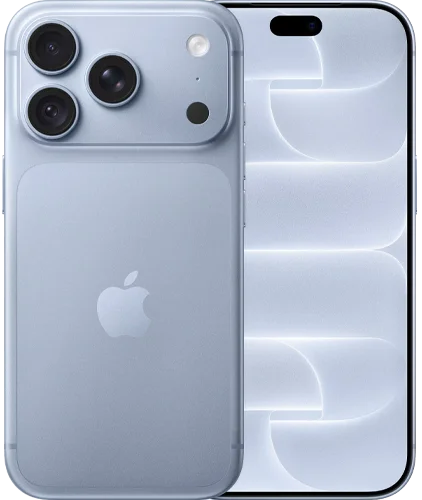
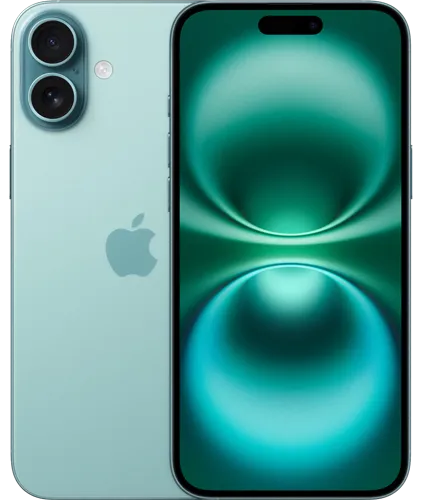
The iPhone 18 Pro has a marketing problem. Its most interesting improvements are the ones that sound least exciting on stage.
Apple can demonstrate a smaller Dynamic Island, a redesigned variable-aperture camera and faster AI hardware. But the supplied in-depth review finds a different story once the phones are used and tested: the smaller Pro lasts unexpectedly long, charges faster, and delivers remarkable sustained graphics performance. The variable aperture is clever, yet often behaves much like last year's fixed lens. AI benchmarks rise, while common AI tasks barely feel quicker.
That tension is more useful than a feature checklist. It reveals what an upgrade actually changes—and what it merely makes possible.
The review covers both iPhone 18 Pro sizes. This article focuses on the smaller iPhone 18 Pro, and clearly labels measurements from the Pro Max where the reviewer tested or discussed the larger model.
Belliste has not independently tested these phones. Battery, charging, thermal, benchmark and camera observations below are attributed to the linked video, with technical claims assessed separately.
The First Surprise Is Battery Life
The reviewer runs a mixed, medium-to-high-intensity app workload until the phones shut down. In that test, the iPhone 17 and 17 Pro finish below nine hours. Samsung's Galaxy S26 Ultra reaches 10 hours, and the iPhone 17 Pro Max manages 10 hours and 36 minutes.
The remarkable result is that the smaller iPhone 18 Pro almost matches the iPhone 17 Pro Max. The reviewer does not state an exact iPhone 18 Pro runtime in the supplied narration, so Belliste will not invent one.
The iPhone 18 Pro Max lasts 12 hours and 32 minutes in the same test. That is a result for the larger model, not for the iPhone 18 Pro.
These results suggest Apple has made meaningful progress in power efficiency and battery capacity. They do not establish that every user will experience the same improvement. The workload, signal strength, brightness and battery health of comparison devices all affect runtime.
For the smaller Pro, the result is particularly significant. Compact flagship buyers often accept weaker endurance in exchange for easier handling. Getting close to the previous generation's Max-sized battery performance reduces that compromise.
This is a better reason to consider the iPhone 18 Pro than a new camera mode you may use twice.
Charging Is Faster, but Samsung Still Has an Edge in This Test
After draining the phones, the reviewer connects each one to a charger suited to its charging protocol and measures recovery over 20 minutes.
The new iPhone Pro models reach 58% and 63%, while the previous generation reaches 45% and 50%. The reviewer explains that the smaller Pro charges to a higher percentage more quickly because it has a smaller battery.
That distinction matters: percentage gained is not the same as energy transferred. Two phones can absorb similar power yet show different percentages if their battery capacities differ.
In the video, the Galaxy S26 Ultra still performs better over that 20-minute interval. Apple's improvement is real, but it does not make the iPhone the universal fast-charging leader.
The result also depends on charger compatibility. USB-C connectors do not guarantee identical charging behavior; the adapter's supported power-delivery profile and the phone's thermal state affect the outcome.
For buyers coming from an older iPhone, the faster top-up is likely to be noticeable. For those comparing several current flagships, charging remains a specification worth testing rather than accepting from advertising alone.
The Cooling System Looks Worse Until You Examine the Performance
One of the review's most interesting findings concerns heat.
The iPhone 18 Pro and Pro Max use a much broader vapor-chamber design than their predecessors. The reviewer describes the new chamber as occupying almost the entire width of the phone.
He tests heat by recording 4K video while charging for one hour, comparing recent iPhones and Samsung's Galaxy S26 Ultra. Thermal-camera footage produces a surprise: the 18 Pro Max becomes very warm at the surface, sometimes warmer than the previous model.
He repeats the test the following day and observes the same pattern.
At first glance, that sounds like a cooling failure. But a vapor chamber is designed to move heat away from concentrated hot spots. Efficient heat transfer can make a larger portion of the phone's exterior warm even while the processor operates more consistently.
Surface temperature and internal chip temperature are not interchangeable. Neither is a warmer case automatically evidence of unsafe operation.
The reviewer therefore runs a separate sustained graphics test. The results change the interpretation: the phone may feel warmer because it is better at distributing heat while maintaining performance.
This is an important distinction for buyers who game, shoot long videos or use demanding creative apps. The goal is not necessarily the coldest back panel. It is stable operation without excessive thermal stress or uncomfortable surface temperatures.
The video does not supply standardized internal temperature readings, so it cannot prove the exact temperature of the A20 Pro silicon.
A20 Pro Graphics: A Major Lead Under Sustained Load
In repeated 3DMark Wild Life Extreme stress tests, the reviewer reports a top score of 9,024 for the iPhone 18 Pro Max, compared with 7,970 for the Galaxy S26 Ultra, 5,911 for the iPhone 17 Pro and 4,860 for the iPhone 16 Pro.
More importantly, the new Pro Max records a low score of 6,153 during the repeated workload. That sustained result exceeds the peak figures the reviewer reports for several older devices.
These are figures from the video's test setup. They should not be presented as independently verified Belliste benchmarks or assumed to represent every game.
The pattern is nevertheless striking. Apple's thermal design and A20 Pro appear to offer a substantial graphics advantage in this particular prolonged test.
The reviewer also notices that the new model cools down quickly after the workload ends. That is consistent with effective heat redistribution, although additional measurements would be needed to quantify the mechanism.
The key buying question is whether you need this headroom. For messaging, web browsing and ordinary photography, last year's Pro was already fast. For demanding gaming or intensive video workflows, sustained performance can make a more meaningful difference.
And there is a qualification: these precise scores are discussed in the video primarily for the 18 Pro Max. The smaller iPhone 18 Pro shares the A20 Pro generation and cooling approach, but its exact sustained behavior should not be inferred from the Max without equivalent measurements.
Faster AI Hardware, Surprisingly Similar AI Experience
Apple promotes a major increase in AI-processing capability. The reviewer tests that promise rather than accepting it.
In Geekbench AI, he sees roughly a 30% increase compared with the prior generation, far below the '2x' improvement he says Apple advertised. That discrepancy is not necessarily evidence that Apple's claim is false; companies and benchmark tools may measure different workloads, precisions or hardware paths.
What matters for users is whether the increase produces a practical improvement.
The reviewer generates a Genmoji, removes a person from a photograph and asks Siri to create a shortcut. The new iPhone does not consistently finish first. In one cleanup run, an older iPhone completes the task sooner; in another on-device cleanup mode, the new phone wins. Siri shortcut creation is also slower in his test.
These are small task samples, not comprehensive AI performance evaluations. Cloud processing, caching, software versions and network behavior can influence results.
One third-party image-generation app does show a clearer advantage: the reviewer reports around 1.8x faster processing on the new model versus the 17 Pro in that task.
That split is the real finding. Hardware acceleration can be substantial without every Apple Intelligence feature feeling substantially faster.
Buying a new phone for AI performance makes sense only if the applications you actually use take advantage of it.
The Smaller Dynamic Island Hides a Clever Engineering Compromise
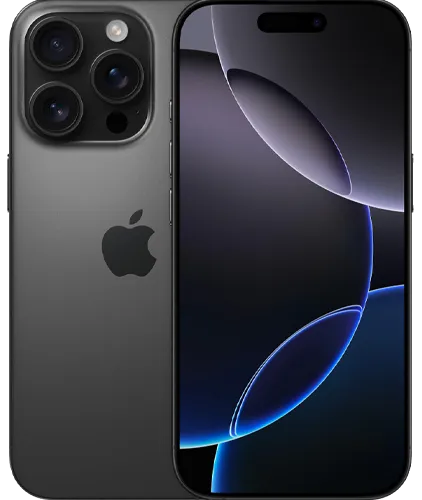
The iPhone 18 Pro has a visibly smaller Dynamic Island. The reviewer examines how Apple achieved the change and finds the engineering more interesting than the aesthetic result.
According to his explanation, Apple has moved part of the Face ID infrared system beneath the display. To allow infrared light to pass through, the display uses a modified pixel structure over that area, compensating with brightness adjustments and a gradual transition into the normal pixel layout.
He says Face ID works well. His only annoyance is that, at certain angles with the screen off, he can still notice the altered area.
This is an example of a technically demanding change that makes a modest everyday difference. The display looks cleaner, and the sensor remains functional, but most people will stop noticing the smaller cutout after a few days.
The details of the under-display implementation in this paragraph come from the reviewer's explanation. They are not independent microscopic or engineering measurements performed by Belliste.
A smaller interruption to the display is welcome. It is not, by itself, a reason to replace a recent iPhone.
Variable Aperture: Smart Engineering, Limited Everyday Payoff
Apple's variable-aperture main camera is the feature the reviewer most thoroughly questions.
He demonstrates the lens at its widest setting, approximately f/1.4, and its narrowest, f/4.0. A wider aperture allows more light to reach the sensor and can produce shallower depth of field. A narrower aperture can keep subjects at different distances in focus.
The reviewer shows a group-photo scenario where the difference matters. With one person standing in front of another, the iPhone 18 Pro narrows its aperture and keeps both faces acceptably sharp. The iPhone 17 Pro leaves the person behind more blurred in the comparison.
That is a genuine photographic advantage. It is also an unusually specific situation.
The reviewer says the camera spends most of its time around f/1.8, opening wider in low light and narrowing to f/4.0 when extra depth of field is needed. He argues that much of the benefit could have come from simply adopting a wider fixed aperture.
There is a fair counterargument: variable aperture gives the phone flexibility. A permanently wide lens cannot physically stop down when a group photograph needs greater depth of field.
But flexibility only matters if the camera uses it in situations owners encounter. The reviewer's criticism is that the complex mechanism seldom changes the output enough to justify its status as the headline upgrade.
It is possible for a feature to be technically impressive and practically niche at the same time.
Low-Light Photography Is the Strongest Case for the New Lens
The review becomes more positive when the light falls.
At its widest aperture, the new main camera can gather more light than it does at f/1.8, potentially allowing cleaner images or shorter exposures. In the reviewer's night comparisons, some improvements are subtle; others reveal substantially more detail.
He compares the iPhone against the previous Pro Max and Galaxy S26 Ultra, and often prefers the new iPhone's rendering in very dark scenes.
That is a subjective assessment of the reviewer's selected photographs, not proof that the iPhone wins every low-light scenario. Camera results depend on exposure, processing, subject movement, lens choice and scene lighting.
It also does not prove that the variable mechanism itself is responsible for every improvement. Sensor design and image processing may contribute.
The most defensible conclusion is narrower: the wider available aperture can help in difficult light, and the reviewer observed meaningful gains in some night scenes.
For people who frequently photograph dim restaurants, city streets or evening events, that may be more valuable than the camera's ability to stop down for an occasional staggered group portrait.
Why the New Camera Can Still Be Worse in Some Situations
The video's broader theme is that new hardware does not automatically improve every result.
A wider aperture can create pleasing subject separation, but it can also make focus more demanding. A narrower aperture can keep a group sharp, but reduces the light reaching the sensor and may require longer exposures or more aggressive processing.
The automatic system has to decide which compromise is best. That decision will not always match the photographer's intent.
The reviewer likes the camera's intelligence in his staged group demonstration, yet finds the overall gain underwhelming. That is not inconsistent: a feature can solve a problem convincingly while solving a problem most people rarely have.
There is also a distinction between 'better camera hardware' and 'better photographs.' Color science, motion handling, autofocus, HDR processing and the photographer's choices remain important.
Buyers should evaluate full-resolution samples in the kinds of lighting they use, not assume that moving aperture blades guarantee a visible upgrade in every shot.
The Sponsored Segment Is Not Independent Evidence
Near the end of the supplied video, the reviewer moves into a paid promotion for ESR charging accessories. He describes a magnetically attached wireless charger, cooling claims and a compact wired charger.
Those product claims are advertising content within the video. They are not independent test results about the iPhone 18 Pro itself, and Belliste does not adopt the sponsor's percentage improvements as verified facts.
The broader point remains useful: charging accessories can affect real-world convenience and temperature, and buyers should use compatible, reputable products.
But a sponsored accessory demonstration should not be blended into the phone's independent editorial verdict. The two have different evidentiary weight.
iPhone 18 Pro vs iPhone 17 Pro: What Actually Changes?
The review gives the smaller iPhone 18 Pro a clearer upgrade story than the feature list suggests.
Battery endurance is the standout. In the reviewer's workload, the smaller new Pro approaches the previous generation's larger Pro Max. Faster charging also reduces downtime.
The A20 Pro brings substantially stronger graphics potential, and the redesigned thermal system appears to support sustained performance. But the most detailed benchmark and thermal numbers in the video belong to the 18 Pro Max, so buyers should not assume identical results for the smaller model.
The Dynamic Island is smaller, though that is primarily a refinement. AI hardware improves on paper and in some third-party apps, but the reviewer's everyday Apple Intelligence tests show little consistent benefit.
Variable aperture is the most ambitious camera change. It helps in selected group portraits and low light, yet often operates close to a familiar f/1.8 setting.
If you own an iPhone 17 Pro and already enjoy strong battery life, there is little reason to rush. If you are coming from an older Pro with a worn battery and slower charging, the improvements become easier to justify.
A sensible comparison also includes trade-in value, repair costs, available storage and the price of a battery replacement for your current phone.
Verdict: The Boring Improvements Win
The iPhone 18 Pro is most persuasive when it stops trying to impress.
The supplied review finds that the smaller model can deliver battery endurance close to last year's Pro Max. Charging is meaningfully faster. The new chip and cooling system make a compelling case for sustained performance, although the video's most detailed stress results are for the larger 18 Pro Max.
The smaller Dynamic Island is neat. The AI acceleration is uneven in everyday apps. The variable-aperture camera is a sophisticated piece of engineering that can improve low-light scenes and unusual group portraits, but it is not a universal photographic revolution.
Consider the iPhone 18 Pro if you want a relatively manageable flagship with stronger endurance and faster charging.
Keep your iPhone 17 Pro if its battery, speed and cameras already satisfy you.
Look at the iPhone 18 Pro Max if maximum battery life matters more than size and weight.
The most important upgrade is not the mechanism you can see moving inside the camera. It is the extra time the phone gives you before you need a charger.
Sources and methodology: Hands-on tests, comparisons and observations come from the [supplied iPhone 18 Pro and Pro Max review](https://www.youtube.com/watch?v=n6hPB3Arr_M). Belliste has not performed independent device testing. Sponsored accessory claims in the video are excluded from the phone's performance assessment.