The HONOR 600 adds stronger durability, a bright screen and outstanding endurance, but its familiar cameras and missing telephoto complicate the verdict.
A tougher body, a 7,000mAh battery and a polished display make the HONOR 600 easy to like. But the camera hardware tells a different story about how much progress HONOR has actually made.
There is something slightly uncomfortable about the HONOR 600. It improves many of the things people notice every day, yet leaves one of its most important selling points largely untouched. The design is sleeker, the protection against water is stronger, and the battery promises the kind of endurance that changes how often you think about charging. But beneath the camera housing, the hardware looks remarkably familiar.
That tension runs through Earl's hands-on review. He is impressed by the display, still photography and endurance, but repeatedly returns to what HONOR chose not to improve. His criticism isn't that the HONOR 600 is a bad phone. It is that a company known for smartphone photography has delivered another generation without a dedicated telephoto camera.
For buyers, that makes the HONOR 600 an unusually price-sensitive recommendation. The phone does plenty right, but whether it represents good value depends on what competitors offer for similar money.
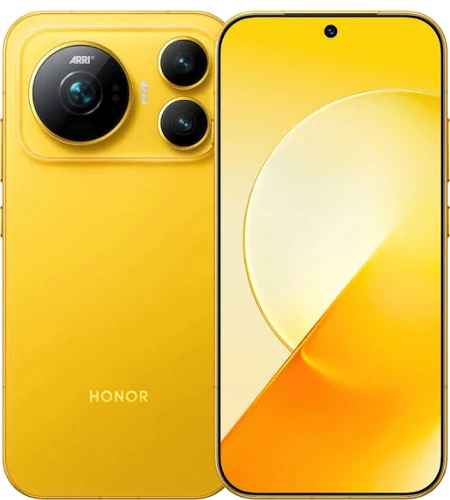
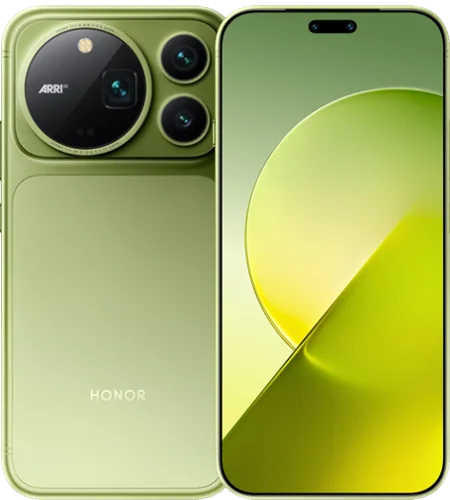
The orange HONOR 600 looks inspired by Apple's recent Pro iPhones. Earl notices the coordinated orange finish across the matte metal frame, camera rings and buttons. The rear panel avoids obvious fingerprints, although he describes its texture as somewhat plasticky, while the glossy camera platform attracts smudges.
At roughly 190 grams, with a 6.57-inch display and rounded corners, the phone feels relatively manageable. Earl appreciates the more pronounced corner curvature, which makes the device comfortable to hold. Design originality and ergonomics are not the same thing: the HONOR may borrow its visual identity, but that does not prevent it from being pleasant to use.
Durability has received a more substantial upgrade. Where the HONOR 400 offered IP66 protection, the HONOR 600 carries IP68 and IP69K ratings, alongside an SGS five-star drop and crush-resistance certification. Those credentials offer greater reassurance against water and accidental damage, although they should not be mistaken for a guarantee against every accident.
The dedicated AI button on the right edge also doubles as a camera shortcut. Launching the camera with a physical button is a practical convenience, regardless of whether someone uses the phone's AI features.
HONOR advertises up to 8,000 nits of peak brightness for the 600's 6.57-inch AMOLED display. Earl is appropriately skeptical. Peak brightness refers to particular conditions and does not tell buyers how bright an entire screen will remain while browsing, navigating or watching a video outdoors.
What he can confirm from experience is more useful: the display remains readable in direct sunlight. He also praises the picture quality, extremely thin uniform bezels and 120Hz refresh rate. The overall impression is of a premium-feeling screen, even if the video does not provide a measured typical or sustained brightness result.
One feature earns unusually personal praise. Earl experiences motion sickness in moving vehicles and finds HONOR's Motion Sickness Relief mode helpful. It places moving visual indicators on the screen and can activate automatically when the phone detects travel. That is a meaningful firsthand observation, though not clinical evidence that the feature works for everyone.
The speakers are less impressive. Earl describes respectable mids and clear highs at moderate volume, but limited bass and noticeable distortion when volume is pushed high, especially with the 200% volume setting. Harsh sibilant sounds make the maximum setting unpleasant, weakening an otherwise enjoyable multimedia experience.
The HONOR 600 uses a 200MP main camera with optical image stabilization and a 12MP ultrawide camera. Those are essentially the same headline camera specifications as the HONOR 400, and there is still no dedicated telephoto lens. For a series emphasizing photography, that absence is difficult to ignore.
Yet Earl's actual photographs are often impressive. He praises the main camera's sharpness, color accuracy and dynamic range, while portraits show convincing background separation without excessively harsh edges around hair. The studio-style portrait filters also appeal to him, adding creative flexibility without a separate editing application.
The 12MP ultrawide performs better than its modest resolution might suggest. Earl finds good detail and generally consistent colors relative to the main camera, an important quality when switching focal lengths. A camera system does not need identical sensors to produce visually coherent photographs.
The difficulty is that the results expose the limits of the hardware strategy. HONOR has retained a capable main camera, but the lack of optical telephoto reach means users photographing distant subjects must rely on digital zoom. That may be acceptable for casual photography, but it is a real limitation rather than a minor specification omission.
Earl's most interesting camera criticism concerns image processing. He acknowledges that HONOR's computational photography can improve detail, particularly when using digital zoom around 4x. But he dislikes how heavily the phone relies on processing and wishes he had more control over when enhancements are applied.
His concern becomes more noticeable with low-light selfies. While daytime selfies generally preserve pleasing skin texture and natural-looking color, he finds that the finished nighttime image can differ substantially from the preview shown before capture. That mismatch matters because it makes the photographic result less predictable.
Image processing can rescue difficult shots, but it can also alter the photographer's intentions. A phone that consistently produces attractive pictures is valuable; a phone that gives the user confidence about what it will produce is better still.
The HONOR 600 records up to 4K at 30fps. Earl finds the main camera's video well stabilized, with quick autofocus and generally consistent color when using its zoom options. For ordinary handheld clips, those qualities are more important than an impressive resolution label alone.
The ultrawide introduces a noticeable compromise. Its footage is less detailed and tends toward warmer colors, making transitions between the main and ultrawide perspectives less consistent. Anyone combining footage from both cameras may need to account for that difference during editing.
The front camera also supports 4K at 30fps, and Earl finds the footage reasonably stable despite the absence of optical image stabilization. The review does not provide a controlled stabilization benchmark, so these observations are practical impressions rather than measured guarantees.
The HONOR 600 runs on Qualcomm's Snapdragon 7 Gen 4, with Earl's review unit offering 8GB of RAM and 256GB of storage. In AnTuTu v11, the phone passes one million points, while the reviewer reports an average of around 43fps in a 3DMark Wild Life graphics test. Those figures establish a capable upper-midrange foundation, but Earl is more interested in whether the phone feels fast during real use.
For everyday tasks, he reports no noticeable stuttering. Mobile Legends and Call of Duty: Mobile also run comfortably within the frame-rate options available during his tests. This performance will satisfy many buyers who mainly use social apps, watch videos, take photographs and occasionally play competitive games.
Demanding games reveal the ceiling. With Wuthering Waves configured at high settings, Earl observes frame rates hovering around 30–40fps, frequent drops and noticeable heat. Switching to the higher-performance mode does not substantially change the average frame rate, although he does not report heat severe enough to make the device uncomfortable to hold.
The HONOR 600 can game, but it should not be purchased primarily as a high-end gaming device. Its processor is well suited to everyday responsiveness, not sustained maximum-settings performance in the most demanding titles.
MagicOS 10, based on Android 16, is another area where Earl recognizes progress. He likes the translucent interface elements, broader customization options, redesigned icons, lock-screen choices and full-screen always-on display. Although the visual influence of iOS is obvious, he is willing to overlook that when the execution works.
The dedicated AI button offers access to features such as AI Screen Suggestions and AI Memories. A long press can provide contextual actions based on the screen, while a double press can launch the camera. The video demonstrates these features but does not establish how reliably or frequently they improve daily workflows.
There are still rough edges. Earl points to animations that could be smoother, inconsistent text presentation, a Magic Capsule feature that feels underdeveloped and preinstalled applications or recommendation folders he would rather not have. These details do not undermine the whole interface, but they prevent it from feeling as polished as the best premium software experiences.
HONOR's stated commitment of up to six years of major OS upgrades and security patches is a stronger long-term selling point. It gives buyers a reason to consider keeping the device beyond the usual short replacement cycle, assuming that commitment applies to their market and model.
The 7,000mAh battery is the HONOR 600's clearest practical improvement. In the reviewer's proprietary video-loop test, the phone lasts 41 hours and 28 minutes. It also records 18 hours and 33 minutes in PCMark 3.0, providing two different indications of strong endurance rather than a single vague promise about multiday battery life.
Earl's personal experience supports the test results. He spends considerable time watching YouTube and finds that the battery drains slowly enough to make charging feel less urgent. That kind of confidence can matter more in daily life than another small improvement to benchmark scores.
Charging is less spectacular than endurance. The included 80W charger takes approximately 90 minutes to refill the phone from empty to full in the reviewer's experience. There is no bypass charging, but 27W reverse wired charging allows the phone to supply power to compatible accessories or another device.
The larger battery helps explain why the HONOR 600 feels like a meaningful upgrade despite familiar camera hardware. Endurance is not glamorous, but it changes how the phone fits into a person's routine.
| Area | Result or observation |
|---|---|
| Display | 6.57-inch AMOLED, 120Hz; excellent outdoor visibility in reviewer experience |
| Advertised peak brightness | Up to 8,000 nits; not a measured typical brightness result |
| Processor | Snapdragon 7 Gen 4 |
| Review configuration | 8GB RAM / 256GB storage |
| AnTuTu v11 | Above 1 million points |
| 3DMark Wild Life | Around 43fps average |
| Demanding gaming | Wuthering Waves around 30–40fps at high settings, with drops |
| Main camera | 200MP with OIS; strong still photography |
| Ultrawide | 12MP; good photos, less consistent video |
| Telephoto camera | Not included |
| Video | Up to 4K/30fps |
| Battery | 7,000mAh |
| Video-loop endurance | 41h 28m |
| PCMark 3.0 endurance | 18h 33m |
| Full charging time | Approximately 90 minutes |
| Water resistance | IP68 / IP69K |
| Software | MagicOS 10 based on Android 16 |
The figures above come from Earl's supplied video and the tests reported in it. They are not independent Belliste measurements.
The most revealing part of Earl's verdict is his reference to the older HONOR 200. That model offered a telephoto camera, yet the newer HONOR 600 still omits one. From his perspective, HONOR has improved the exterior and endurance while leaving a potentially more important photographic capability out of the package.
There is a legitimate argument for this approach. Most people probably benefit from better battery life and durability more frequently than they need optical zoom. But that argument becomes less persuasive when photography is central to the phone's identity and the competition offers more flexible camera systems.
This is where the HONOR 600's value proposition will be decided. If priced attractively against upper-midrange rivals, its battery, display and still-image quality could make it an easy recommendation. If it approaches the price of devices with better processors or dedicated telephoto cameras, the compromises become harder to overlook.
Earl did not have confirmed pricing when recording his review. Any definitive claim that the HONOR 600 is a bargain would therefore go beyond the evidence available in the video.
The HONOR 600 is not an ambitious reinvention of its predecessor. It is a refinement that concentrates on durability, ergonomics, software presentation and battery endurance, while keeping a camera configuration that already needed more flexibility. That is not necessarily the wrong decision, but it makes the phone's appeal depend heavily on price.
Earl's experience suggests a device that is comfortable to use, capable of taking excellent photographs and exceptionally good at lasting through long days. His reservations are equally important: limited optical zoom, aggressive image processing, inconsistent ultrawide video, average demanding-game performance and software details that still need polish.
For someone who values long battery life, a bright screen and attractive everyday photographs, the HONOR 600 deserves consideration. For someone who wants optical telephoto photography or stronger gaming performance, there are reasons to keep comparing.
The HONOR 600 improves the experience of owning a phone more than it advances the camera system. Whether that is enough depends on the price HONOR asks you to pay.
This article is an independent Belliste editorial analysis based on Earl's HONOR 600 video review. Product impressions, benchmark results, battery tests and camera judgments are attributed to the reviewer, and Belliste has not independently tested the device.
Source video: https://www.youtube.com/watch?v=bBGjb8sFfIw
Specifications and regional availability may differ by market. Pricing was not confirmed in the supplied review, so no launch-price claim has been made.
The HONOR 600 offers excellent battery endurance, a bright display and good still photography. Its value depends on pricing, particularly because it lacks a telephoto camera and is not designed for demanding gaming.
The reviewer measured 41 hours and 28 minutes in a video-loop test and 18 hours and 33 minutes in PCMark 3.0 on the 7,000mAh battery.
No. It has a 200MP main camera and a 12MP ultrawide camera, but no dedicated optical telephoto lens.
The Snapdragon 7 Gen 4 handles everyday tasks and lighter games well. The reviewer observed around 30–40fps with frequent drops in Wuthering Waves at demanding settings.
The reviewer reports approximately 90 minutes for a full charge using the included 80W charger.
The HONOR 600 improves durability, battery capacity and aspects of design and software, but retains similar main and ultrawide camera hardware. The better purchase depends on pricing and priorities.