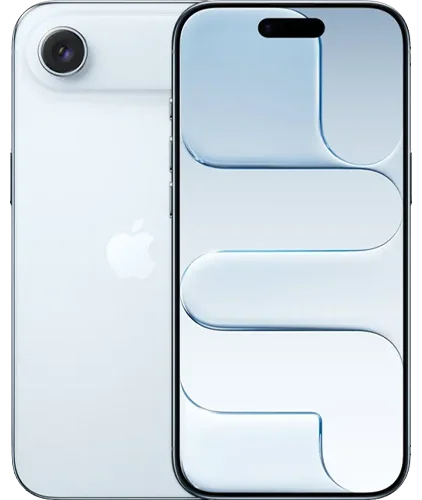
Compare iPhone 17e and Pixel 10a at 256GB: display, cameras, selfie video, charging and ownership costs, with Belliste's clear buying verdict.
The iPhone 17e vs Pixel 10a comparison changes once you stop comparing their cheapest versions. Google's US comparison page lists both 256GB models at $599. The Pixel's $499 entry price buys 128GB. If you need the larger capacity, that advertised $100 saving disappears.
Belliste's verdict: at equal storage and price, we would choose the Pixel for everyday scrolling and flexible framing. The iPhone earns its place through a smaller body, MagSafe and more capable front-camera recording options. Apple deserves credit for including 256GB, but that does not make its screen compromise disappear.
This is a specifications-based buying analysis, not a Belliste hands-on test. The supplied Versus video is embedded above. Its playback and transcript were blocked during preparation, so no camera verdict, battery measurement or benchmark score below is attributed to it.
Use $599 as a US reference point, not a promise about today's local checkout price. Google's comparison is manufacturer marketing, although its capacity table is useful; Apple's launch announcement independently confirms the iPhone's 256GB starting configuration and $599 US price.
The fair comparison is iPhone 17e 256GB against Pixel 10a 256GB, with the same warranty conditions. A discounted Pixel can change our recommendation. So can an imported iPhone with weaker seller support.
Buying the 128GB Pixel can still be sensible. Check your current storage use, downloaded media and expected ownership period first. Paying for unused capacity is wasteful; buying too little and then depending on a recurring cloud subscription can also be a false saving.
| Buying factor | iPhone 17e | Pixel 10a |
|---|---|---|
| Configuration compared | 256GB | 256GB, 8GB RAM |
| US reference price for 256GB | $599 | $599 |
| Display | 6.1-inch OLED, 60Hz | 6.3-inch OLED, 60–120Hz |
| Processor | A19, four-core GPU | Tensor G4 |
| Rear framing options | 48MP main; 2x sensor crop |
| Front video ceiling | 4K Dolby Vision at up to 60fps | 4K at 30fps |
| Wireless charging | MagSafe and Qi2 up to 15W | Qi wireless charging |
| Update commitment | Check Apple's applicable support terms | Seven years from first US Google Store availability |
Explore the iPhone 17e specifications and Pixel 10a specifications on Belliste. Apple does not publish RAM capacity on its specification page, so we have not presented the catalogue's RAM figure as an Apple-confirmed specification.
The Pixel's refresh-rate advantage is relevant every time you scroll a feed, navigate menus or move through a long page. A faster processor cannot make a 60Hz panel display 120 distinct frames each second.
Our view: a $599 phone should not ask buyers to overlook 60Hz simply because its chip is newer. That concession is especially difficult for someone coming from an Android handset with a high-refresh display.
It is less important if you mainly watch conventional video, make calls and send messages. Try scrolling on both phones before deciding whether the difference bothers you. This is a more useful buying exercise than assuming every buyer notices the same thing.
Google also publishes a higher brightness ceiling, but the brands' headline figures use different measurement descriptions. Treat those numbers as specifications, not a matched outdoor visibility test. We have not measured either panel.
The Pixel provides a genuine ultrawide camera. That changes what fits in the photograph: a room, a building or a group when you cannot step back. This is a concrete advantage independent of which phone produces your preferred colors.
The iPhone's 2x option comes from its main sensor. Apple's “optical-quality” wording does not mean there is a separate telephoto lens. Neither phone gives you a dedicated long-range telephoto.
For travel and family photographs, we would rather have the extra field of view available. A missing lens cannot be added later through a software update. Still, two rear cameras do not automatically mean better main-camera photographs.
Compare original samples for moving people, indoor faces and bright windows before declaring a camera winner. A pleasing daylight landscape says little about whether a phone captures a moving child sharply indoors. We have no verified results from the supplied video to settle those questions.
Apple lists front-camera autofocus and 4K Dolby Vision recording up to 60fps. Google lists front 4K recording at 30fps. Both offer rear 4K recording up to 60fps.
Those options give the iPhone a practical reason to be on a creator's shortlist. Front autofocus can be useful when your distance from the phone changes, while additional frame-rate choices offer more control over a recording workflow.
That is a capability advantage, not proof that every iPhone clip looks better. Stabilization, exposure transitions, microphone behavior and the social app you actually use still deserve checking. Before buying for work, test a short recording, edit it and upload it through your normal app.
A19 and Tensor G4 are different platforms, but listing their names does not establish sustained frame rates, heat or export times. We have not run a matched performance test for this article.
If you play demanding games, look for testing of those games on current firmware, including a longer session. A brief benchmark run cannot answer whether frame delivery stays consistent after the phone warms up.
For messaging, maps and browsing, judge interruptions you will actually notice: app reloads, camera launch delays and missed touches. Our criticism of Apple's display remains relevant here. A strong chip and a high-refresh screen solve different problems; neither specification replaces the other.
Google specifies a typical 5,100mAh battery and advertises more than 30 hours under its test conditions. Apple advertises up to 26 hours of video playback. Those are different workloads, so subtracting one figure from the other would produce a meaningless “winner.”
Both manufacturers describe roughly half a charge in around 30 minutes with suitable equipment and conditions. Google's reference to a 45W PPS charger is an adapter requirement, not a claim that the handset charges continuously at 45W.
For wireless charging, MagSafe gives the iPhone built-in magnetic alignment and accessory attachment. That is useful if you already use a desk stand or car mount. Include required chargers and cases in the final price rather than treating accessories as free.
Google's seven-year OS, security and Pixel Drop commitment is explicit. The period runs from first availability on the US Google Store, not from the date you buy an older unit.
For an existing iPhone owner, changing platform can involve replacing accessories, adjusting family workflows or losing compatibility with a device you rely on. Those costs are worth calculating. Familiarity is a valid preference, but it should be a conscious choice.
For either phone, check whether the advertised AI and calling features work in your country and language. Do not pay extra for a demonstration you cannot reproduce locally. Review cloud-processing permissions before sending personal material to an assistant; a long feature list says little about your preferred privacy settings.
Import buyers should also verify the exact regional model, carrier support, SIM arrangement and local repair coverage. A lower sticker price becomes less attractive when a routine repair requires shipping the phone abroad.
For a buyer starting fresh at the same 256GB price, our pick is the Pixel 10a. The display and ultrawide address ordinary tasks that happen repeatedly. We would accept the iPhone's compromises only for a benefit we could name before checkout.
Choose the iPhone 17e if you want its smaller body, need its front-video options or already depend on MagSafe and Apple's device ecosystem. Those are stronger reasons than buying it because “iPhones last longer” without checking support, repair costs and battery replacement.
If the Pixel is substantially cheaper locally, its case strengthens. If the iPhone is cheaper, ask whether the saving compensates for the features you give up. There is no universal price threshold: the useful discount is the one that pays for a compromise you can comfortably live with.
Specifications and price references checked on October 28, 2026. Manufacturer pages establish advertised capabilities, not independent quality rankings.
Google's US comparison lists both 256GB versions at $599. Its $499 Pixel price refers to 128GB. Current local offers, taxes and warranty conditions can change the comparison.
For a buyer starting fresh, Belliste prefers Pixel 10a for its 60–120Hz display and ultrawide camera. The iPhone is more attractive when its smaller body, front-video options or MagSafe meet a specific need.
No. The 2x option uses the main camera sensor. It is not a second physical telephoto lens, and the phone has no ultrawide camera.
Apple lists front-camera 4K Dolby Vision recording up to 60fps for iPhone 17e. Google lists front-camera 4K recording at 30fps for Pixel 10a.
The reference to a 45W USB-C PPS charger describes suitable charging equipment. Google's launch footnote specifies wired phone charging up to 30W; actual power varies.
No. Google's general battery-life claim and Apple's video-playback claim use different workloads. They do not establish a matched endurance winner.
Google promises seven years of OS, security and Pixel Drop updates from first availability on the US Google Store, rather than from each customer's purchase date.
No. The video is embedded for readers, but its playback and transcript were blocked during preparation. Belliste's recommendations here are editorial analysis of published specifications, not claimed hands-on or video-test results.