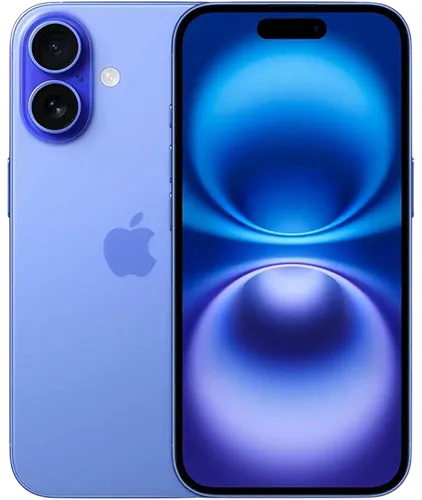
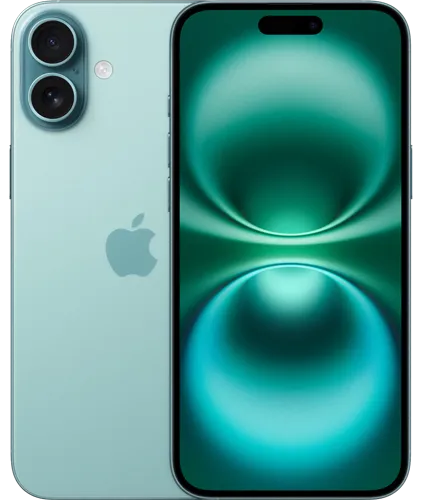
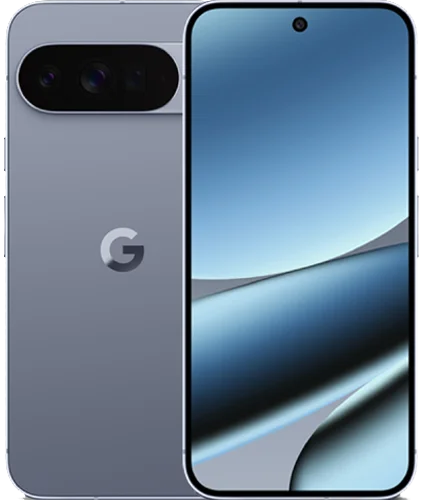
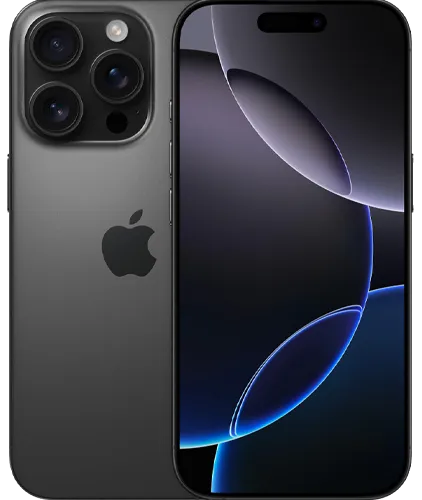
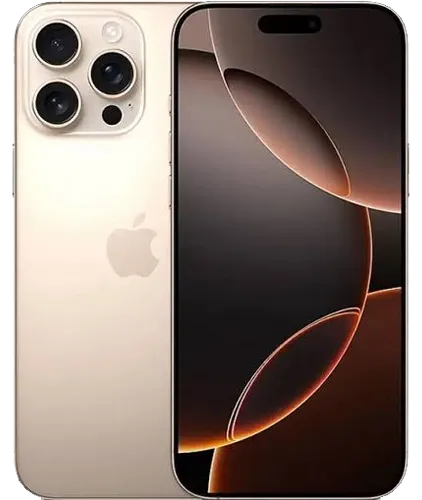
The iPhone 16 Plus looks like an obvious choice for anyone who wants a big iPhone without paying for a Pro Max. It has a spacious 6.7-inch OLED display, Apple's A18 chip and a battery designed to take advantage of its larger body. On paper, the appeal is straightforward: more screen and more endurance without the premium Pro camera system.
But the supplied six-month ownership review tells a less predictable story. Luis bought the iPhone 16 Plus precisely because he wanted a larger phone. After living with it, he concluded that its size was one of his biggest mistakes. He still liked its construction and camera, yet found one-handed use frustrating and experienced serious slowdowns when charging and running several demanding tasks together.
That reversal makes this review useful. The iPhone 16 Plus is not simply a bigger iPhone 16. Its dimensions change how it feels to own, and the value of its extra screen depends on whether those dimensions fit your routine.
This Belliste article analyzes the supplied video rather than claiming independent device testing. The reviewer describes approximately six months of regular use, although he also refers to about eight months of ownership when discussing battery health. Those timelines are not fully consistent, so we treat them as an approximate long-term account rather than a precise test period.
The Buying Decision That Changed His Mind
The reviewer entered the Apple Store considering either a smaller Pro model or a larger standard iPhone. Because he has relatively large hands, he assumed the Plus would be the comfortable choice.
He also saw two apparent advantages: a larger display and greater battery capacity for a price that seemed attractive compared with a smaller Pro configuration.
Those are reasonable considerations. Screen size can make video, reading and typing more pleasant, while extra battery capacity can reduce charging anxiety.
But holding a phone briefly in a store is not the same as carrying it for months.
The reviewer eventually found that the size he initially wanted became an obstacle in everyday situations. That is the central lesson of his experience: the most impressive specification is not always the most convenient one.
For prospective buyers, the right question is not whether a 6.7-inch screen is better than 6.1 inches. It is whether the additional space is worth the handling compromises.
Design and Build: Better Than His Complaints Suggest
After months of use, the reviewer says his iPhone 16 Plus remained in excellent cosmetic condition.
He describes several knocks and drops but reports no visible scratches on the screen. He has no significant criticism of the build quality.
This is encouraging as a firsthand ownership report, but it is not a controlled durability test. A different impact angle or surface could produce a very different result.
The iPhone 16 Plus uses an aluminum frame, a color-infused glass back and Ceramic Shield front protection. Its vertically arranged rear cameras distinguish it from the diagonal camera layout of the previous Plus generation.
The phone feels modern without copying every design element of the Pro models.
For used buyers, cosmetic condition still deserves attention. Check the frame, corners, screen and camera glass rather than assuming the model is inherently resistant to damage.
The reviewer's device surviving several months in good condition tells us how his particular unit aged, not how every unit will behave.
A 6.7-Inch Screen Can Be Too Much
The iPhone 16 Plus has a 6.7-inch Super Retina XDR OLED display. That extra area is its defining feature.
The reviewer originally welcomed the size. After six months, he found the phone too difficult to operate comfortably with one hand.
Reaching the top of the display often required his second hand. Typing while holding the phone in one hand was frustrating, and the overall size interfered with quick everyday interactions.
He is particularly striking because he describes himself as someone with big hands. Even that did not make the phone comfortable for his habits.
Hand size alone is not enough to predict comfort. Grip, finger reach, pocket size and how often you use the device while standing or moving all matter.
The reviewer says he expects to return to a smaller iPhone next time.
That is a subjective preference, but it is supported by months of practical use rather than a first impression.
The Difference Between Watching and Operating
A large display has two distinct uses: consuming content and interacting with the interface.
For watching films, reading articles, reviewing photos and using split areas within apps, the iPhone 16 Plus provides more space than a compact model.
But most iPhone interactions involve reaching controls, typing or changing grip. Those actions can become harder as the display grows.
The reviewer focuses on the second category. He does not deny the screen's appeal; he dislikes the physical effort required to operate it.
That distinction matters because someone who mostly watches videos may love the Plus, while someone who frequently sends messages with one hand may not.
Accessibility features such as Reachability can help with upper-screen controls, but they do not change the phone's physical width and weight.
If possible, try the device while standing, walking and typing rather than judging it only while holding it with both hands at a counter.
Display Quality and the 60Hz Limitation
The iPhone 16 Plus offers a high-quality OLED panel with deep blacks, strong contrast and ample resolution for everyday content.
However, like the standard iPhone 16, it is limited to a 60Hz refresh rate and lacks the ProMotion technology found on the iPhone 16 Pro models.
The supplied reviewer broadly praises the display without analyzing refresh rate in detail. His video does not contain controlled measurements of brightness, color accuracy or motion clarity.
The 60Hz limitation is a relevant specification-based consideration, especially for people moving from a 120Hz Android phone or Pro iPhone.
A larger screen does not compensate for a lower refresh rate if smooth scrolling is a priority.
On the other hand, people accustomed to 60Hz may be perfectly satisfied with its motion.
The correct assessment is that the Plus has an excellent large OLED image, but not the full display feature set of a Pro model.
A18 Performance: Strong for Ordinary Use
The iPhone 16 Plus runs Apple's A18 chip, the same processor family used in the standard iPhone 16.
For messaging, browsing, navigation, photography and ordinary applications, this is powerful hardware.
The reviewer does not report persistent slowdowns during simple use. His concerns arise when he combines demanding tasks.
That is an important distinction. The supplied video does not demonstrate that the A18 is generally inadequate or that the Plus is slow in everyday conditions.
Instead, it reveals the limits of one particular high-load scenario.
The A18 should not be judged solely by a situation involving gaming, charging, hotspot sharing and a live video call at the same time.
Those activities place simultaneous demands on processing, wireless radios, battery and thermal management.
A buyer who mainly uses standard apps may never encounter the same behavior.
Heat Under Heavy Multitasking
The reviewer's most serious performance complaint concerns heat.
He describes the phone becoming very warm when gaming or performing demanding work while charging.
In one scenario, he was using FaceTime, sharing a hotspot with another device, charging and attempting to play a game.
He says the phone became extremely slow and, at times, even keyboard input was difficult.
That is a meaningful firsthand report. It suggests the device struggled under his combined workload.
However, the video does not provide temperature measurements, diagnostic logs, repeatable benchmark data or evidence identifying the exact cause.
It would be inaccurate to conclude that the A18 is defective or that every iPhone 16 Plus behaves this way.
Charging adds heat, hotspot use activates cellular and Wi-Fi radios, FaceTime uses camera and encoding resources, and gaming can place sustained demand on the processor and graphics system.
Together, these conditions can create a difficult thermal environment for a smartphone.
What Thermal Slowdowns Actually Mean
Smartphones manage heat by reducing performance when necessary. This is intended to protect components and maintain safe operating conditions.
If a phone becomes hot during simultaneous high-load activities, it may temporarily reduce processing speed.
The reviewer attributes the problem to the chip being overwhelmed, but the video does not prove whether the limiting factor was processor capacity, thermal throttling, network conditions, software or a combination.
That uncertainty should remain visible in any responsible review.
His experience still matters because it describes a real workflow that some buyers may recognize.
If you routinely use a hotspot, participate in long video calls and play demanding games while charging, the Plus deserves closer scrutiny.
If you rarely combine those activities, the same episode may have little relevance to your purchase.
The sensible conclusion is workload-specific caution, not a universal overheating verdict.
Battery Life: Good, but Not Unlimited
The iPhone 16 Plus has a larger battery than the standard iPhone 16, and endurance is one of the usual reasons to choose it.
The reviewer says his phone still lasts through the day, but he also describes himself as a heavy user who often needs an additional charge.
That is not necessarily contradictory. A device can offer strong battery life and still require a top-up under demanding use.
The video does not provide a standardized screen-on-time result or controlled battery drain test.
The reviewer also says battery health remained above 90% after approximately eight months of ownership.
That figure is a snapshot of his device, not a prediction for all used iPhone 16 Plus units.
Battery health varies with charge cycles, temperature, charging habits and use patterns.
A buyer in 2026 should examine the actual battery condition of the phone being offered, especially if the purchase is secondhand.
Charging Heat Changes the Experience
The reviewer finds the phone uncomfortable to hold when it becomes hot while charging.
He says this is especially noticeable without a case.
The supplied video does not specify the charger model, charging wattage, ambient temperature or whether a particular accessory contributed to the problem.
Those missing details matter because charging temperature can vary significantly across conditions.
It is reasonable to avoid intensive gaming while charging if the device is already becoming unusually warm.
Persistent overheating, unexpected shutdowns or temperature warnings under ordinary use would warrant further investigation.
For buyers, the practical issue is not just maximum charging speed. It is whether the phone remains comfortable and predictable during the charging habits they actually use.
The reviewer found that his heavy-use routine exposed a weakness he did not expect from a large iPhone.
Battery Health Versus Battery Endurance
The reviewer mentions battery health above 90%, but that percentage does not directly translate into a specific number of hours of use.
Battery health estimates remaining capacity relative to the battery's original condition. Daily endurance also depends on software, signal quality, brightness and activity.
For example, sharing a hotspot and recording video can consume power much faster than reading text.
This is why the reviewer's description of needing to recharge does not invalidate the Plus model's larger battery.
It does show that extra capacity cannot overcome every workload.
When comparing used listings, a slightly more expensive unit with better battery health and a warranty may offer more value than a cheaper unit requiring a battery replacement.
A long-term review should therefore consider both capacity and real-world habits.
The iPhone 16 Plus has the potential for strong endurance, but the exact experience is personal.
Camera Hardware: A Capable Dual-Lens System
The iPhone 16 Plus uses a 48MP Fusion main camera and a 12MP ultra-wide camera.
It supports 2x framing through the main camera's sensor crop, but it does not have a separate telephoto lens like the Pro models.
The reviewer is enthusiastic about the camera, particularly for video.
He describes iPhones as leaders in smartphone photography, although that is his opinion rather than a comparative finding established by the video.
There are many strong competing smartphone cameras, and different devices can excel in different lighting and shooting conditions.
For ordinary daylight photography, portraits, travel and family memories, the 16 Plus has a versatile system.
For long-range zoom, the Pro models provide capabilities the standard dual-camera setup cannot fully match.
That difference may matter more than small changes in color processing.
The Review Video Was Filmed on the Phone
One of the most concrete demonstrations in the supplied video is the footage itself.
The reviewer says the video is being recorded on his iPhone 16 Plus in 4K at 24 frames per second using Cinematic mode.
That is a useful real-world example of how he uses the phone.
Cinematic mode can create a simulated depth-of-field effect and shift focus between subjects, providing a different look from standard video.
The footage demonstrates that the reviewer is comfortable using the device for published content.
However, online compression and the absence of controlled comparison footage limit what can be concluded about fine detail, dynamic range and color accuracy.
The video also does not prove that the iPhone 16 Plus outperforms all other smartphones.
It supports a narrower, more credible conclusion: the phone is capable of producing video that the reviewer considers good enough for his own channel.
What Creators Should Consider
For casual creators, the iPhone 16 Plus offers an appealing combination of a large monitoring screen and capable 4K video recording.
The bigger display can make framing and reviewing clips more comfortable.
The same size may become inconvenient when mounting the phone, carrying it for long shoots or operating camera controls with one hand.
The reviewer also encountered heat during intensive multitasking, though he does not establish a controlled link between that problem and ordinary video recording.
Creators who shoot long sessions should consider storage capacity, charging arrangements and thermal conditions.
A Pro model may offer additional recording formats and lens flexibility, but those features are only valuable if they match the workflow.
The iPhone 16 Plus can be a good content-creation tool without being the most specialized camera phone in Apple's lineup.
iPhone 16 Plus vs iPhone 16
The most important difference between the two standard iPhone 16 sizes is physical.
The iPhone 16 has a 6.1-inch screen, while the Plus offers 6.7 inches.
Both use the A18 chip and share the same broad dual-camera configuration.
The Plus provides a larger display and battery, but it is harder to operate with one hand.
The reviewer's experience is a warning against assuming that bigger is automatically better, even for people with large hands.
Choose the Plus if you watch lots of video, read extensively and value the extra battery capacity.
Choose the smaller iPhone 16 if portability, grip and quick one-handed interactions matter more.
Neither option is objectively superior for every buyer.
The best way to decide is to test both sizes with your own everyday gestures.
iPhone 16 Plus vs iPhone 16 Pro
The reviewer originally considered a smaller Pro model and later says he expects his next iPhone to be a Pro.
The iPhone 16 Pro offers a 6.3-inch ProMotion display with up to 120Hz, a dedicated 5x telephoto camera and additional advanced video capabilities.
The Plus counters with a larger 6.7-inch screen and a different battery-versus-size balance.
A smaller Pro may suit someone who wants a smoother display and more versatile cameras without carrying a large phone.
The reviewer also hopes for more processing headroom from a Pro model, but his video does not prove that switching to a Pro would eliminate all thermal slowdowns during the same extreme workload.
Both models remain subject to physical heat limits.
The correct comparison should focus on size, camera needs, display features, battery expectations and the actual prices available.
What About the iPhone 17 Generation?
The reviewer refers to the iPhone 17 lineup as already available when he recorded the video.
That makes the iPhone 16 Plus a previous-generation choice in the context of his review.
The supplied video does not systematically compare the Plus with an iPhone 17 model, and it does not provide verified prices for either device.
Buyers in 2026 should compare current offers rather than relying on launch prices.
Newer models may offer improvements in display technology, processing or battery behavior, but those differences need to be evaluated against actual specifications and prices.
The Plus remains attractive when its large-screen experience is available at a meaningful discount.
If a newer phone costs only slightly more and directly addresses the limitations that concern you, the older Plus may be harder to recommend.
The goal is value for your use, not simply the lowest generation number.
Buying a Used or Refurbished iPhone 16 Plus
By 2026, a substantial number of iPhone 16 Plus devices will be offered secondhand or refurbished.
Before buying, check battery health, cycle count and the parts and service history available in iOS.
Inspect the screen for cracks, discoloration and touch problems. Test Face ID, the rear cameras, speakers, microphones, USB-C port and wireless charging.
Confirm that the phone is not Activation Locked and that its SIM configuration is compatible with your carrier.
Ask about the seller's warranty and return period. A refurbished label is not a substitute for clear terms.
If the phone becomes unusually hot during basic setup or light use, investigate before committing to the purchase.
The reviewer's specific heavy-load heating experience should not be treated as proof of a widespread defect, but it is a reminder to evaluate the condition of the individual unit.
Who Should Buy the iPhone 16 Plus?
The iPhone 16 Plus is best suited to people who actively want a large display.
That includes frequent video watchers, readers, people who prefer larger on-screen controls and buyers who want more battery capacity than the compact standard iPhone offers.
It may also appeal to casual video creators who enjoy reviewing footage on a bigger screen.
It is less suitable for users who frequently type with one hand or want a phone that disappears into a pocket.
The reviewer falls into this second group, despite initially believing otherwise.
People who routinely combine gaming, charging, hotspot sharing and video calls should investigate sustained performance and thermal behavior carefully.
And anyone accustomed to a 120Hz display should consider whether the Plus model's 60Hz refresh rate is acceptable.
Verdict: Excellent Hardware, Wrong Size for This Reviewer
The iPhone 16 Plus remains a capable large-screen iPhone. It offers strong everyday performance, a quality OLED display, useful cameras and the battery capacity expected from a larger model.
The reviewer reports excellent cosmetic durability and is happy enough with the camera to record his own video in 4K Cinematic mode.
His dissatisfaction comes from lived experience. The 6.7-inch body proved frustrating for one-handed use, and heavy multitasking while charging produced uncomfortable heat and severe slowdowns.
Those observations do not establish that every Plus owner will have the same problems. They do show why a specification sheet cannot replace months of practical use.
Choose the iPhone 16 Plus if you genuinely want a large screen, usually operate with both hands and find a good offer.
Choose the regular iPhone 16 if one-handed comfort matters more than screen area.
Consider the iPhone 16 Pro or a newer model if you value 120Hz, dedicated telephoto zoom or other advanced features.
The iPhone 16 Plus is not a bad phone. For this reviewer, it was simply the wrong size. That may be the most useful buying advice in the entire video.
Editorial methodology: This article analyzes the supplied [iPhone 16 Plus long-term review](https://www.youtube.com/watch?v=BuMW2bzBdTw). The reviewer's experiences with heat, battery health, durability and multitasking are personal observations, not independent Belliste tests. Hardware specifications are distinguished from reviewer opinion. The reviewer's approximate six- and eight-month ownership references are preserved as an unresolved timing inconsistency.