India’s Phone Slump Exposes the Cost of Losing Affordable Upgrades
By BellistePublished:
Counterpoint and Omdia disagree on the size of India’s Q3 decline, but both point to an upgrade market under pressure from prices.
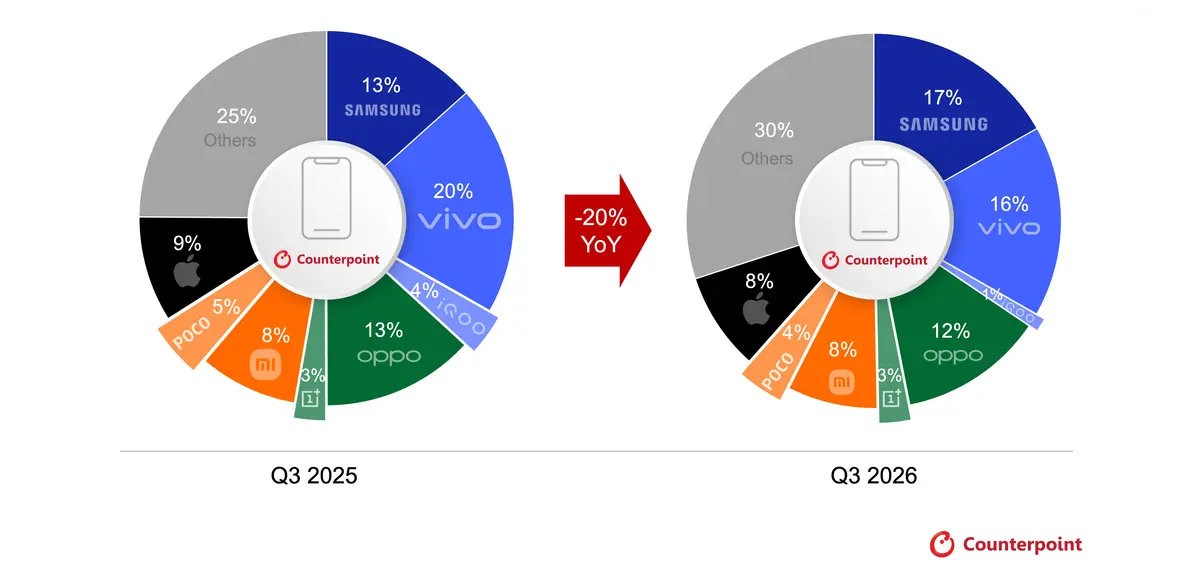
India’s smartphone downturn is not just a contest over which brand finished first. Two research firms describe a market in which buying a replacement has become harder to justify.
Counterpoint estimates that shipments fell 20% year on year in the July–September quarter. Omdia puts the decline at 26%. Those are separate estimates, not figures to average into a more convenient headline.
The releases are also earlier than some news coverage suggests: Omdia published on October 19; Counterpoint’s release is dated October 22, with October 23 publication metadata. This is an analysis of that newly circulated evidence, not a claim that the quarter’s data appeared today.
Belliste’s view: premium sales cannot compensate consumers for an affordable market that keeps asking them to pay more or accept less. The industry needs convincing replacements at ordinary budgets.
Two estimates, one buying problem
Both firms connect the weakness to higher prices and cautious purchasing. Counterpoint reports a particularly steep fall below INR 20,000, while Omdia also highlights inventory timing around a later Diwali.
That distinction prevents a simplistic conclusion. Shipments into distribution are not identical to purchases by individual users. Retailers holding less stock can deepen a quarterly decline without every missing unit representing a customer who abandoned a purchase.
The figures still matter. When cheaper configurations become scarce or move into higher price bands, the person replacing a broken phone faces a narrower set of compromises.
Winning share does not settle value
Both firms put Samsung first in their respective estimates. A position in a shipment table is useful market context, but it does not establish that every Galaxy is the best purchase.
Likewise, a growing brand can benefit from a small starting base. Growth percentages should not replace comparisons of support, reliability and the actual price of a suitable configuration.
Buyers need the exact RAM and storage variant. A familiar model name can conceal a less generous configuration, changing the value without making the headline price look dramatically different.
Financing needs a total-price comparison
Instalments can make a necessary replacement manageable. They can also make a larger purchase feel smaller by moving attention from the total to the monthly payment.
Compare the full amount payable, the required payment method and the value assigned to a traded-in phone. A discount available only with a particular bank card is not an ordinary cash price.
There is no need to predict an imminent price collapse from weak shipments. Suppliers and retailers can respond to demand in different ways. Neither report guarantees that waiting a few weeks will produce a better offer.