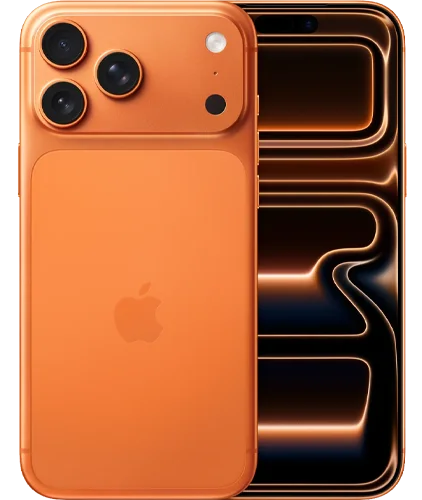
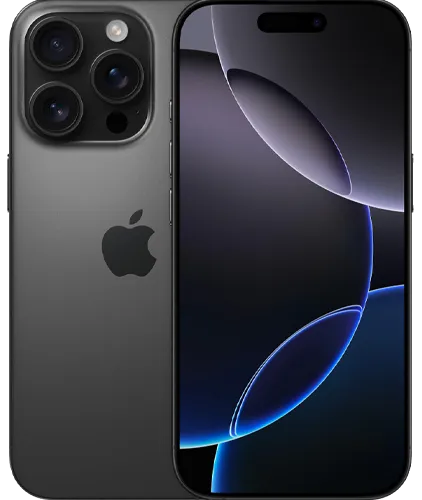
Apple spent years making its flagship phones thinner, smoother and more refined. With the iPhone 17 Pro Max, it took a different approach: make room for the things people actually use.
The result is a thicker, heavier flagship with an aluminum unibody, a larger battery, vapor-chamber cooling and a substantially redesigned telephoto camera. In the supplied review, Marques Brownlee argues that the arrival of the ultra-thin iPhone Air gave Apple room to make its Pro models more unapologetically capable.
It is a convincing thesis, but not an uncomplicated victory. The iPhone 17 Pro Max still has visible camera limitations, a finish that can show damage, and a size that will not suit everyone. Nor do all of its professional recording features matter to the typical buyer.
This is Belliste's editorial analysis of the linked hands-on review, not an independent Belliste device test. Observations and measured figures from the video are attributed to its reviewer.
The Pro Paradox: More Specialized, Yet More Appealing
Brownlee opens with a contradiction. The iPhone Air attracts attention for being thin, but the Pro Max remains the practical choice for people who want more battery life, better cameras and sustained performance.
He points to sales patterns from his channel sponsor's accessory business as an illustration of Pro Max demand. Those figures describe one accessory seller's customers, not Apple's audited worldwide sales, so they cannot establish the model's exact global market share.
Still, the appeal is understandable. A large display, reliable cameras and enough endurance to last through demanding days are not exclusively professional requirements. They are features ordinary users appreciate.
The trade-off is physical. Apple has stopped pretending that maximum capability and minimum thickness are the same goal. The iPhone 17 Pro Max is a phone for people willing to carry more hardware.
That makes the buying decision clearer: if thinness and lightness are your priorities, there are better options. If you want the most capable conventional iPhone of its generation, the added bulk has a purpose.
The Camera System Finally Feels More Balanced
The rear system uses three 48MP cameras: main, ultra-wide and telephoto. The most consequential change is the telephoto lens.
The previous Pro Max used a 12MP 5x optical telephoto. The iPhone 17 Pro Max moves to a 48MP 4x telephoto, with a roughly 100mm-equivalent field of view. The reviewer prefers the new focal length for portraits and everyday framing.
At first, reducing optical magnification from 5x to 4x might sound like a downgrade. But zoom quality depends on more than the number beside the lens. Sensor size, resolution, optics and processing affect detail and noise.
Brownlee reports that the new telephoto produces cleaner, more detailed shots than the previous implementation in many situations. That is a reviewer observation, not a guarantee that every 4x or longer-distance photo will be superior.
A 4x lens can be more flexible for people and moderately distant scenes. Photographers who regularly shoot wildlife or sports from far away may still prefer a longer native focal length.
The important improvement is consistency across the three cameras. Switching lenses feels less like stepping down to a weaker sensor, especially in the telephoto range.
Eight 'Lenses' Are Not Eight Physical Cameras
Apple's marketing highlights multiple focal-length options. Brownlee pushes back on the idea that this amounts to eight distinct lenses.
There are three physical rear cameras. Other advertised focal lengths are achieved through cropping and computational processing.
That distinction matters. A processed crop can look sharper than an unoptimized digital zoom, and the reviewer credits Apple for doing useful work at selected 2x steps. But a crop does not recreate the light-gathering or optical characteristics of a separate dedicated lens.
For buyers, the right question is not how many focal-length labels appear in the Camera app. It is whether the images at the distances you use actually hold up.
Apple's system provides useful framing choices. It should be described as a three-camera system with additional processed focal lengths, not a phone with eight independent lenses.
The Camera Still Has Weaknesses After Dark
The reviewer is pleased with the overall camera package but identifies a persistent flaw: bright point lights can create visible flares and reflections in dark scenes.
Streetlights, headlights and illuminated signs are exactly the kinds of subjects that reveal internal reflections. Sophisticated image processing cannot always eliminate optical artifacts.
Brownlee says this problem remains noticeable despite the new generation's improvements. That criticism is important because flagship camera comparisons often focus on daylight detail and overlook the awkward situations that frustrate owners.
There is also no 8K video recording in this generation. The reviewer finds that omission surprising given the availability of a high-capacity 2TB model.
Not everyone needs 8K. It creates very large files and brings demanding editing and storage requirements. But its absence shows that even Apple's most expensive conventional phone does not include every imaginable professional recording feature.
A great camera phone can still have clear limitations. A useful review names them rather than hiding them behind a long list of supported formats.
ProRes RAW and Genlock Are for Specific Workflows
For serious video creators, the iPhone 17 Pro Max offers capabilities that are much more significant than extra digital zoom presets.
The video discusses ProRes RAW, which allows greater flexibility in post-production workflows. Brownlee demonstrates why adjusting parameters such as white balance and ISO interpretation after capture can be valuable when editing.
He also highlights genlock, a synchronization feature used in multi-camera production. Its purpose is to keep recording devices aligned across coordinated shoots.
These tools can make the phone genuinely useful in professional production environments, particularly where the operator needs to combine multiple cameras or preserve editing latitude.
They also carry costs. ProRes RAW files are large, storage fills quickly, and the benefits depend on compatible editing software and an established workflow.
For someone who mostly records family clips, these features will be invisible. Their presence is not a reason to pay for a Pro Max unless they solve a problem you actually have.
That distinction runs throughout this phone: Apple's most specialized hardware can be impressive without being necessary for most owners.
The Aluminum Unibody Changes the Feel of the Phone
Brownlee's favorite change is the design.
The iPhone 17 Pro Max uses an aluminum unibody rather than the familiar metal frame and broad glass back. Glass sections remain where wireless charging and antenna operation require them.
The redesigned rear camera plateau spans the upper back. The reviewer likes it both visually and ergonomically, saying it creates a natural place for his finger to rest.
More importantly, the internal redesign makes room for the battery and thermal system. This is not simply a cosmetic makeover.
Aluminum brings its own trade-offs. It can be shaped into an integrated structure and helps distribute heat, but its surface finish is vulnerable to cosmetic damage in ways that differ from glass or titanium.
The phone is also thicker and heavier than its predecessor. That is a sensible exchange for some buyers and an immediate deal-breaker for others.
A case can reduce exposure to dents and scuffs, but it adds yet more bulk. People who prefer using a phone without a case should pay particular attention to the finish.
Scratchgate: Cosmetic Damage Is Not Structural Failure
One of the video's most nuanced sections concerns reports that the colored anodized finish can chip or scratch, exposing brighter raw aluminum beneath it.
Brownlee says he has not experienced the problem on his own caseless unit. He also references durability testing that found vulnerable areas around the sharp edges of the camera plateau.
Both observations matter. A single clean personal device does not prove that reports are false. A deliberately harsh scratch test does not establish how often ordinary owners will see the same damage.
The issue is primarily about the visible surface finish. Scratching through anodization is not the same as cracking the chassis or damaging the display.
Buyers should distinguish cosmetic durability from structural integrity and functional reliability. The former matters, especially on an expensive phone, but it is not evidence that the entire device is poorly built.
The video includes a sponsored case segment at the end. Belliste does not treat that advertising as independent proof that a particular accessory is necessary or superior.
The practical advice is simple: inspect the finish carefully, consider your tolerance for wear, and do not assume a premium material is immune to visible marks.
A19 Pro: Faster, but Cooling Is the Bigger Story
The iPhone 17 Pro Max runs Apple's A19 Pro chip. Brownlee cites performance around 20% ahead of the prior generation in benchmark comparisons, alongside 12GB of RAM.
Those figures describe a powerful device, but speed alone is no longer a compelling annual upgrade. Recent flagship processors already handle most everyday tasks without obvious delay.
The more interesting addition is a vapor chamber, introduced to improve heat transfer during sustained workloads.
In the reviewer's use, the phone rarely becomes more than slightly warm. He also notes that the improved thermal system helps maintain gaming frame rates and display brightness during extended video recording.
Those are practical benefits. A device that stays responsive and avoids dimming its screen during a long shoot is easier to work with than one that posts a higher short benchmark score but quickly throttles.
However, these are the reviewer's observations. Belliste has not measured surface temperatures, internal chip temperatures or long-duration performance curves.
Cooling is not a guarantee that the phone will remain cold under every load. Ambient temperature, cases, charging and app behavior all influence heat.
The new thermal design matters because it helps the phone sustain its capabilities, not merely advertise them.
Battery Life Benefits From the Extra Thickness
The Pro Max's larger chassis allows Apple to push battery capacity beyond 5,000mAh, according to the video.
Brownlee also discusses a roughly 20% battery-capacity increase for the smaller iPhone 17 Pro. That percentage must not be automatically applied to the Pro Max; the two devices have different batteries.
He reports more than five hours of daily screen-on time while ending the day with over 30% charge remaining, but explicitly says this observation comes from a phone that is not the larger Pro Max.
That makes it a useful anecdote about the smaller Pro, not a direct Pro Max endurance measurement.
For the Pro Max, the stronger case rests on its larger battery and Apple's emphasis on extended playback time. Real-world battery performance will depend on brightness, cellular coverage, camera use, navigation and other workloads.
The larger battery also brings a simple advantage that benchmark charts sometimes miss: less anxiety when plans change and charging is inconvenient.
Owners of older iPhones with degraded batteries may see a substantial improvement. Those coming from the previous Pro Max should compare real usage before assuming the new model will transform their routine.
Charging Is Better, Though Not Class-Leading
The reviewer describes support for faster wired charging, with a 50% charge in around 20 minutes under Apple's stated conditions.
That is welcome progress for iPhone owners. A short charging stop is more useful when it restores enough power for the rest of an afternoon.
But the video also acknowledges that some Android competitors offer substantially higher charging wattages and larger nominal battery capacities.
Wattage is not the entire story. A phone's charge curve, thermal limits and battery size affect how long it takes to fill. The advertised peak is not necessarily sustained throughout a charging session.
Apple's improvement should be judged on the time it saves owners, not only against the largest number printed on a rival's charger.
A compatible adapter may be required to achieve the fastest supported rate. Buyers should check the charger specification rather than assume any USB-C power brick delivers the same result.
The iPhone 17 Pro Max is meaningfully more convenient to recharge than older generations, even if it is not the fastest-charging flagship on the market.
Display Refinements Are Small but Useful
The Pro Max display remains a major reason to choose the larger phone. Its spacious OLED panel suits video editing, reading, navigation and watching films.
Brownlee notes a brighter display, citing up to 3,000 nits peak under Apple's stated conditions, and a modest improvement in anti-reflective treatment.
Peak brightness is not the same as sustained full-screen brightness. Actual visibility outdoors depends on lighting, reflections, content and thermal conditions.
He also highlights an accessibility setting related to PWM dimming, which some users may appreciate if they are sensitive to certain display-flicker behavior.
These are refinements rather than dramatic changes. They matter most to people who regularly use their phones outdoors, spend long periods looking at the screen or have particular display-comfort preferences.
The larger screen remains a trade-off. It improves workspace but makes the phone less manageable in one hand and more cumbersome to carry.
For many buyers, the best display is not automatically the biggest one. It is the one they are comfortable using throughout the day.
Satellite Features Add a Layer of Reassurance
The video also mentions expanded satellite-based capabilities, including messaging and location sharing.
These functions can be valuable when conventional cellular service is unavailable, especially for people who travel or spend time outdoors.
Availability, supported countries, service terms and compatible software vary. Satellite communication should not be described as a universal replacement for mobile coverage or a guaranteed emergency connection in every location.
The feature is most useful as a fallback. It may rarely be needed, but the potential value is substantial when circumstances are difficult.
For buyers comparing premium phones, connectivity features deserve attention alongside cameras and battery life. Their relevance depends heavily on where and how the phone will be used.
iPhone 17 Pro Max vs 16 Pro Max: Should You Upgrade?
The iPhone 17 Pro Max brings a redesigned body, a new telephoto sensor, vapor-chamber cooling, improved charging and a larger battery.
Those are meaningful changes, but their value depends on your current phone.
If you own an iPhone 16 Pro Max and already get reliable battery life, comfortable thermals and strong camera results, the upgrade is harder to justify. The new 4x telephoto may be appealing for portraits, but owners who prefer the older 5x framing may not see it as an unqualified improvement.
For an iPhone 13 Pro or 14 Pro owner, several generations of camera, performance and display improvements have accumulated. The move to the 17 Pro Max is more likely to feel substantial.
There is also the price. A high-end Pro Max costs enough that replacing a battery or waiting another year may be the smarter decision if your current phone meets your needs.
Consider the storage you genuinely require. A 2TB option is useful for heavy professional recording, but it is unnecessary for many people who mainly take photos and stream media.
A sensible upgrade decision starts with the limitations of your existing device, not with the launch presentation.
The 2026 Buying Question
By October 2026, the iPhone 17 Pro Max is no longer Apple's newest Pro Max generation. That changes its position in the market.
Its camera system, cooling and display remain capable, but shoppers should compare current pricing and availability against the newer iPhone 18 Pro Max rather than judge the 17 Pro Max solely by its original launch claims.
A meaningful discount could make the older model attractive. A small price difference would strengthen the case for the newer phone, particularly for buyers prioritizing battery endurance and charging improvements.
Do not assume the 17 Pro Max is a bargain simply because it is older. Prices vary by retailer, storage tier, condition and region.
The review's central lesson still holds: the best flagship is not necessarily the newest or thinnest. It is the one whose trade-offs fit the way you use it.
Verdict: More Phone, for Better and Worse
The iPhone 17 Pro Max is a deliberate rejection of the idea that every new flagship should be thinner.
Its larger chassis creates space for a bigger battery and vapor-chamber cooling. The 48MP telephoto makes the camera system more consistent, while ProRes RAW and genlock extend its usefulness for professional video work.
The compromises are equally real. The phone is bulky. The aluminum finish can show cosmetic wear. Nighttime point-light flares remain an issue, and the absence of 8K video will disappoint some demanding creators.
For most owners, the battery, display and reliable everyday camera experience will matter more than the specialized recording features.
Consider the iPhone 17 Pro Max if you value a large display, endurance, stable performance and versatile cameras—especially at a meaningful discount.
Keep your iPhone 16 Pro Max if it already meets your needs and the upgrade price is high.
Compare the newer iPhone 18 Pro Max if the price difference is small or you want the latest battery and charging improvements.
Apple's decision to make the Pro Max bigger was not elegant in the traditional sense. It was practical. And for many people, practical is precisely what makes a flagship feel premium.
Sources and methodology: Hands-on observations and quoted testing claims come from the [supplied Marques Brownlee iPhone 17 Pro review](https://www.youtube.com/watch?v=q0aFOxT6TNw). Belliste has not performed independent device testing. The review's Dbrand sponsorship is not treated as independent product evidence.