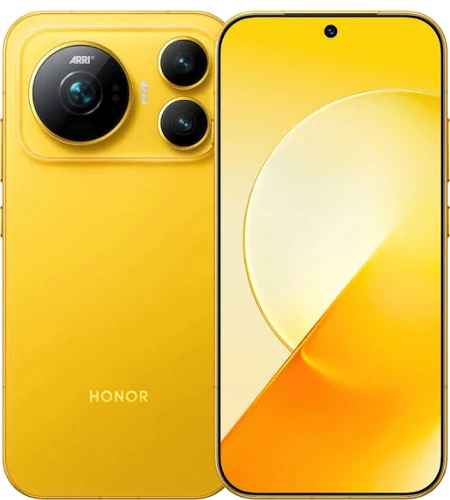
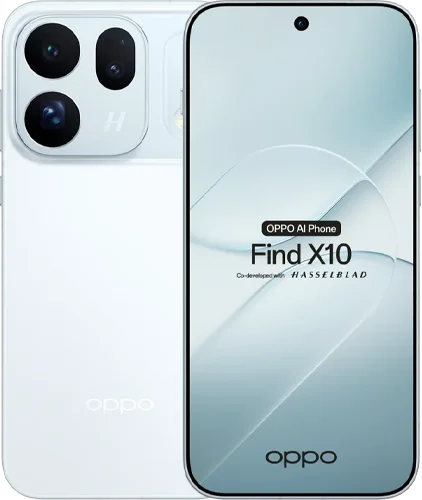
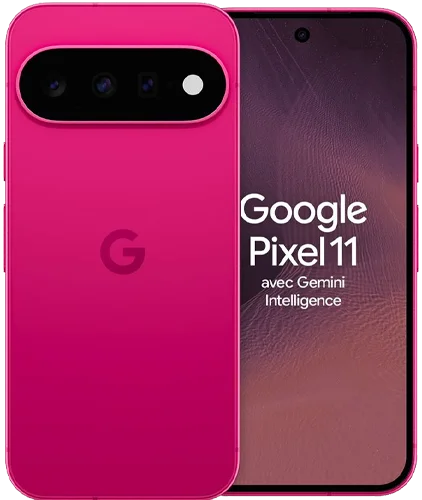
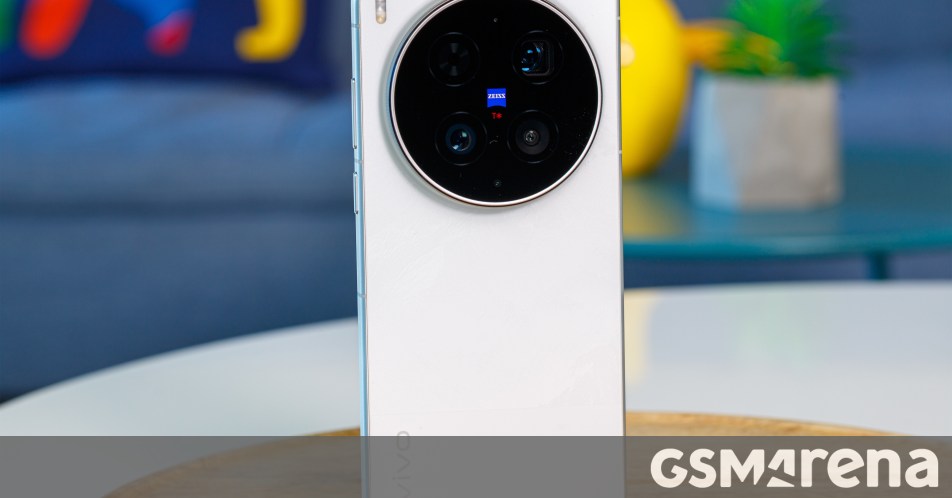
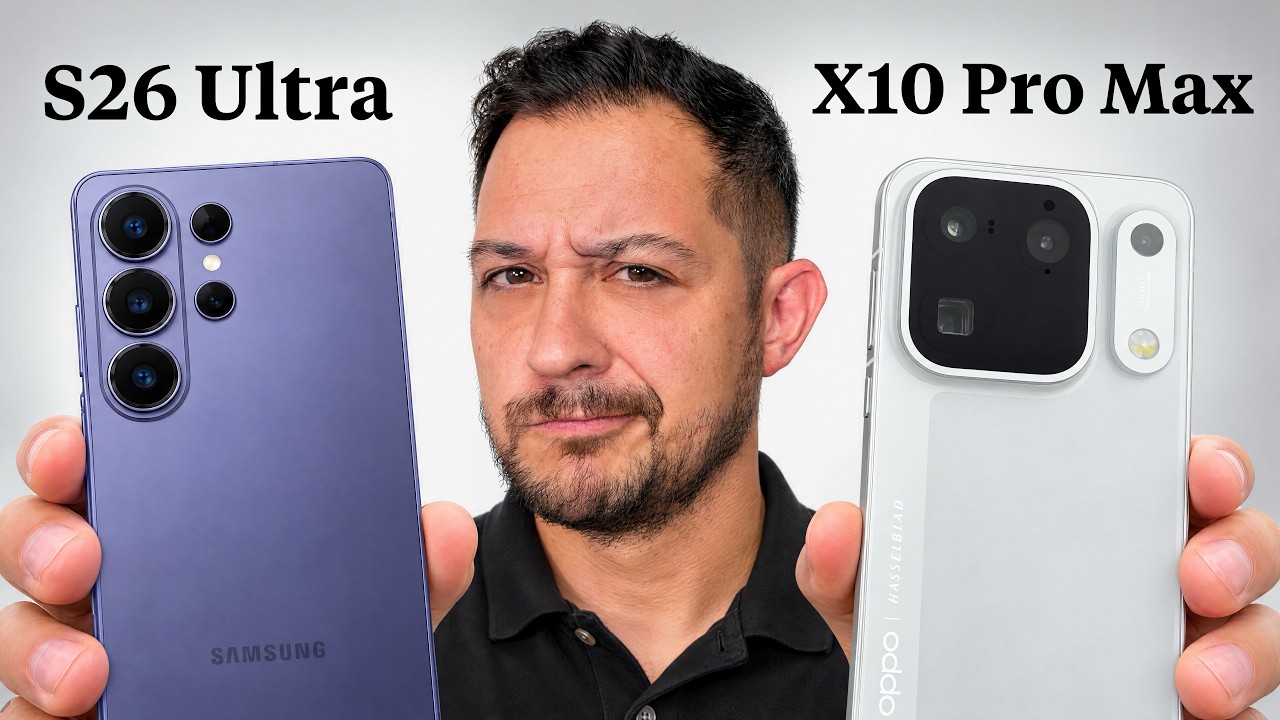
Compare Find X10 Pro Max and Pixel 11 Pro cameras, software and daily use, including native zoom differences, size, charging and update support.
A camera comparison can help you choose a photograph. It cannot, on its own, tell you which phone you will prefer carrying, charging and using every morning.
The supplied video places the OPPO Find X10 Pro Max beside the Pixel 11 Pro in daylight and after dark. It moves between front, ultrawide, main and telephoto cameras, then leaves much of the judgment to the viewer.
That is an important boundary. Large sections of the supplied transcript contain music rather than analysis of the images. Belliste has not inspected the original files or performed its own test, so this article does not invent winners for those sections. Instead, it explains the demonstrated camera choices and adds independently researched software and everyday buying context.
The reviewer begins one sequence at 10x, explicitly calling it a digital crop on the telephoto cameras. He then moves to 6x on OPPO and 5x on Pixel.
Those are not equivalent optical starting points. OPPO’s telephoto has a native 3x view; Google lists a dedicated 5x telephoto for Pixel 11 Pro. OPPO’s demonstrated 6x setting therefore extends beyond its native lens, while Pixel’s 5x corresponds to its optical view.
This does not settle quality. Sensor detail, light and processing can allow a crop to compete well with another lens. It does mean that “both have telephoto” hides a useful difference.
For portraits and subjects at moderate distances, the shorter native view can be convenient. For a more distant detail, a longer native view may be attractive. Compare matching framing rather than assuming the higher zoom label wins.
At 10x, both examples involve additional processing. Sharp-looking edges do not establish faithful capture of every texture, particularly in dim light.
The presenter says OPPO does a good job with selfie video while describing Pixel as one of his favourite Android options for that task.
That is not a conclusive ranking. It is a positive account of both experiences and an invitation to assess the footage.
For someone who records a face frequently, check exposure as the background changes, focus at your usual distance and whether stabilisation makes the framing too tight. Listen for speech clarity and wind as well.
A front camera also saves effort: you can monitor framing without turning the phone around. Rear-camera hardware can be more ambitious, but convenience matters when you are trying to record something quickly.
Do not buy solely because one clip looks sharper after online compression. Check the complete workflow, including how the file behaves in the app where you normally share it.
After sunset, the reviewer switches from the front camera through the rear views. He expects the main camera to give the strongest low-light result.
That is a reasonable starting strategy, not an absolute law. Aperture, sensor characteristics, processing and the particular recording mode all affect the outcome.
His claim that the selfie sensor is always the smallest camera sensor on a smartphone is too broad. Camera arrangements differ between devices. The article therefore does not use that generalisation to rank the phones.
Likewise, background blur does not depend on sensor size alone. Aperture, focal length, subject distance and framing contribute.
If you want to film yourself at night, compare the front and rear main cameras under your actual lighting. The improvement in output must be weighed against the difficulty of keeping yourself framed without a live front-screen view.
Google lists the Pixel 11 Pro with a 6.3-inch screen. OPPO’s Pro Max has a 6.78-inch panel. This comparison is with the smaller Pixel Pro, not the Pro XL.
That difference is likely to be more persistent in daily use than a small variation between two daylight photographs. A larger screen can make editing, reading and side-by-side work more comfortable. The smaller handset may be easier to carry and use one-handed.
Try the camera grip as well as ordinary typing. A phone that feels good in the palm can still become awkward when you reach for the shutter or change lenses.
For editing, check whether you can make precise selections and review focus comfortably. For travel, consider pocket fit, the case and the way you hold the phone while navigating.
Neither preference follows automatically from the diagonal. Your hands and habits decide whether the extra screen earns its space.
OPPO’s ColorOS offers its own interface and workflow, while Pixel integrates Google’s software approach. Both can run familiar Android applications, but their controls and bundled features are not interchangeable.
Instead of treating one as universally cleaner, perform the same routine on each: adjust notifications, copy information between apps, manage a downloaded file and return to something left in the background.
Check what happens when the phone is locked as well. Reliable notifications from a work or messaging app can matter more than a striking animation.
Google advertises seven years of OS, security and Pixel Drop updates. That is a concrete commitment to include in a long-term comparison. It does not guarantee every update arrives without bugs or that every feature appears in every language.
Verify OPPO’s applicable regional update policy separately. A claim about years of retained fluency is not equivalent to a promise of that many major OS upgrades.
AI deserves a task-based check too. Confirm language support, accounts, connectivity and any subscription or quota. A tool that works in a launch demonstration may have conditions that affect whether it saves you time.
OPPO lists substantially larger battery configurations, with regional differences, and up to 80W wired charging. Google specifies a 4,850mAh typical battery for the smaller Pixel 11 Pro and conditional fast charging with compatible PPS equipment.
Those specifications do not establish a runtime winner in this article. The video is a camera comparison and supplies no matched battery test.
Someone using the camera extensively while travelling should seek a mixed workload test rather than infer endurance from capacity. Display use, signal and video recording can change the result.
For charging, inspect your existing adapter’s capabilities and the charger requirements of the local model. Maximum wattage is not maintained through an entire charge.
A brief top-up before leaving and a full overnight charge solve different needs. Decide which matters to you before attaching value to a faster headline figure.
During daylight recording, the presenter says he thinks OPPO will do better. At the end, he asks viewers which device performed better.
Those statements should not be converted into a measured win across the photographs that appear between them. The transcript alone cannot establish which phone handles every face, highlight or moving subject more reliably.
For a personal comparison, view matching samples without labels first. Note what you prefer, then check whether that preference repeats across scenes rather than depending on one attractive image.
The strongest purchase case for OPPO is a preference for its camera output and controls combined with a desire for the larger handset and its charging setup. The strongest Pixel case is a preference for its own results, a smaller form factor and Google’s documented support horizon.
Compare current local prices and warranty coverage before deciding. The right choice needs to work both while you are taking a photograph and during the many hours when you are not.
Source camera comparison and supplied transcript · OPPO official specifications · OPPO UK regional specifications · Google Pixel 11 Pro specifications
No. Many sample sections have no spoken analysis, and the presenter invites viewers to decide. Belliste does not invent image-quality results from those sections.
No. The reviewer explicitly describes 6x as a crop from OPPO’s 3x telephoto. Pixel 11 Pro has a native 5x telephoto.
No. The supplied video identifies the Pixel 11 Pro, the smaller Pro model. Its size and battery should not be replaced with Pro XL specifications.
Google advertises seven years of OS, security and Pixel Drop updates for Pixel 11 Pro. Feature availability and rollout timing can vary.
No. It supplies no matched endurance test. Capacity and charging specifications are independent buying context rather than results from the video.
Test your recurring tasks on both interfaces, including notifications, files and app switching. Verify regional AI availability and support policies rather than relying on general brand preferences.

A camera comparison focused on facial texture, ultrawide detail and night exposure, including where the reviewer’s OPPO preference needs qualification.
Read article →
OPPO’s camera ambitions and battery meet Samsung’s S Pen, Privacy Display and potential discounts. A buying comparison that separates impressions from verified facts.
Read article →
A practical upgrade guide drawn from one owner’s experience, with a closer look at camera claims, battery expectations and the accessories that shape daily use.