OPPO Find X10 Pro Max vs Galaxy S26 Ultra: Buying Guide
BELLISTE GUIDE
OPPO Find X10 Pro Max vs Galaxy S26 Ultra: What Is the Premium Worth?
Published:
OPPO’s camera ambitions and battery meet Samsung’s S Pen, Privacy Display and potential discounts. A buying comparison that separates impressions from verified facts.
An older flagship becomes interesting again when its replacement costs more than the improvements are worth to you. That is the real contest between the Galaxy S26 Ultra and OPPO Find X10 Pro Max in Jorge’s comparison.
The OPPO gives him reasons to want the newer phone: a more ambitious camera arrangement, substantial battery capacity and software he finds unusually fluid. Samsung answers with a lighter body, the integrated S Pen, a privacy-focused display feature and the possibility of a more attractive retail offer.
The video does not settle this with a definitive camera score or a controlled endurance test. Instead, it presents two different interpretations of a premium Android phone. This English-language article draws on the supplied Spanish transcript and manufacturer specifications. Belliste has not independently tested the devices or examined the original image files.
What would make you pay more?
Start with the actual offers available to you. Jorge describes OPPO as the more expensive purchase at the time of recording, while the Samsung has had months to move away from its launch price. He does not provide a stable, directly comparable retail quote for both.
That makes the price argument conditional. Compare the same storage tier, warranty coverage and required charging accessories. A discounted Samsung and an OPPO bundle containing a teleconverter are different propositions from the two phones bought on their own.
Assign a bundle accessory a value only if you intend to use it. A lens attachment left at home does not compensate for a higher price, however impressive its advertised retail value.
This is also why the age of the Galaxy should not decide the comparison by itself. A phone does not become a poor purchase when a newer competitor appears. It becomes less attractive when its limitations matter more than the money you save.
The camera decision is more complicated than three matching numbers
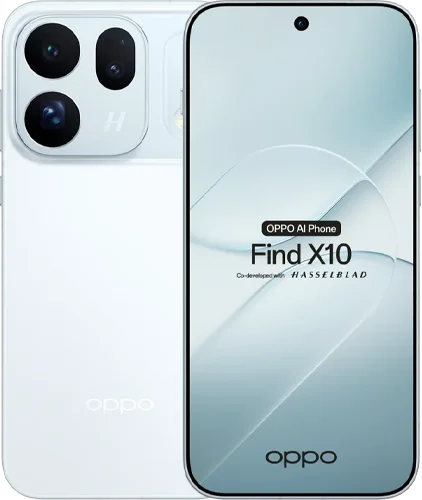
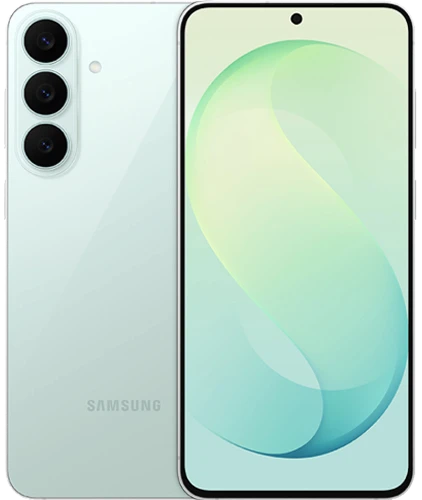
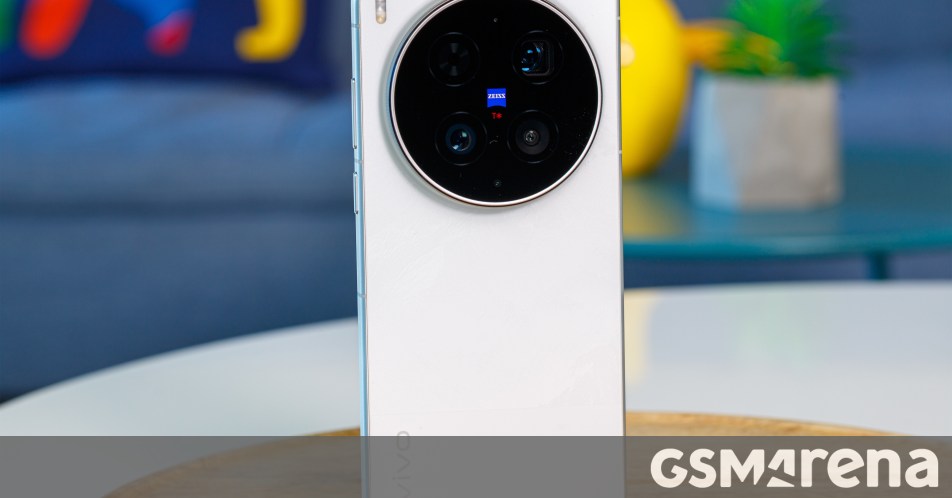
OPPO equips the Pro Max with 200MP main, ultrawide and telephoto cameras. Samsung uses a 200MP main camera, 50MP ultrawide, 10MP 3x telephoto and 50MP 5x telephoto.
That corrects the transcript’s suggestion that all the Galaxy’s secondary cameras are 50MP. It also changes how the systems should be understood: OPPO concentrates on three high-resolution rear views, while Samsung provides two native telephoto options.
Neither arrangement proves superior output in every situation. Resolution does not measure autofocus reliability, moving-subject performance or the processing applied to a face. The transcript’s opening claim about more advanced camera hardware is an argument to investigate, rather than an automatic verdict.
Jorge prefers OPPO’s photographic zoom in his examples, but favours the Galaxy for video. That split is more useful than declaring one complete camera system the winner.
Someone photographing travel details or distant static subjects may value OPPO’s approach. Someone recording frequently should look closely at exposure transitions, stabilisation, sound and autofocus on both phones. A preferred still photograph does not establish a video advantage.
A zoom example is evidence about that example
The presenter recalls photographing a pigeon at a distance in Madrid and finding OPPO’s processed result better. However, the transcript describes different zoom settings and does not establish matched framing or capture conditions.
That is insufficient to turn his preference into an objective ranking of every zoom distance. Processing may produce a more convincing picture without preserving every fine texture faithfully.
For a fair buying comparison, inspect the same subject at equivalent framing, then check both the full image and a sensible crop. Repeat in lower light. A distant bird, a person indoors and a building in daylight pose different demands.
Samsung’s separate telephoto lenses also deserve evaluation at their native views, rather than being represented only by an extreme digital crop. Likewise, OPPO should be judged at the distances you actually use, not simply its largest selectable zoom number.
The useful question is whether one phone makes your usual photograph easier to capture reliably.
The Hasselblad attachment creates a different routine
The optional teleconverter is one of OPPO’s clearest points of distinction in the review. It offers a physical route to greater reach, but introduces additional equipment and setup.
Think of it as a small camera kit. You need to carry the attachment, fit it securely and use the supported camera mode. Check exactly which case, adapter and recording functions are compatible with the version you buy.
For a planned outing, that preparation can be reasonable. For a subject that appears briefly while you are walking, the built-in camera arrangement may matter more than what an accessory can achieve once mounted.
The transcript mentions launch offers that include the attachment. Those should be verified at purchase, including the precise accessory and eligibility conditions. A promotion described in a review is not a permanent inclusion.
Natural-looking colour is a goal, not the absence of processing
Jorge welcomes OPPO’s emphasis on more realistic light and skin tones. He wants photographs that remain anchored to what he saw, rather than an aggressively polished interpretation.
That is a useful editorial preference, but natural appearance remains something to judge in the finished image. Tone mapping, noise reduction and computational reconstruction still influence the result.
There is also no single rendering that everyone will prefer. A restrained photograph may need editing before someone finds it appealing; a more vivid one may suit a quick social post. Compare familiar skin tones and difficult colours rather than relying entirely on landscapes that look attractive on either screen.
If you already edit your photographs, investigate the files and modes that fit that workflow. If you rarely edit, the automatic output deserves more weight than an advanced option you will not use.
A larger battery earns attention, not a proportional runtime claim
The UK Find X10 Pro Max specification lists a 7,150mAh battery, compared with Samsung’s stated 5,000mAh. OPPO also sells an 8,000mAh configuration in other markets, so buyers should identify the regional version before comparing reviews.
The difference is substantial on paper. It does not imply a matching percentage increase in usable hours. Display behaviour, signal strength, processor load and software can all change consumption.
Jorge considers battery capacity a major reason to favour OPPO, but the supplied transcript gives no matched discharge test. His recommendation should therefore remain distinct from a measured endurance ranking.
Consider the day that currently causes trouble: navigation and photography while travelling, long video calls, or gaming away from a charger. Seek results for that workload and the exact regional model.
Charging needs a correction too. OPPO lists support for 55W PPS, which is not the same as promising 55W from any USB Power Delivery adapter. Check the supported profiles of the charger and use an appropriate cable.
Maximum charging power is only one part of the experience. Charge gained during a short stop, heat and the time needed for a full charge can matter differently depending on your routine.
Samsung spends some of its physical space differently
Samsung’s official dimensions confirm a 214g body at 7.9mm thick. The reviewer appreciates how much hardware fits into it, particularly the S Pen.
The stylus is not a substitute for battery capacity. It serves a different need: handwriting, precise selection and annotation may matter repeatedly to one buyer and scarcely at all to another.
OPPO’s customisable Snap Key follows a different productivity idea. Jorge likes having a quick way to capture a thought or save information. Its value depends on whether you make that shortcut part of your routine.
Before awarding either phone a productivity advantage, try the task you actually perform. Annotate a document on the Galaxy; capture and retrieve a note on OPPO. Judge the whole interaction, including how easy the information is to find afterwards.
Display features solve different problems
The video calls both screens Quad HD+, but OPPO lists 2772×1272 pixels for its 6.78-inch panel. Samsung identifies its 6.9-inch display as QHD+. Using the actual resolution avoids treating those labels as equivalent.
Jorge likes OPPO’s colour presentation and outdoor appearance. Those are preferences from his use, not a matched brightness or colour-accuracy measurement. A wide advertised colour gamut alone does not establish more faithful rendering.
Samsung’s Privacy Display serves another purpose. It restricts side-angle visibility and can activate for selected situations, including sensitive applications or password entry. That may be useful on public transport or in shared spaces.
It does not protect against every way information can be exposed, and it should not be confused with stronger account security. Its practical value is reducing casual viewing from beside you.
OPPO’s advertised 144Hz maximum is also conditional on supported gaming scenarios. Do not assume every game named in the transcript runs at that rate, or that ordinary system use exceeds 120Hz.
Treat software promises as separate claims
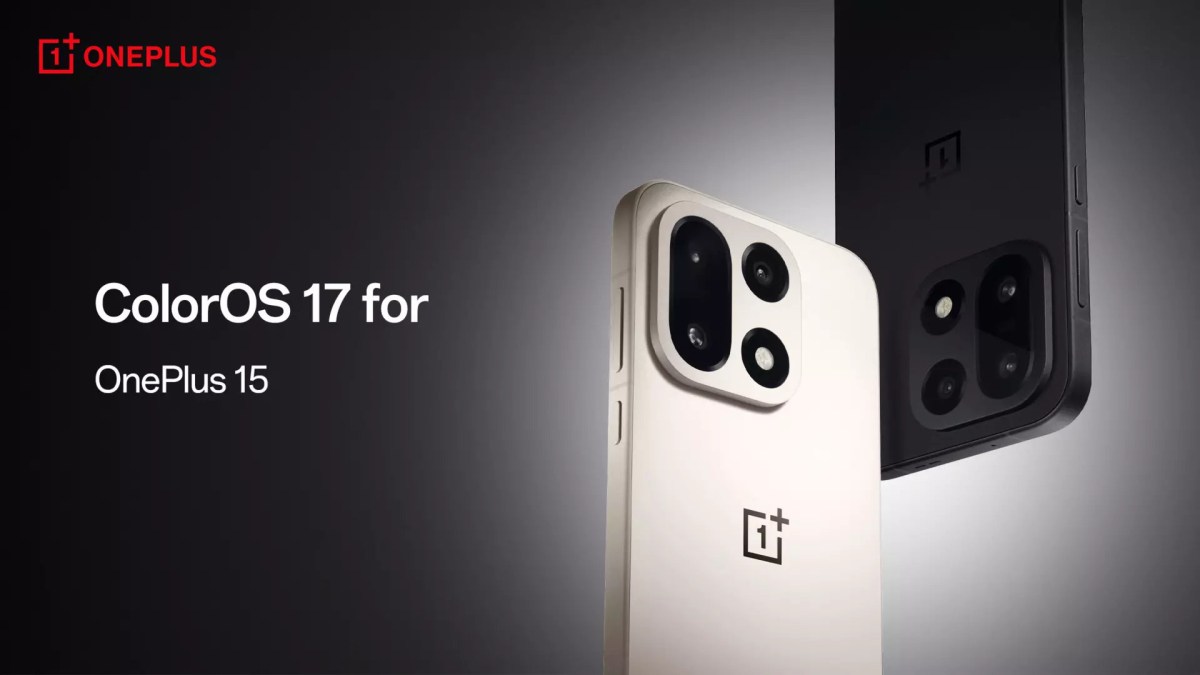
Jorge enjoys ColorOS 17’s animation and responsiveness and reports using One UI 9 on his updated Galaxy. That describes his devices; update availability can differ by region and carrier.
His comments about future battery health and retained fluency are less precise. He explicitly struggles to recall the figures. They should not become a contractual promise that a buyer will retain a particular battery percentage or performance score after years of use.
A longevity certification, an operating-system update policy and a battery warranty answer different questions. Confirm each separately in your market.
The AI discussion has similar limits. The transcript describes a service combining several providers and broad cross-platform sharing capabilities. Without confirming the exact service, app requirements and regional availability, those statements should not become universal compatibility claims.
Before buying for an AI feature, test a real task in your language and check limits or subscription requirements. Before relying on iPhone file transfers, establish what the recipient must install and which devices and software versions are supported.
Two credible purchases, with different conditions
The Find X10 Pro Max makes its strongest case when you prefer its photographs, value the battery configuration available locally and genuinely want the optional teleconverter workflow. Those are concrete reasons to accept a premium.
The Galaxy S26 Ultra becomes especially persuasive when a comparable offer is materially cheaper and you will use the S Pen or Privacy Display. Its earlier release does not erase those features, and this video does not show that its performance has become inadequate.
We would decide with the current offers beside a short list of recurring needs. Choose the improvement you will use every week, then check that it survives the price difference, regional specifications and accessory requirements.
Jorge’s comparison is positive about both phones. The most useful conclusion is that OPPO needs to justify the extra money through your photography and daily use, while Samsung needs to offer enough of a saving—or a sufficiently valuable feature—to make the older release the better purchase.
Jorge favours OPPO’s photographic zoom in his examples and Samsung’s video. The transcript does not establish a controlled overall camera winner.
Are all Galaxy S26 Ultra secondary cameras 50MP?
No. Samsung lists a 50MP ultrawide, a 10MP 3x telephoto and a 50MP 5x telephoto alongside the 200MP main camera.
Does every Find X10 Pro Max have the same battery?
No. The UK specification lists 7,150mAh, while OPPO lists 8,000mAh in other markets. Verify the regional version before applying review results.
Will any USB PD charger deliver 55W to OPPO?
No. OPPO’s 55W support is specified for PPS. The adapter must provide compatible profiles, and actual charging power varies with conditions.
What does Samsung’s Privacy Display do?
It limits side-angle visibility and can activate in selected situations. It reduces casual viewing from nearby people rather than replacing account or device security.
Is the OPPO teleconverter included with the phone?
Do not assume so. The reviewer mentions a launch promotion, but the attachment is an optional accessory and offers can change. Confirm the exact bundle and required adapter or case.