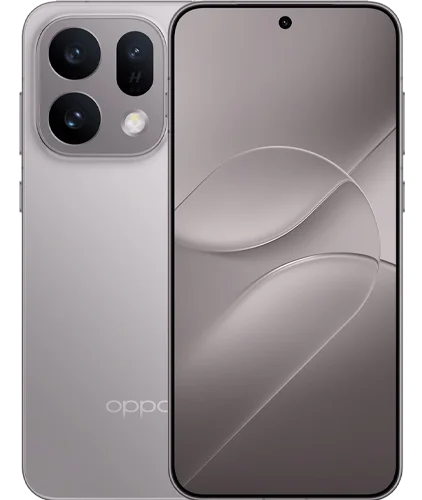
The biggest camera upgrade appears after dark on the ultrawide. A closer look at where OPPO’s newer phones improve—and where the X9 Pro still holds up.
A night-time photograph taken with the ultrawide camera tells you more about this OPPO comparison than another daylight shot from the main lens. In the supplied side-by-side test, the Find X10 Pro Max pulls ahead when the reviewer examines signs and detail near the edges of a wide scene. Switch back to the main cameras, and the decision becomes considerably less obvious.
That is the useful distinction between the Find X10, Find X10 Pro Max and Find X9 Pro. The newest and most expensive phone does not transform every photograph. Its case becomes stronger when you regularly use the lenses and recording modes that receive the largest upgrades.
This article analyses the supplied comparison transcript alongside OPPO’s published product information. Belliste has not independently tested the phones or inspected the original full-resolution files. Image-quality judgments below are attributed to the video’s reviewer.
At around 21 minutes into the comparison, the reviewer describes a clear advantage for the Find X10 Pro Max’s ultrawide: more detail in a night scene, including signage towards the edge of the frame, despite its wider coverage.
That is a more useful observation than simply counting megapixels. An ultrawide that remains usable after dark gives you a framing option you might otherwise avoid. It matters for evening city walks, interiors and travel photographs where stepping backwards is impossible.
The reviewer finds a smaller gap in daylight. All three ultrawides produce usable photographs, although he prefers the newer phones’ more restrained processing. The Pro Max still offers a wider view, but the older phone is not rendered obsolete by good light.
OPPO advertises three 200MP rear cameras on the Pro Max, while the regular Find X10 has a dual-200MP arrangement. Those specifications help explain why the ultrawide deserves separate attention. They do not establish that every 200MP output will contain more useful information than every lower-resolution image.
For a buyer who almost always stays on the main camera, this upgrade may have limited practical value. For someone who frequently switches to the ultrawide indoors or at night, it could be the reason to choose the Pro Max.
The daylight portraits in the review resist a simple ranking. The reviewer sees less aggressive processing on the newer phones, yet sometimes prefers the Find X9 Pro’s skin tones. He finds the regular X10’s colour slightly less convincing in one scene, while acknowledging that all three deliver strong detail.
That distinction matters. A photograph can look sharper because edge contrast has been increased, rather than because more genuine detail was captured. Equally, a softer rendering can look more natural without being a universal improvement.
At night, the reviewer initially describes the main-camera photographs as close. Examining illuminated signs reveals a cleaner result from the Pro Max in one example, but the difference is more specific than a dramatic leap across the entire scene.
The sensible conclusion is conditional: the Pro Max may preserve certain difficult details better, while a Find X9 Pro owner could still be satisfied with the photographs they already get. A single preferred skin tone or sign crop should not become a verdict on every portrait and night scene.
Before upgrading, compare photographs at the size you normally view them. If an advantage only appears after substantial enlargement, decide whether that enlargement represents your actual use.
The reviewer reports that the newer phones are easier to aim at a distant church. He needs several attempts to frame it with the X9 Pro, while the X10 models are steadier to compose with at long zoom.
That is a meaningful usability gain. A theoretically detailed camera is less helpful if you repeatedly miss the subject.
The extreme-zoom photographs need a different interpretation. At 30x and especially 120x, the reviewer points out artificial-looking textures and reconstructed detail on all three phones. He prefers some of the newer processing, but does not describe those maximum-zoom images as faithful, high-quality records.
Better-looking reconstruction is not evidence that every texture in the scene was resolved. Treat extreme zoom as a way to explore a distant subject, not as a substitute for a longer optical lens when accuracy matters.
At more moderate zoom, the older Pro remains competitive. In the squirrel photographs, taken through a window at roughly 6x, the reviewer favours the Pro Max overall but also praises the X9 Pro’s detail. At 10x at night, he finds the two Pro models closer to each other than either is to the standard X10.
These are individual scenes with their own complications, including reflections and difficult light. Even so, they undermine the assumption that the newer standard model must beat the older Pro in every camera task.
The reviewer’s minimum-focus demonstrations reveal an important trade-off. The regular X10’s main camera gets closer than the other main cameras in his test, but its telephoto needs considerably more distance from the subject. The X9 Pro and X10 Pro Max work better for the telephoto close-ups shown.
His distances are informal estimates, not laboratory minimum-focus measurements. They should not be copied into a specification table as guaranteed limits.
The practical lesson is still valuable. Close-up ability depends on the particular lens, not the model’s position in the range. A phone may be excellent for a wide close-up and less useful for isolating a small subject with the telephoto.
The reviewer also comments on different background rendering in the squirrel examples. That cannot be explained by a small focal-length difference alone. Shooting distance, framing, aperture, sensor characteristics and processing can all affect the appearance of the background.
If you photograph jewellery, flowers, food details or small products, inspect the telephoto close-up examples before replacing an X9 Pro with a standard X10. Being able to focus closer may matter more than a newer processing style.
OPPO’s product pages confirm Open Gate recording and 8K 30fps 10-bit Log features for the X10 models. The supplied review adds a more detailed account of which lenses support particular recording modes on its test units.
According to that account, the Pro Max extends 8K30 and 4K120 coverage to the ultrawide, while the standard X10 is more restricted at those settings. The reviewer also demonstrates Open Gate options on the newer models. Check the exact camera, resolution, frame rate and colour-mode combination on the version you intend to buy; support for individual features does not guarantee every combination.
Open Gate is useful when one recording needs to become both a horizontal video and a vertical edit. Keeping more of the sensor’s image area can give you room to reframe afterwards. It does not remove the need to leave space around a moving subject while filming.
Log recording has a different purpose: retaining material for a controlled colour-grading workflow. It can add work rather than save it if you simply want a clip ready to share.
The X9 Pro is still capable of demanding recording. OPPO lists rear 4K120 and front 4K60 support, alongside Pro video and HDR features. Choosing a newer model should therefore follow a specific missing capability, rather than the belief that last year’s phone cannot produce serious video.
The reviewer reports that the Find X10 recorded his night clips at 24fps despite his attempt to disable adaptive frame rate. The X9 Pro and Pro Max remained at 30fps. He says the test was filmed before launch and that he attempted to correct the mismatch in editing.
That limits what can be concluded about the night-video comparison. Different capture rates can change motion rendering and the exposure time available per frame. Editing the clips onto a common timeline cannot recreate identical capture conditions.
This is an observation about his early test unit. It does not prove that every retail X10 still behaves the same way, and the supplied material does not establish whether a later update resolved it.
For anyone filming events or moving subjects at night, a current firmware test would be more useful than treating those clips as a definitive ranking.
The newer camera apps offer more adjustable looks in the reviewer’s demonstration, including tone, saturation and texture controls, plus a soft-light effect. He repeatedly describes the X10 generation as more restrained in sharpening and contrast.
That may suit a photographer who dislikes heavily processed edges and lifted shadows. It may appeal less to someone who prefers the brighter, punchier appearance of the X9 Pro.
Keep those differences in proportion. Adjustable looks can help tailor output, but they cannot restore detail a lens failed to capture or make an out-of-focus subject sharp. Conversely, an older phone producing a style you already like does not require replacement simply because the newer default is different.
Future updates may also change processing or interface behaviour. This comparison describes the software the reviewer used, not a permanent separation between generations.
Choose the Find X10 Pro Max when you want the fewest compromises across the rear lenses, particularly for night-time ultrawide photography and the broader recording options demonstrated in the review. Those are specific reasons to pay more.
Consider the regular Find X10 if its main-camera results, newer processing controls and editing features match your priorities. Examine its telephoto close-ups and low-light zoom carefully before assuming it replaces every strength of the older Pro.
Keep, or consider a discounted, Find X9 Pro when its existing camera range already covers your work. The comparison gives little reason to discard it solely for ordinary daylight photography, and its telephoto remains competitive in several examples. Any discount should be checked against local warranty, device condition and remaining support.
The decision turns on the photograph your current phone struggles to take. If that photograph is a wide night scene, the Pro Max has the clearest argument in this test. If your gallery is mostly daylight main-camera shots, the evidence for spending again is much weaker.
Original three-phone camera comparison · OPPO Find X10 Pro Max product information · OPPO Find X10 product information · OPPO Find X9 Pro specifications
The reviewer gives the Find X10 Pro Max the strongest case for versatility, particularly its ultrawide in low light. Main-camera differences are smaller, and the Find X9 Pro remains competitive in several telephoto examples. This is not a universal ranking for every scene.
Yes, particularly if you already own it or find a meaningful discount with suitable warranty coverage. In the supplied comparison, its daylight photographs and several telephoto results remain competitive. Local price and condition still matter.
No. The reviewer prefers some newer processing and recording features, but finds the X9 Pro competitive in zoom and better suited to the telephoto close-ups demonstrated.
Open Gate retains more of the sensor’s image area for reframing, which can help when producing horizontal and vertical edits from one recording. Check the supported lens, resolution, frame rate and colour-mode combination before planning a shoot.
The reviewer says his pre-launch X10 recorded at 24fps while the other phones remained at 30fps, despite disabling adaptive frame rate. That limits direct motion comparisons. The supplied material does not establish whether current retail firmware behaves the same way.
They should be treated cautiously. The reviewer identifies reconstructed textures and artificial-looking detail at extreme zoom on all three phones. A more convincing appearance does not guarantee that every visible texture was faithfully captured.