OPPO’s telephoto and reported endurance meet Samsung’s video strengths. A practical comparison with regional battery details and source corrections.
The OPPO Reno16 F 5G makes a persuasive first impression beside the Samsung Galaxy A57 5G: a matte finish, a substantial battery and a dedicated telephoto camera. Then the comparison moves indoors, out after dark and into video, and the decision becomes less straightforward.
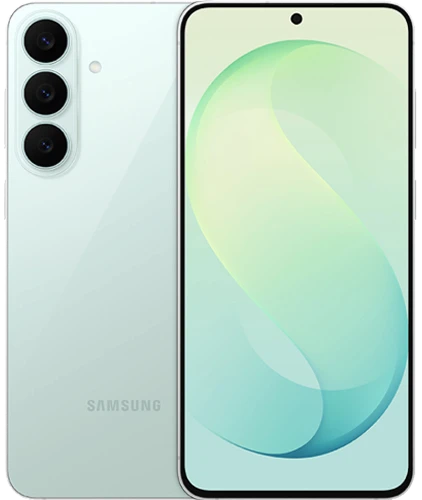
In the supplied Topes de Gama review, the presenters prefer OPPO for several photographic tasks and battery endurance. Samsung earns their preference for demanding performance and video, and handles some night-time colours more convincingly.
That split is the useful buying advice. Neither phone needs to win every category to be the better purchase for a particular person. This article draws on the supplied Spanish transcript and published hardware information. Belliste has not independently tested the phones or inspected their original camera files.
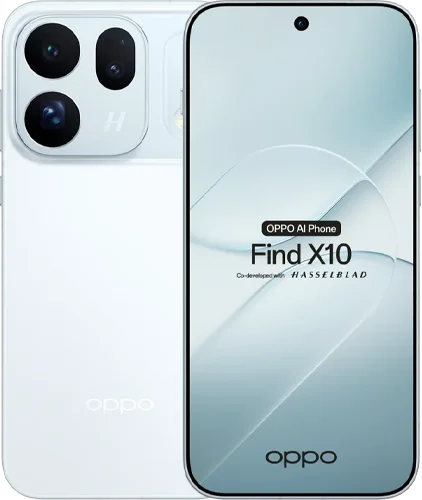
The clearest camera distinction is OPPO’s dedicated telephoto. The reviewers find its zoom photographs cleaner and more detailed than the Galaxy’s digital crops, and prefer its portrait results.
That is a practical advantage for someone photographing people, details on a trip or subjects that cannot easily be approached. It changes the available framing rather than simply adding another camera icon.
OPPO’s official specifications list a 50MP telephoto with optical image stabilisation. Its presence does not guarantee a better photograph in every condition: focus, subject movement and available light still matter.
For portraits, the lens can let you frame a face from farther away. The resulting perspective depends on the camera position, not a magical change caused by the word telephoto. Simulated background blur and edge detection remain separate questions.
If your photographs rarely use zoom, the advantage may matter less. Do not pay extra for a lens simply because another phone lacks it; identify the pictures it would help you make.
The presenters prefer OPPO’s main-camera photographs in daylight, particularly scenes containing bright sun and shadow. They describe better retention of information across the scene and a small advantage in detail.
They also like its treatment of green vegetation. That is a preference about the samples, not a calibrated measurement of colour accuracy.
That restraint matters. A phone can lead a comparison while remaining only adequate in a difficult situation. “Better than the other sample” does not necessarily mean excellent.
Before buying for family photography, look for people moving indoors rather than relying only on stationary furniture or daylight scenery. The supplied transcript does not provide a repeated moving-subject test.
At night, the reviewers identify an OPPO weakness: some scenes acquire an excessively yellow or orange cast. Samsung’s white balance looks more convincing to them.
They speculate that an update could improve OPPO. That possibility is not a fix, and the article should judge the observed result rather than award points for an update that has not been demonstrated.
The ultrawide comparison has another trade-off. The presenters describe Samsung as covering a substantially wider scene, but criticise its handling of bright and dark areas in daylight. At night, neither impresses them greatly, although Samsung again gets credit for white balance.
Those differences call for a personal choice. Someone who regularly photographs interiors or evening scenes may care more about believable colour than a daylight detail advantage. Someone who frequently needs a wider view may value framing even when the processing is less pleasing.
The reviewers favour Samsung’s rear video for its combination of sharpness, stabilisation and colour. They also prefer its front-video stabilisation and handling of the background.
OPPO sometimes produces colours they like, but the presenter notes brighter background areas becoming overexposed in the selfie comparison.
This is why still photography and video should not share an automatic winner. A camera can produce a pleasing single frame while being less convincing as exposure, focus and movement evolve during a clip.
The source demonstrates 4K30 recording. Check which combinations of lens, stabilisation and settings are available on the exact device you buy rather than treating one mode as a complete specification.
For frequent video calls, walking narration or family clips, Samsung’s reported strengths deserve attention. Compare the sound as well as the image before deciding; the transcript does not supply a systematic microphone assessment.
The review discusses a 6,500mAh Reno16 F with 45W charging. OPPO’s Norway and Singapore specifications support that configuration. Its global page lists a different 7,000mAh, 80W configuration.
The distinction should be preserved, not silently corrected to whichever number looks better. Confirm the local version when reading a review or comparing a retailer’s listing.
The presenters report longer endurance from OPPO than Samsung during their use. That is encouraging, but the transcript contains no documented matched discharge procedure. A larger capacity is not a promise of a proportional increase in runtime.
Think about the day that regularly causes trouble: travel with navigation, long periods on mobile data or evening photographs after a working day. Seek evidence for that workload and the regional model.
The same advertised charging wattage also does not mean two phones take the same time to fill. Battery size, charging curves and compatible equipment affect the result.
The presenters say both phones handle messaging, social media, email and news comfortably. Samsung is their stronger performer when demands increase, including gaming and multitasking.
Their transcript references a benchmark but supplies no complete set of results or sustained temperature measurements. It supports an attributed preference, not a precise percentage performance lead.
If those ordinary tasks describe your routine, the extra speed may be less valuable than battery reserve or storage. If you regularly play demanding games, investigate the titles and settings you use before buying either phone as a gaming device.
Storage comparisons need equal care. The video contrasts particular offers, including different entry capacities. OPPO’s published regional configurations vary, so do not assume every Reno16 F starts with the same storage.
Compare matching capacity wherever possible, then price the additional space you need. OPPO lists memory-card support, which can help with compatible file storage but is not equivalent to faster internal storage or a guarantee that every app can be moved.
The screen discussion contains an obvious transcription problem: an implausible Samsung HBM figure appears alongside a claimed difference of only 200 nits. The spoken sequence also becomes inconsistent about which panel leads.
It would be misleading to turn that into a numerical brightness verdict. This article therefore does not reproduce the disputed figure or declare a measured outdoor winner.
OPPO’s regional specifications describe a 6.57-inch 120Hz AMOLED panel. That establishes basic hardware, but outdoor comfort also depends on reflections, automatic brightness behaviour and heat.
Try reading a page and framing a photograph outside. A peak or high-brightness specification cannot describe every condition in which you use the screen.
The presenters like ColorOS and regard OPPO’s additional AI tools as a strength in this price range. They also recognise Samsung’s familiar software and ecosystem as reasons people choose it.
Their account of Samsung having little beyond an eraser should not become an exhaustive statement about its current features. Availability changes with software, region, language and account requirements.
Choose one task you would actually use, such as translating a menu or organising a saved note, and verify the complete workflow. Check any usage limits before assigning value to it.
For long-term ownership, compare the local support commitment and repair arrangements separately. Brand familiarity can be reassuring, but the warranty attached to the actual unit is what you will depend on.
The review quotes an OPPO promotion ending on 30 July and a Samsung offer at the time of recording. Those figures are historical context, not verified current prices.
At comparable local prices, OPPO is the more interesting candidate for someone prioritising zoom photography and the endurance the presenters describe. Samsung deserves stronger consideration for video, performance under greater load and the night-time colour handling shown.
A large price gap can change either recommendation. Match storage and warranty, check the regional battery configuration, and include a compatible charger if needed.
The most useful purchase is the phone whose strengths appear in your routine. Choose OPPO because you will use its telephoto and battery reserve; choose Samsung because its video and performance address your priorities. Neither choice requires pretending the other phone has nothing to offer.
Original Topes de Gama comparison and supplied transcript · OPPO Norway specifications · OPPO Singapore specifications · OPPO global specifications
They generally prefer OPPO for daylight main-camera photographs, zoom and portraits. Samsung handles white balance more convincingly in some night scenes, so the preference is not universal.
The presenters favour Samsung for rear-video quality and front-video stabilisation in the demonstrated tests. That does not establish a win in every lens and recording mode.
OPPO lists regional configurations. The Norway and Singapore pages show 6,500mAh with 45W charging, matching the review, while the global page lists 7,000mAh with 80W. Verify the version sold locally.
No reliable numerical conclusion can be drawn from the supplied transcript because its brightness section contains contradictory figures and wording. Check a controlled display test or compare the devices directly.
Yes. OPPO specifies a 50MP telephoto with optical image stabilisation. The reviewers prefer its zoom and portrait results to the Galaxy’s digital-zoom examples.
They are historical offers mentioned in the source. Check current prices for matching storage, local warranty and required charging equipment before deciding.