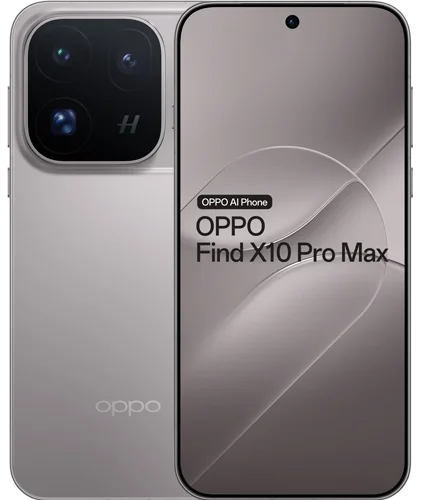
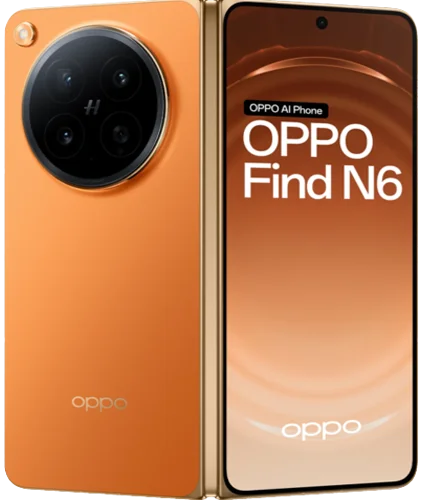
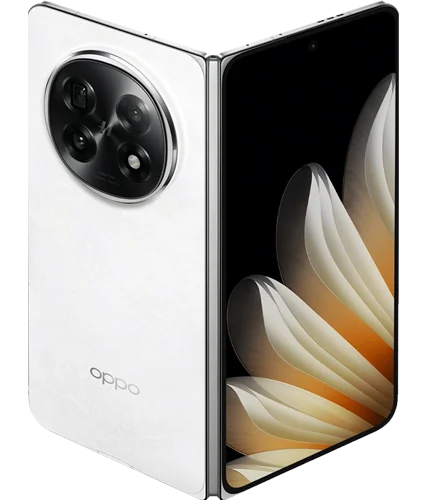
The OPPO Find X10 Pro Max asks an awkward question of the Find X9 Ultra: how much of an Ultra camera do you actually need? In the supplied comparison, the presenter finds the newer phone faster in several benchmarks, more comfortable to use and close enough in photography to make the bigger camera specialist harder to justify. The exception is an important one: the Ultra still has a dedicated long-distance lens.
That makes this a buying decision about priorities, rather than a simple contest between product names. The Pro Max brings three 200MP rear cameras and newer processing, while the older Ultra retains hardware advantages at particular distances. For an existing Find X9 Pro owner, there is a separate question: do the improvements change enough of daily use to justify paying again?
Belliste has combined the supplied reviewer’s observations with checked hardware and regional information. We have not tested these phones ourselves. Benchmark results, camera impressions and battery findings below are attributed to the source video, with particular care around its 8,000mAh review unit and the smaller battery sold in Europe.
Start with the photograph the Ultra can take more easily
The Find X10 Pro Max has 200MP main, ultrawide and 3x telephoto cameras. The Find X9 Ultra adds a separate native 10x telephoto to its own arrangement. Equal resolution across the newer phone’s three main rear cameras does not reproduce the older device’s additional optical framing option.
That matters when the subject is far away and cannot be approached. Someone regularly photographing a distant performance or an architectural detail may value a ready-to-use long lens more than a benchmark advantage. Someone whose photographs mostly sit between wide views and ordinary portrait distances may find the Pro Max’s range sufficient.
The presenter regards the Ultra’s larger main and 3x camera hardware as reasons it remains attractive, while welcoming the Pro Max’s upgraded ultrawide. That is a more useful distinction than declaring one system newer and therefore universally better. A set of cameras can become more balanced without winning at every individual task.
We would begin the decision by checking the distances you use most often. If you rarely go beyond moderate zoom, a native 10x module may be an expensive advantage you seldom call on. If long-range pictures are a regular part of your photography, losing it changes the experience every time the subject is beyond reach.
A teleconverter is an option, with a different routine
The reviewer demonstrates the optional Hasselblad teleconverter and finds a clear improvement in some distant samples. He also identifies cases where the difference is subtler. That variation is worth preserving: an accessory can improve detail without transforming every photograph equally.
His most useful criticism is about operation. In the setup he tests, the attachment obstructs the other cameras and requires the dedicated teleconverter photo mode. He cannot simply leave it installed and move through all the ordinary camera options. Those are reported restrictions of his demonstrated setup; compatibility should be checked again against the accessory and software you buy.
This changes the comparison with an Ultra. A native long lens is already available when a distant subject appears. An external attachment needs to be carried, mounted and used within its supported workflow. For a planned landscape or a predictable event, that may be acceptable. For a moment that disappears in seconds, the setup time can matter more than a sharper sample.
The presenter mentions venues as a possible use, but admission rules should be checked with the actual organizer. A phone accessory is not guaranteed entry simply because it is smaller than a conventional camera lens. Decide on the kit for situations in which you can use it, and include its cost and carrying requirements in the comparison.
The more interesting camera upgrade may be the default look
The reviewer says he previously preferred Hasselblad Master mode to the ordinary camera mode. With the Pro Max, he is happier staying in automatic capture because he likes the more restrained tone. That is a meaningful everyday change: a preferred look becomes easier to get without remembering to select a separate mode.
His account should not be stretched into a claim that the camera has stopped using computational processing. OPPO describes a revised LUMO imaging pipeline; natural-looking output is a rendering goal, not evidence that software has disappeared from the process. The final picture remains the useful thing to judge.
The same care applies to claims about dynamic range. The manufacturer’s headline figure does not mean every finished photograph preserves the same measured range, or that a face against a bright window will always look preferable to a competitor’s result. Compare those scenes directly if they are important to you.
The presenter also discusses a default output around 26MP, despite the three 200MP sensors. That is not a contradiction. High-resolution capture and ordinary output modes serve different purposes. Full-resolution files may be useful for certain static scenes and later cropping, while everyday capture balances detail, processing and file size.
For an X9 Pro owner, the test is particularly straightforward: photograph familiar subjects with both phones using the modes you actually prefer. If you already like the older model’s Master-mode results, the newer automatic look may improve convenience more than transform the photographs themselves.
Video gains matter when they fit an editing habit
The source reviewer highlights 8K/30fps and 4K/120fps across the three rear views, alongside Open Gate and O-Log2. He also demonstrates log capture and discusses using the selfie camera for more advanced recording. These options make the Pro Max interesting to someone who intends to shape footage afterward, rather than only press record and share.
Open Gate is useful when the finished format has not been decided. Keeping more of the sensor’s image can help produce a horizontal film and a vertical version from one recording. It does not remove the need to frame with both crops in mind: a face placed at the far side of a wide composition may disappear in a narrow edit.
A high frame rate serves a different purpose, allowing slower playback when the timeline and shutter choices suit it. Log concerns the recording’s tonal and color treatment. They are separate decisions, and their presence in the same menu does not prove that every combination of lens, resolution, stabilization and profile works together.
Before relying on the phone for a project, make a short test in the exact mode you plan to use, then open it in your editor. Check playback, color interpretation and reframing. This is a more valuable preparation than choosing the maximum number in every setting and discovering incompatibilities later.
For casual clips, the default video experience still matters more. The supplied review is positive about the tools, but it is not a comprehensive account of autofocus consistency, microphone behavior and low-light recording in every mode. A creative feature list should complement those basics rather than stand in for them.
The battery comparison has one number you cannot ignore
The reviewer’s five-hour mixture of streaming, gaming and camera use leaves the X10 Pro Max at 53%, the X9 Pro at 47% and the X9 Ultra at 33%. Those are his reported remaining-charge readings from one test, not a Belliste laboratory ranking.
The crucial qualification arrives immediately afterward: his Pro Max is the 8,000mAh Asia-Pacific version. European and UK buyers receive a 7,150mAh configuration. The test therefore does not measure the endurance of the version many viewers would buy locally.
Nor can the result be scaled cleanly by dividing battery capacities. Screen settings, workload distribution, software, temperature and discharge behavior all matter. The reviewer expects the European version to land near the older Pro’s endurance, but he identifies that as an expectation. We would keep it that way until a matched test of the smaller-battery unit is available.
There is still encouraging evidence here. Under the reviewer’s chosen workload, the larger-battery model has a comfortable reserve and finishes ahead of the comparison devices. The appropriate purchase conclusion is narrower than “every Pro Max lasts longer”: verify the regional model and seek results for the one you intend to use.
The phone lists 80W wired and 50W wireless charging with compatible equipment. Those maximums describe supported charging, not the time every owner will need or the power delivered by an existing generic pad.
A newer MediaTek platform is not a brand-based shortcut
The Dimensity 9600 Pro is a 2nm platform. In the reviewer’s comparisons, it improves on the Ultra’s Snapdragon 8 Elite Gen 5 in several CPU and graphics results. That supports his point that this Pro Max should not be dismissed as slower merely because it lacks a Snapdragon badge.
It does not establish that MediaTek is always more efficient, or that every task runs faster on every phone using the chip. The result concerns particular devices and workloads. Battery capacity, cooling, display consumption and software affect efficiency alongside the processor.
Some of the transcript’s graphics labels are incomplete, so this article does not combine every quoted number into a single performance verdict. A peak frame-rate figure is not an average, and a benchmark gain is not automatically the same percentage improvement in an ordinary game.
For buyers, the more useful question is sustained behavior in the applications they use. A quick score can establish headroom, while extended gaming or recording reveals how a phone manages heat over time. The source video is encouraging about speed but does not remove the need for those longer workload checks.
The comfort argument deserves an in-person check
The presenter finds the 6.78-inch Pro Max more comfortable than the larger camera specialist. He likes the flat display, rounded corners and stereo sound, while noting reflections as an area for improvement. That gives the handling discussion more substance than simply describing a smaller diagonal.
It remains a large flagship. Pocket fit, case thickness and your preferred grip can outweigh the difference between nearby screen sizes. Hold it while typing one-handed and while framing a photograph, rather than assessing comfort only with the phone resting in your palm.
There are two smaller changes to consider. “Titanium Grey” is a color name, not confirmation of a titanium frame; the phone uses aluminum. The presenter also notes the removal of the older dedicated camera-control button. Someone who rarely used it loses little, while a regular user should check the available replacement shortcuts.
The 144Hz display maximum is limited to supported gaming situations, with ordinary adaptive operation up to 120Hz. A broader color gamut likewise does not prove better accuracy in every mode. The reviewer likes the screen, but both refresh behavior and rendering should be described with their actual conditions.
He also misses built-in magnets for accessories. A suitable magnetic case can help with attachment, although that should not be confused with proof of a particular wireless-charging certification or maximum speed. Check the complete case-and-charger arrangement you expect to use.
The upgrade decision differs for three buyers
For someone choosing between the Pro Max and the Find X9 Ultra, we would prioritize photographic range first. The Pro Max makes a strong case if you mostly use ordinary focal lengths and want the newer platform and video options. The Ultra retains a specific advantage for buyers who want native long reach without fitting an attachment.
For an X9 Pro owner, the burden of proof is higher. Your current phone already offers a capable camera system, and the regional battery comparison is more complicated than the launch headline suggests. Identify the recurring limitation the new phone solves before paying for another generation.
For someone replacing a much older device, the Pro Max can bring several benefits together: a flexible camera set, modern recording controls, a good display and substantial everyday performance. The decision then depends on local pricing, warranty and whether the size fits your routine, rather than whether it wins every comparison with an Ultra.
The transcript is uncertain about the precise update commitment and refers to an on-screen clarification we do not have in the supplied text. We have not converted that uncertainty into a six-upgrade promise. Confirm operating-system and security support separately in the applicable market.
Belliste verdict: the balanced choice still needs a specific reason
The Find X10 Pro Max is compelling because it moves much of the camera experience into a package the presenter prefers using every day. Its appeal is strongest when you value consistency across the three ordinary rear views and useful recording flexibility more than a dedicated extreme-distance camera.
The most important caveat is the battery variant, followed by the external lens’s operating restrictions. Neither makes the phone a poor choice. Both change what the review’s positive results mean for the version and setup you would actually own.
We would choose between these OPPO models by the pictures and recordings you repeatedly make. Buy the native long lens if distance is the persistent problem. Consider the Pro Max if the everyday camera range and newer platform suit you better. Keep a recent X9 Pro when its remaining limitations are too occasional to justify the replacement cost.
Sources and review basis
Hands-on comparisons, battery percentages and teleconverter restrictions are attributed to the supplied video and transcript. Hardware and regional variants were checked against GSMArena and OPPO’s specifications. Imaging context was cross-checked with OPPO’s global launch information and product page. Belliste has not conducted hands-on testing.