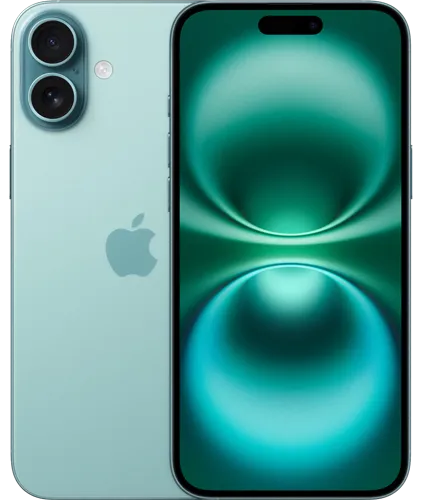
HONOR wins more app launches and 3DMark, while iPhone takes Geekbench 6: an editorial breakdown of Nick's real-world flagship speed test.
The HONOR Magic8 Pro opens more apps first. The iPhone 17 Pro Max wins the CPU benchmark. And the biggest graphics surprise belongs to HONOR.
That is the uncomfortable result of a comparison that refuses to produce one simple winner.
In his side-by-side speed test, YouTube reviewer Nick puts the HONOR Magic8 Pro against Apple's iPhone 17 Pro Max across boot times, face unlocking, app launches, gaming, memory management, synthetic benchmarks and Wi-Fi performance.
The test is interesting because Nick does not appear determined to defend one platform. He praises HONOR's speed, prefers the iPhone's multitasking animations and notices that certain games still look better on Apple's device.
Which kind of speed actually changes your experience?
Editorial note: This article analyzes the reviewer's observations and reported test results. Belliste has not independently benchmarked either device.
The comparison starts with both phones powering on. The HONOR Magic8 Pro boots faster.
Nick identifies the HONOR's Snapdragon 8 Elite Gen 5 processor, 12GB RAM and Android 16-based MagicOS software. The iPhone takes longer to reach its usable home screen in the demonstration.
It is an immediate victory, but one with limited daily significance. Most people rarely restart their phones. A difference in boot time might be noticeable after a software update, but it tells us relatively little about how responsive a device feels during normal use.
Both phones unlock at nearly the same time in Nick's repeated demonstrations.
The HONOR's advantage is not raw face-unlock speed. It is flexibility. Alongside facial recognition, the Magic8 Pro offers an in-display fingerprint sensor. The iPhone relies on Face ID and its passcode fallback.
Nick gives the HONOR the advantage because having both biometric methods can make unlocking more convenient.
That is a reasonable preference, particularly when a user's hands, face position or surroundings make one method less convenient. But it is not evidence that HONOR's facial authentication is faster or more secure than Apple's. The video measures neither biometric security nor failure rates.
Nick repeatedly returns to a distinction between responsiveness and visual polish.
MagicOS feels more immediate to him. App transitions, scrolling and short animations appear snappier. iOS, by contrast, seems to prioritize smoother, more deliberate movement.
This is subjective, but it matters because two phones can complete a task at almost the same speed while feeling different.
The reviewer also notices similarities between MagicOS and iOS, particularly in visual effects and transitions.
The HONOR offers more options for changing home-screen animations and organizing apps, while the iPhone follows Apple's more controlled interface approach.
Neither animation style is objectively superior. Someone who values instant-looking transitions may prefer HONOR. Someone who enjoys consistent, polished motion may prefer iOS.
The app-opening sequence is the clearest practical victory for the Magic8 Pro.
Nick launches everyday applications, including calendar, calculator, app stores, ChatGPT, Gemini, Copilot, social apps and utilities. The HONOR appears first in many tests.
There are exceptions. The iPhone wins some individual launches, including X in one sequence. The reviewer occasionally double-checks results when an application might already have been open.
That is a useful sign of caution, but the test still has limitations. Application caching, network conditions, operating-system differences and animation timing can all affect the result. It is not a laboratory benchmark with repeated runs and statistical analysis.
Nevertheless, Nick's overall conclusion is clear: the HONOR Magic8 Pro wins more of the app-launch comparisons. For users who frequently jump between applications, that is relevant.
The reviewer then opens several games. The HONOR wins a number of loading races, including demonstrations involving Free Fire and Call of Duty.
That makes the Magic8 Pro look extremely competitive as a gaming device. But Nick notices something the loading results cannot explain.
In Destiny Rising, he prefers the graphics on the iPhone 17 Pro Max. He describes sharper-looking characters and a presentation closer to console-quality visuals.
He does not claim to know the cause. It could reflect differences in game optimization, graphics settings or hardware behavior.
A game can launch faster on one device and look better on another. Neither observation automatically proves which device will maintain higher frame rates after an hour of play.
The video does not provide a controlled sustained-gaming comparison with matched settings, temperatures and frame-time measurements.
The appropriate conclusion is that HONOR looks excellent in loading speed, while the iPhone earns specific praise for graphical presentation in one title.
The graphics benchmark produces the most striking numerical result in the video.
| 3DMark Wild Life Extreme | HONOR Magic8 Pro | iPhone 17 Pro Max |
|---|---|---|
| Score | 7,047 | 5,808 |
| Reported frame rate | 42.2 FPS | 34.8 FPS |
The HONOR scores approximately 21% higher in this reported run.
Interestingly, the reviewer says the iPhone finishes the benchmark first, despite recording the lower graphics score. That is a reminder that completion time and benchmark performance are not necessarily interchangeable.
The result supports a specific conclusion: the HONOR delivers a higher score in the demonstrated Wild Life Extreme test.
It does not establish that every game will run 21% faster on HONOR, or that the same margin will survive repeated tests under sustained heat.
The CPU benchmark produces the opposite winner.
Nick reports that the iPhone 17 Pro Max convincingly outperforms the HONOR Magic8 Pro in Geekbench 6.
He questions how much weight viewers should place on one benchmark, noting that Apple's devices often perform exceptionally well in this test.
That skepticism is understandable, but the result should not be dismissed simply because it favors the iPhone.
Geekbench and 3DMark measure different workloads. A CPU advantage and a GPU advantage can coexist, particularly across different chip architectures and operating systems.
The supplied transcript does not clearly provide the numerical Geekbench scores, so this article does not invent them.
The evidence supports two separate outcomes: HONOR leads the demonstrated graphics benchmark, while iPhone leads the demonstrated CPU benchmark.
This section is revealing because both phones are described as having 12GB RAM.
Nick praises iOS for retaining applications and making transitions between them feel smooth. He also observes that the HONOR does not reload applications during his test.
So the difference is not simply that one phone keeps apps in memory and the other cannot.
Instead, he prefers the way iOS handles the gestures and animations involved in returning to previous apps.
The HONOR offers a different advantage: split-screen multitasking, floating windows and additional window-management options. The iPhone's conventional interface does not offer the same split-screen workflow.
If you value smooth transitions between full-screen applications, Nick prefers the iPhone. If you want to work with multiple app windows, the HONOR provides more flexibility.
Nick runs an internet speed comparison using the same server.
The HONOR records approximately 480Mbps download, while the iPhone reaches around 391Mbps in the demonstrated run.
That is a meaningful difference in this particular test. But Nick himself notes that network performance depends on conditions.
Router behavior, interference, signal strength, channel congestion and timing can affect results. A single pair of tests cannot establish that one device has permanently superior Wi-Fi performance.
The fair conclusion is that HONOR performed better during the demonstrated test, while both devices delivered strong connectivity.
Near the end, Nick briefly compares how quickly the phones open their camera applications. After repeating the test, he finds the results close.
He also comments positively on the HONOR's shutter responsiveness and mentions its 200MP telephoto camera.
But he offers an important qualification: some nighttime photographs from the HONOR do not outperform competing phones.
That observation prevents the speed-test victory from becoming an unsupported camera recommendation. A phone can open its camera quickly and still produce weaker images in difficult light.
This video is not a full photography comparison, and its camera segment should not be treated as one.
| Test | Reviewer's result |
|---|---|
| Boot time | HONOR Magic8 Pro |
| Face unlock speed | Very close |
| Unlocking flexibility | HONOR Magic8 Pro |
| Home-screen responsiveness | HONOR feels snappier |
| App-launching sequence | HONOR wins more tests |
| Game-loading tests | HONOR wins several |
| Graphics in Destiny Rising | iPhone preferred |
| 3DMark Wild Life Extreme | HONOR Magic8 Pro |
| Geekbench 6 CPU | iPhone 17 Pro Max |
| RAM-management experience | iPhone preferred |
| Multitasking features | HONOR offers more options |
| Wi-Fi download test | HONOR in this run |
| Camera launch | Very close |
These are outcomes from the supplied video, not independent Belliste testing or universal performance rankings.
The HONOR Magic8 Pro makes a compelling case for buyers who value immediate responsiveness, fast application launching, flexible multitasking and strong GPU benchmark results.
It also offers both face and fingerprint unlocking, which the reviewer finds more convenient.
The iPhone 17 Pro Max remains compelling for people who value its CPU performance, polished application transitions and the graphical quality of particular iOS games.
The video does not establish battery endurance, sustained gaming performance, long-term software reliability or camera superiority. Those factors may be more important to the final purchasing decision than a few fractions of a second saved when opening an app.
Nick gives the overall speed-test victory to the HONOR Magic8 Pro.
Based on the demonstrations, that judgment is understandable. The HONOR boots faster, wins more app launches and delivers the higher 3DMark graphics score.
Yet the iPhone wins Geekbench 6, earns praise for its multitasking polish and looks better to the reviewer in at least one game.
The lesson is not that benchmarks are meaningless or that everyday speed is everything. It is that performance has several dimensions, and no single test captures them all.
If speed means getting into apps quickly and enjoying a responsive Android interface, the HONOR Magic8 Pro is the reviewer's winner.
If speed also includes CPU performance, animation consistency and platform-specific game optimization, the iPhone 17 Pro Max still has a strong argument.
The HONOR wins this particular race. The better phone depends on which race matters to you.
This article analyzes Nick's side-by-side comparison video: https://www.youtube.com/watch?v=EBVbhLQRbg4 .
Belliste did not independently test either phone. Benchmark numbers and practical observations come from the supplied transcript. Results from individual tests should not be generalized into universal performance guarantees.
The HONOR wins more app launches and the demonstrated 3DMark test, while the iPhone wins Geekbench 6 CPU testing.
HONOR wins several game-loading tests, but the reviewer prefers the graphical presentation of Destiny Rising on the iPhone. Sustained gaming was not measured.
The video reports 7,047 for HONOR Magic8 Pro and 5,808 for iPhone 17 Pro Max in Wild Life Extreme.
Both retain applications well in the test. The reviewer prefers the iPhone's transitions, while HONOR provides more multitasking options.
The HONOR Magic8 Pro boots faster in the supplied demonstration.
Yes. The reviewer demonstrates an in-display fingerprint sensor alongside facial unlocking.