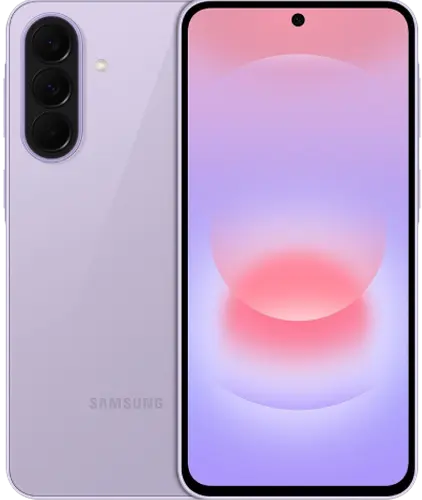
The Galaxy S26+ has a premium 6.7-inch display and strong specifications, but its familiar telephoto camera raises questions at its price.
Belliste Review · Analysis based on an early hands-on video
The Samsung Galaxy S26+ gets plenty right. It has the polished design you'd expect from a premium Galaxy, a large, sharp display, and enough processing power to handle almost anything most people will throw at it.
Then there's the camera system.
At $1,100, Samsung is still asking buyers to settle for a 10MP telephoto camera with 3x optical zoom. That doesn't automatically make it a poor camera, but it's an increasingly difficult specification to defend when competing flagships offer more capable zoom hardware.
The disappointment comes through clearly in this Galaxy S26+ hands-on video. The reviewer genuinely likes much of what Samsung has done. He praises the updated design, appreciates the display, and expects impressive performance from the new processor. His enthusiasm fades, however, when the conversation turns to the rear cameras.
It's an awkward position for the S26+. Samsung has produced what appears to be a very capable premium phone, yet one of its most important features feels surprisingly familiar.
Editorial note: This article examines a third-party early hands-on demonstration. Belliste has not independently tested the device, and conclusions about battery life, camera quality, and sustained performance remain provisional.
Samsung has spent years refining a design language that makes its phones instantly recognizable. The downside is that some of its expensive Galaxy S models have looked a little too similar to their more affordable relatives.
The reviewer never considered that consistency a serious problem. Even so, he welcomes the S26 series' more distinctive appearance.
The Galaxy S26+ now looks more clearly like a member of Samsung's flagship family, rather than simply a larger version of one of its midrange phones.
Six finishes are presented at launch: Cobalt Violet, White, Black, Sky Blue, Pink Gold, and Silver Shadow. The last two are exclusive to Samsung's online store.
Pink Gold earns a particularly unexpected compliment. The reviewer admits he likes it considerably more than he thought he would.
That's worth mentioning because promotional renders rarely tell the whole story. The way a finish catches the light, the texture of the frame, and the appearance of the camera housing can all influence how a phone feels in everyday use. For something you might carry for four or five years, those details matter.
The Plus also has a certain simplicity that distinguishes it from the Ultra. There's no integrated S Pen, no elaborate collection of rear cameras, and no attempt to turn the phone into a pocket-sized productivity tablet.
It's a large, premium Galaxy with a relatively straightforward purpose. For many buyers, that restraint is part of the appeal.
Screen size: 6.7 inches
Resolution: QHD+
Refresh rate: Adaptive 1–120Hz
Peak brightness: 2,600 nits (Samsung claim)
The screen may be the most convincing reason to choose the S26+ over the smaller Galaxy S26.
Its 6.7-inch QHD+ panel provides generous space for reading, watching videos, editing photos, and playing games. You get the benefits of a large display without having to buy the Ultra.
Samsung specifies an adaptive refresh rate of 1Hz to 120Hz, allowing the screen to adjust its refresh behavior according to the content. The company also claims a peak brightness of 2,600 nits.
The reviewer comes away impressed, which isn't particularly surprising. Display quality has been one of Samsung's strengths for years. Nothing in this brief demonstration suggests that tradition has changed.
What's more interesting is the feature Samsung chose to reserve for the Ultra.
The Galaxy S26 Ultra introduces Privacy Display, a feature designed to reduce visibility from certain viewing angles when sensitive information is on screen.
The S26+ doesn't include it.
Whether that omission matters depends on how you use your phone.
Someone who regularly handles confidential messages on public transport, works with sensitive documents in shared spaces, or frequently travels might find the Ultra's privacy feature genuinely valuable.
For someone who spends most of their time browsing, watching videos, gaming, or reading, the benefit may be far less significant.
The S26+ still offers the large, high-resolution display that makes the Plus attractive in the first place. It simply lacks one of the Ultra's more specialized features.
It's a reasonable distinction between the two models, even if some buyers would have preferred to see Privacy Display available across the flagship range.
Here's what Samsung offers on the back of the Galaxy S26+:
Main: 50MP
Ultrawide: 12MP
Telephoto: 10MP, 3x optical zoom
Maximum advertised zoom: Up to 30x with digital processing
There's nothing inherently inadequate about this setup. A 50MP main camera, an ultrawide lens, and a dedicated 3x telephoto cover many of the situations people photograph every day.
The problem is the price.
On a more affordable phone, this hardware would be easy to accept. At $1,100, it looks conservative.
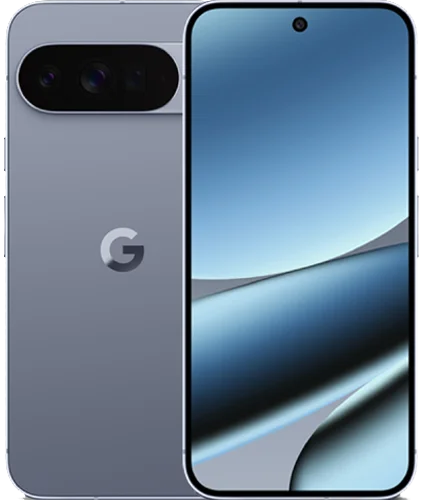
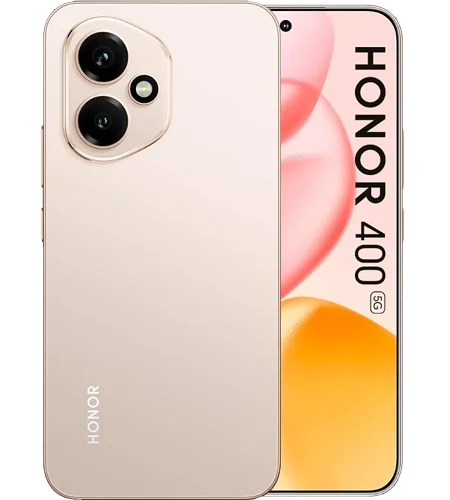
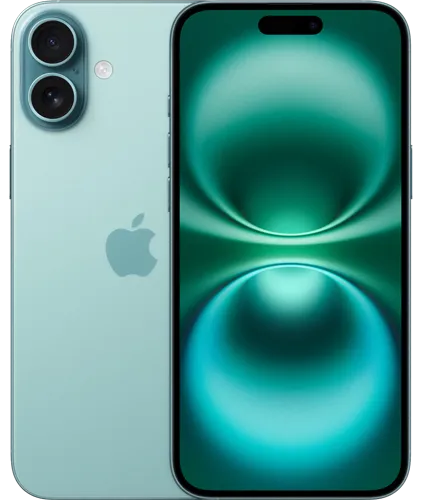
The reviewer points to premium competitors from Apple and Google that offer more ambitious periscope-style telephoto systems. His complaint isn't that every smartphone needs extreme magnification. It's that Samsung has done relatively little to make the Plus camera hardware feel like a substantial upgrade over its less expensive models.
There's also an important distinction between optical zoom and the large magnification figures manufacturers advertise.
At 3x, the S26+ uses its dedicated telephoto optics to capture distant subjects. Beyond that magnification, computational processing and digital cropping play an increasingly important role.
An advertised 30x zoom setting shouldn't be confused with 30x optical detail.
That difference becomes noticeable when you're photographing a performer from the back of a concert venue, trying to capture details on a distant building, or taking pictures of wildlife you can't approach.
In those situations, more capable optical hardware can provide a meaningful advantage.
The camera story isn't entirely about sensor specifications.
Image processing has become an essential part of smartphone photography. Improvements to the processor, exposure algorithms, noise reduction, and color rendering can make a difference even when the underlying camera hardware changes very little.
The Galaxy S26+ could therefore deliver better photographs than its predecessor, particularly in challenging lighting conditions.
But that improvement hasn't been established by the hands-on video.
The reviewer had not completed a controlled camera comparison at the time of recording, so his criticism focuses primarily on Samsung's hardware decisions and the phone's competitive position.
That's an important distinction. A conservative telephoto specification doesn't prove that the S26+ produces poor images.
For buyers who mostly photograph friends, family, food, and everyday scenes, the camera system may be entirely sufficient.
For anyone spending flagship money specifically to get better photography hardware, the limited zoom upgrade is harder to overlook.
The Galaxy S26+ demonstrated in the video uses the Snapdragon 8 Elite Gen 5 for Galaxy.
Samsung claims the following generational performance improvements:
CPU: +19%
GPU: +24%
NPU: +39%
These figures point to meaningful gains in processing, graphics, and AI workloads. They are Samsung's claims, however, rather than results independently measured during the demonstration.
The phone also comes with 12GB of RAM, alongside 256GB and 512GB storage configurations discussed in the video.
For everyday use, that should be more than enough memory. The combination of a powerful chipset and a large 120Hz display also makes the S26+ an appealing option for mobile gaming.
The unanswered question is how well it maintains that performance over time.
Short demonstrations rarely reveal much about thermal management. A processor can deliver impressive peak performance and still reduce its clock speeds under prolonged load.
Extended gaming sessions, repeated benchmarks, and temperature measurements will provide a clearer picture of how effectively Samsung manages heat.
There's also a regional consideration. Samsung has previously offered different processors in different markets, so buyers should verify the chipset used in the version sold in their country.
The Snapdragon specifications discussed here apply to the reviewer's device and shouldn't automatically be assumed to represent every regional configuration.
The Galaxy S26+ has a 4,900mAh battery, putting it just below the S26 Ultra's 5,000mAh capacity.
The charging specifications discussed in the video include:
Battery capacity: 4,900mAh
Wired charging: Up to 45W
Wireless charging: Up to 20W
Those figures provide a useful starting point, but battery capacity alone doesn't tell us how long a phone will last.
Processor efficiency, display behavior, background activity, and software optimization all influence endurance.
The early hands-on demonstration doesn't include a controlled battery test. Any firm conclusion about all-day use would therefore be premature.
Curiously, the most interesting battery-related detail in the video has little to do with charging speed or capacity.
Around the five-minute mark, the reviewer notices something unusual in Samsung's press materials.
The Galaxy Watch 7 and Watch 8 appear in documentation associated with reverse wireless charging.
That catches his attention because newer Galaxy Watch designs have introduced compatibility challenges when charging from the back of certain Galaxy phones.
Rather than treating the documentation as confirmation, he questions whether Samsung may have included the watches by mistake.
He plans to test it.
It's a small detail with potentially useful consequences. If the S26+ can reliably charge a compatible Galaxy Watch through Wireless PowerShare, some travelers could avoid carrying a separate watch charger.
For now, though, that remains an unanswered question.
The press material is an interesting clue, not proof that the feature works with those watches.
Samsung's commitment to seven years of software and security updates remains one of the strongest arguments for buying a premium Galaxy.
At $1,100, the S26+ isn't the sort of phone most people will want to replace after a year or two.
Keeping it for four or five years makes much more financial sense, particularly if the hardware continues to meet your needs.
Long software support doesn't eliminate the practical challenges of owning an older phone. Batteries degrade, components wear out, and some future software features may require newer hardware.
It does, however, reduce the risk of paying a premium for a device that loses official support too soon.
For someone upgrading from a considerably older Galaxy, that long-term commitment may prove more valuable than another incremental increase in benchmark performance.
Samsung has plenty to say about AI, but one feature discussed in the video seems especially practical: call screening.
The reviewer describes a system that can answer an incoming call, interact with the caller, and present a transcript so you can decide whether to respond personally.
He's familiar with similar functionality on Google's Pixel phones and sees the appeal immediately.
Imagine receiving a call from an unfamiliar number while you're in a meeting. Rather than interrupting everyone or ignoring a potentially important call, you could read what the caller wants before deciding what to do.
That's the sort of AI feature that solves an ordinary problem without demanding much attention from the user.
Samsung also discusses detecting suspicious calling patterns and language associated with scams.
Such functionality could be particularly helpful for people who regularly receive fraudulent calls, including older users who may be targeted by convincing impersonation attempts.
Its usefulness will depend on accuracy, though.
A screening system that misses obvious scams won't inspire confidence. One that constantly flags legitimate conversations could become equally frustrating.
Real-world testing will matter more than the demonstration.
Samsung is also expanding the creative tools available in its Gallery app.
Removing unwanted objects is only part of the experience. The tools described in the video can help modify backgrounds, reposition elements between images, and adjust the lighting or appearance of edited content.
For creative projects, those capabilities can be genuinely useful.
But they also change what we expect a photograph to represent.
Removing a stranger from the background of a holiday picture is one kind of edit. Replacing the entire setting, introducing objects that were never present, or dramatically altering the lighting moves the result closer to a constructed image.
There's nothing necessarily wrong with that. It simply serves a different purpose.
The reviewer seems comfortable with both possibilities. He appreciates having the editing tools available without suggesting that every photograph needs to be transformed.
That distinction matters more than the growing number of effects Samsung can demonstrate.
The S26+ also offers access to experiences involving Bixby, Gemini, and Perplexity.
On paper, giving users more assistant options sounds appealing.
The video doesn't go far enough, however, to establish which experience works best or how consistently they handle everyday tasks.
The more meaningful questions concern reliability and integration.
Can an assistant understand what you want without repeated clarification? Can it work with the apps you already use? Can it complete a straightforward task without turning it into an unnecessarily long exchange?
Those are the things that will determine whether Samsung's expanded AI offering becomes part of people's routines or simply another collection of features they rarely open.
The Galaxy S26+ doesn't need to match every Ultra specification to justify its place in Samsung's lineup.
Its job is to deliver the core flagship experience at a lower price, without forcing buyers to pay for hardware they don't need.
Display: 6.7-inch QHD+ — Larger flagship display
Privacy Display: Not included — Included
Main camera: 50MP — 200MP
Telephoto: 3x optical — More advanced zoom system
Battery: 4,900mAh — 5,000mAh
Wired charging: Up to 45W — Up to 60W
S Pen: Not included — Integrated
For someone who wants a large Samsung display, premium software, and powerful everyday performance, the Plus covers the essentials.
The Ultra becomes more compelling when advanced photography, Privacy Display, or the integrated S Pen are genuine priorities.
Price makes the decision less straightforward.
If a promotion brings the Ultra within reach of the S26+, the stronger camera hardware becomes difficult to ignore.
The same reasoning works in the opposite direction. A heavily discounted previous-generation Plus may deliver much of the everyday experience for substantially less money.
Samsung therefore needs more than a familiar set of flagship specifications to justify the S26+ at full price.
It needs buyers to value the particular improvements this generation offers.
There's a lot to like about the Galaxy S26+.
The display appears excellent, the design finally gives the Plus a more distinctive identity, and the processor promises enough performance for demanding applications and games. Samsung's long software support commitment also makes it a sensible candidate for extended ownership.
None of those strengths should be dismissed.
But at $1,100, the camera hardware is difficult to ignore.
Samsung has kept the Plus telephoto system relatively modest while competitors continue to invest in more capable zoom solutions. Buyers who want that extra photographic flexibility are effectively being encouraged to spend more on the Ultra.
That doesn't make the S26+ a bad camera phone. We still need proper image comparisons before drawing conclusions about its photographic performance.
It does make the hardware offering feel less ambitious than the price suggests.
The S26+ makes the most sense for buyers who prioritize a large display, Samsung's software experience, and strong flagship performance over advanced zoom photography.
If cameras are your main reason for upgrading, wait for detailed comparisons with the S26 Ultra and similarly priced rivals before making a decision.
The Galaxy S26+ looks like a phone that many people would enjoy owning.
Whether it's the one they should buy at full price is a more difficult question.
No. Samsung reserves Privacy Display for the Galaxy S26 Ultra. The S26+ uses a conventional premium display without the Ultra's selective side-angle privacy feature.
Its 50MP main camera, 12MP ultrawide, and 10MP 3x telephoto cover many everyday photography needs. The main concern is that the zoom hardware appears conservative for a $1,100 flagship. Controlled camera comparisons are still needed to evaluate actual image quality.
The Galaxy S26+ has a 4,900mAh battery. The early hands-on video doesn't include a controlled endurance test, so its real-world battery life cannot yet be established from that demonstration.
The reviewer noticed a possible indication of compatibility in Samsung's press materials, but he hadn't tested it. Wireless PowerShare compatibility with those watches should remain unconfirmed until verified through hands-on testing.
Choose the Galaxy S26+ if you want a large premium Samsung phone without paying for the Ultra's specialized hardware. The S26 Ultra is worth considering if advanced zoom photography, Privacy Display, or the integrated S Pen matter to you. The final decision should also account for current pricing and discounts.