The Galaxy A37 5G did not become a faster phone four months after launch. Its cameras did not suddenly improve, and Samsung did not replace its plastic frame with metal. What changed was the price.
That matters more than another paragraph about megapixels. In the linked video, reviewer Kevin says he liked the A37 from the beginning but found its original $449 US asking price difficult to defend. He then points to an unlocked Best Buy listing at $374.99 and much lower carrier promotions. At those prices, the same hardware starts to look sensible.
This is a review of the A37's value after four months, not a claim that Belliste independently used the phone. The hands-on observations come from Kevin's video; the buying analysis and interpretation are Belliste's.
The Price Is the Story, but Read the Fine Print
A drop from $449 to $374.99 represents about $74 off, or roughly 16.5%. It is meaningful in the middle of the smartphone market, where even a modest saving can determine whether a buyer chooses a new phone or an older flagship.
Kevin also cites carrier deals, including a Metro by T-Mobile promotion involving a number transfer and a $40 unlimited plan, and a Cricket offer advertised at $19.99.
Those aren't equivalent to buying an unlocked phone for $19.99. Service charges, eligibility, port-in rules, plan commitments and the phone's lock status can affect the real cost. The offers were current when the video was recorded; they should not be treated as verified prices today.
The larger point holds even when those exact promotions expire: the A37 is more convincing when it is clearly cheaper than stronger alternatives. At full price, the compromises become harder to excuse.
A Good Screen Does Not Need a Flagship Chip
The 6.7-inch Super AMOLED display is the A37's easiest feature to appreciate. It runs at 120Hz and has a 1080p-class resolution, with the reviewer citing approximately 385 pixels per inch.
Kevin praises the screen for social media, streaming and everyday viewing. That assessment makes sense for the category. A large OLED panel with smooth scrolling can have a bigger effect on daily satisfaction than a small increase in benchmark scores.
But the display doesn't tell the whole performance story. A fast refresh rate makes the interface look fluid only when the chipset can consistently supply frames. Demanding games, heavy multitasking and long-term responsiveness still depend on the processor and memory.
The A37's display is a reason to consider it, not evidence that it performs like a Galaxy S flagship.
Plastic Frame, Glass Back: Where Samsung Saved Money
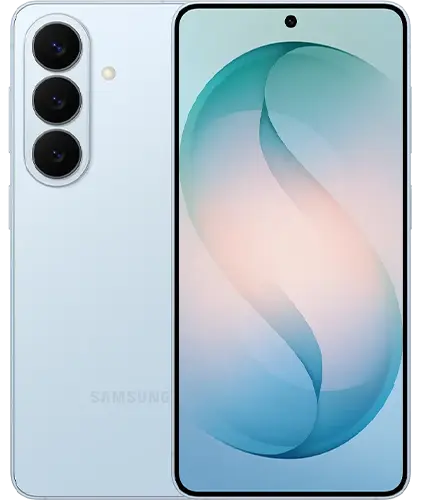
The reviewer shows a Lavender unit and likes its finish. The phone uses plastic around the sides, while he describes Gorilla Glass Victus+ on the front and back.
The combination is practical rather than luxurious. Glass helps the phone feel more substantial, but plastic edges may scratch over time. Kevin recommends a case, particularly for someone planning to keep the phone for several years.
There is a broader point here. Materials alone do not determine whether a midrange phone is well built. A plastic frame can be perfectly acceptable if the screen, fit and overall durability are good. What matters is whether the asking price leaves enough room for that compromise.
Samsung also gives the A37 an IP68 dust- and water-resistance rating, as described in the video. The rating is useful protection against accidents under specified test conditions, not an invitation to swim with the phone. Resistance can also diminish with wear and damage.
The A37 feels more carefully equipped than a bargain-basement phone, even if it does not have the metal finish of the A57.
Three Rear Cameras, but Only One Is the Main Attraction
The rear system combines a 50MP main camera, an 8MP ultrawide and a 5MP macro. A 12MP front camera handles selfies.
Kevin's verdict is measured: the cameras are good enough for vacations, family gatherings and social posts, but not exceptional.
That is a useful distinction. The main camera is likely to do most of the work. The ultrawide offers a different perspective, but its lower resolution limits flexibility compared with the main sensor. The macro adds a close-focus option, although it is not a substitute for a dedicated optical zoom lens.
There is no telephoto camera in the setup discussed in the video. If portraits from a distance, concerts or detailed zoom shots are important to you, a used premium phone with a proper telephoto lens may offer a better camera experience.
Kevin does not present a controlled, side-by-side photo study in the transcript. It would be misleading to claim a quantified improvement over competing phones based on his general praise.
For everyday memories, the A37 should be capable. For photography enthusiasts, its camera versatility is limited.
Exynos 1480: The Compromise You Will Notice Later
Inside the reviewer's configuration are 6GB of RAM and Samsung's Exynos 1480 processor. He describes it as adequate rather than particularly fast.
The video shows benchmark results, but the spoken transcript does not give the exact single-core and multi-core numbers. Belliste therefore does not invent scores.
The practical concern is longevity. A processor that feels sufficient for messaging, navigation and streaming today may become less comfortable when several heavy apps compete for memory or future software becomes more demanding.
Six gigabytes of RAM is workable for ordinary use, but it leaves less headroom than configurations with more memory. Buyers should check the exact RAM and storage version offered in their region rather than assuming all A37 units match the reviewer's.
The A37 has 128GB of storage in the reviewed configuration, with no microSD expansion. That makes choosing enough storage at purchase more important, especially for people who record lots of video.
Samsung has balanced this phone toward screen quality, battery and software support rather than raw speed. That is a defensible choice at a discount; it is less compelling at flagship-adjacent prices.
A 5,000mAh Battery and 45W Charging Are Genuine Strengths
The A37 has a 5,000mAh battery and supports up to 45W wired charging, according to the review.
That pairing is attractive because it addresses two separate concerns: how long the phone can operate and how quickly it can recover when the battery is low.
The transcript does not provide a standardized battery endurance score or a measured zero-to-full charging time. Kevin's comments are positive, but there is no basis for promising a specific number of hours or minutes.
Actual charging speed depends on the adapter, cable, battery temperature and charging conditions. A compatible charger may be needed to reach the phone's maximum supported rate.
Still, a large battery and relatively fast charging are meaningful features in this price bracket. For buyers who prioritize messaging, video and long days away from a desk, they may matter more than gaming performance.
Six Years of Updates Change the Value Calculation
Kevin reports receiving multiple updates and highlights Samsung's promise of up to six years of Android software updates.
Long support can make a discounted midrange phone a sensible purchase. It reduces the pressure to replace hardware merely because security maintenance has ended.
But support promises should not be confused with guaranteed performance. A phone may remain secure and receive new Android versions while its processor, storage capacity or battery aging becomes the practical limit.
The A37 also includes an in-display fingerprint reader, face unlock, NFC and stereo speakers in the reviewed configuration. None is a headline innovation, but together they help it feel complete as an everyday device.
This is where Samsung's approach has merit: rather than chase one dramatic feature, it covers many of the basics that people use every day.
Should You Buy an A37 or an Older Galaxy S?
This is the comparison that matters most once the A37 approaches the price of a refurbished flagship.
An older Galaxy S model may offer a faster chipset, more capable cameras and features missing from the A37. The trade-offs are battery wear, remaining software support, repair history and warranty coverage.
A new A37 has the advantage of a fresh battery, predictable condition and a straightforward retail warranty. A used flagship may deliver more performance and camera flexibility for similar money, but only if its condition is genuinely good.
The right choice depends on your priorities.
Buy the A37 if you want a large OLED screen, dependable basics, a substantial battery, Samsung's long update policy and the reassurance of a new phone—especially at a meaningful discount.
Consider an older flagship if gaming performance, zoom photography or premium hardware matter more, and you can verify the device's condition and support lifespan.
Wait or compare further if the A37 is still selling close to its full $449 launch price. The closer it gets to more capable alternatives, the weaker its value argument becomes.
Verdict: Better at $375 Than at $449
Kevin's four-month perspective is persuasive precisely because he does not pretend the hardware has changed. He still sees a good-looking phone with a strong display, acceptable cameras and useful battery features. His enthusiasm grows as the price falls.
Belliste's conclusion is similar, with one condition: the discount must be real once all costs are included.
At roughly the unlocked sale price cited in the video, the Galaxy A37 5G becomes a sensible mainstream option. At full launch price, its Exynos 1480, 6GB reviewed configuration and basic camera versatility invite tougher comparisons.
This is not a hidden flagship. It is a well-rounded midrange Samsung whose strengths are easier to appreciate when you're no longer paying a premium for them.
Source: [Kevin's Galaxy A37 5G four-month review](https://www.youtube.com/watch?v=qihfgN57qBM). Video prices are historical examples, not live retail quotations. Belliste has not independently tested the device.