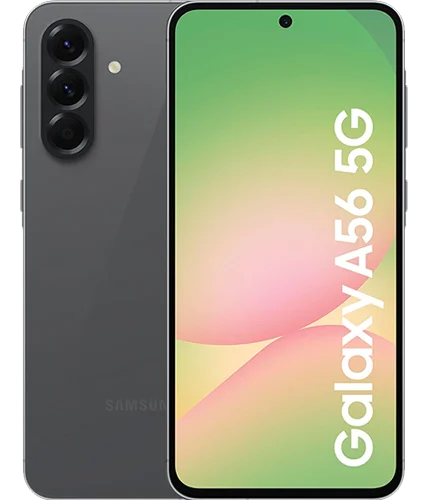
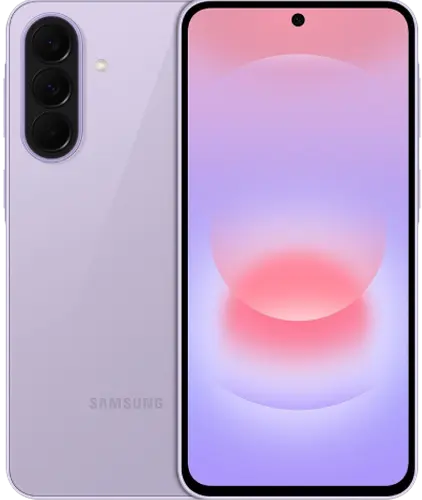
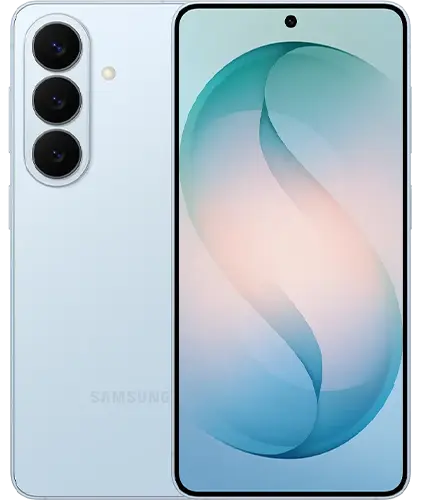
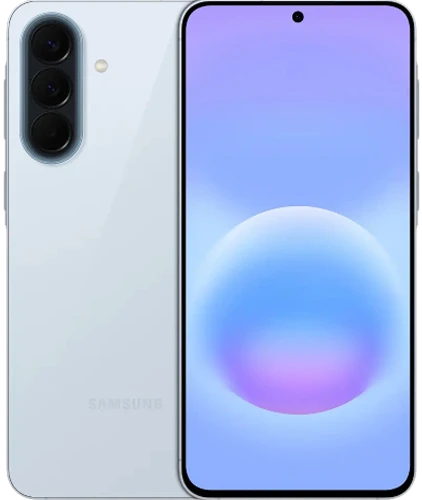
The Galaxy A56 5G has a strange talent: it can convince you that you bought a more expensive phone right up until you open the camera.
That is the tension running through the supplied week-long user-experience review. The creator likes the build, screen, charging and everyday speed. He plays Mobile Legends comfortably and finds Samsung's Exynos processor more capable than its reputation suggests. But his enthusiasm fades when he looks at the photographs and feels the vibration motor while typing.
This is a useful perspective because it focuses on the things owners notice rather than repeating a specification sheet. It is also one person's experience. A separate GSMArena laboratory review adds an important qualification: while the A56's still photographs can be disappointing, its video performance is considerably stronger.
The Galaxy A56 therefore deserves a more nuanced verdict than either 'excellent midranger' or 'bad camera phone.'
Belliste has not tested the device firsthand. Observations from the supplied video are attributed to its creator; hardware, software support and additional camera findings are checked against Samsung and GSMArena.
Why the A56 Feels More Expensive Than It Is
The first thing the reviewer praises is the physical construction. He likes the brushed-metal appearance of the frame, the cleaner back and the unified camera island. He briefly says 'A36' near the beginning, but the rest of the video—including the chipset and camera discussion—clearly concerns the Galaxy A56 5G.
Samsung gives the A56 a real aluminum frame and Gorilla Glass Victus+ on the front and back. It is 7.4mm thick, weighs approximately 198g, and carries an IP67 rating for dust and water resistance under specified laboratory conditions.
Those details matter in a market where many midrange phones look luxurious in promotional photographs but feel less convincing in person. Aluminum and glass do not automatically make a phone durable against every drop, yet they do help explain the reviewer's favorable first impression.
The new camera island is a matter of taste. Some buyers prefer separate lenses; others will appreciate the more cohesive design. What matters more is that Samsung has refined the body without making the A56 unnecessarily thick.
The trade-off is size. At 162.2 × 77.5mm, this is a large phone. Anyone shopping for something genuinely compact should not mistake its thinness for one-handed convenience.
The Display Gets the Everyday Experience Right
The A56 uses a 6.7-inch Super AMOLED screen with 2340 × 1080 resolution and 120Hz refresh rate. Samsung lists up to 1,200 nits in high-brightness mode, with a higher peak figure under particular conditions.
The reviewer enjoys the punchy colors and smooth scrolling. He does not claim the panel is extraordinary; he simply finds it very good for social media, films and normal daily use. That is probably the right level of praise.
His complaint is visual symmetry. The bottom bezel appears thicker than the sides, and the top and side borders are not perfectly uniform. He notices it immediately, then largely stops caring after living with the phone.
This is one of those small design details that can dominate product photographs but disappear in ordinary use. If uniform bezels are important to you, inspect the phone before buying. If not, the screen's color, brightness and smoothness are likely to matter more.
Compared with the Galaxy A55, the display has grown from 6.6 to 6.7 inches without a dramatic increase in the device's overall footprint. Samsung achieved that by trimming the surrounding borders.
The panel is not flagship-class in every respect, but it meets the most important expectation of a good midrange phone: it looks appealing every time you unlock it.
Exynos 1580: A Reputation Is Not a Benchmark
The reviewer spends part of the video defending the Exynos 1580 against the assumption that every Exynos chip must be slow or inefficient.
His evidence is practical. He reports smooth multitasking and a satisfying experience playing Mobile Legends at demanding settings. He also feels that gaming does not drain the battery unusually quickly.
Those are useful observations, but they are not a controlled head-to-head benchmark. He briefly mentions a Snapdragon 7-series comparison while sounding uncertain about the exact chipset name. That uncertain claim should not be turned into a definitive ranking.
Independent specifications identify the Exynos 1580 as a 4nm processor with an Xclipse 540 GPU. GSMArena's testing finds meaningful performance improvements over the previous A-series generation, though it is not a substitute for a flagship processor under every workload.
The reviewer draws a sensible boundary: light and medium gaming should be comfortable, while people who prioritize graphically demanding titles such as Genshin Impact or Honkai may want a stronger gaming-focused device.
That is a more credible recommendation than declaring the A56 either a gaming powerhouse or an Exynos disappointment. For most owners, responsiveness in messaging, browsing, navigation and familiar games matters more than winning a synthetic benchmark chart.
The Battery Is Familiar; the Charging Is Not
Samsung kept the 5,000mAh battery capacity from the A55 but raised wired charging support from 25W to 45W.
The reviewer calls this one of his favorite improvements. He says endurance is strong in his own use, and faster top-ups make the phone easier to live with. He does not provide a repeatable timed charging test, so his impression should not be converted into a precise charging-speed claim.
GSMArena measured an active-use score of 12 hours and 8 minutes and lists a full charge in approximately 68 minutes under its testing conditions. These are independent lab results, not figures measured by the video's creator, and they should not be confused with continuous screen-on time.
The charging improvement is welcome, but it is not unusually aggressive by the standards of brands such as Redmi or Realme. The reviewer makes exactly that point: Samsung is catching up, not setting a new record.
There is also no charger included in the box. To reach the supported charging rate, buyers need a compatible USB Power Delivery PPS adapter. The reviewer's mention of third-party charger brands is personal advice, not evidence that any particular accessory was certified or tested by Belliste.
This is a meaningful A55-to-A56 upgrade because it changes a daily routine. It does not, by itself, guarantee that the phone will last longer between charges than every rival.
The Main Camera: The Most Divisive Part of the Phone
The A56 has a 50MP main camera with optical image stabilization, a 12MP ultrawide and a 5MP macro. There is no dedicated telephoto lens.
The video's creator is dissatisfied with the photos. He finds the exposure, shadows and colors unremarkable for the money and argues that competing phones around his local price point can do better. At roughly 2,000 Malaysian ringgit in the context of the review, he expects more.
This is a subjective judgment, but independent testing gives it some support. GSMArena describes the main camera's still photographs as reasonably detailed and colorful yet sometimes soft, with occasional highlight issues. Indoor images can look less convincing.
That does not make every photograph bad. A well-lit outdoor portrait or family snapshot can still look perfectly shareable. The problem is consistency and competitiveness: buyers at this price increasingly expect stronger detail, reliable exposure and better processing in difficult light.
The distinction matters. A camera that disappoints an enthusiast can still satisfy someone whose photography consists mainly of occasional daytime pictures.
Zoom Is Where the Missing Telephoto Becomes Obvious
The reviewer is especially unhappy when zooming. The A56 relies on digital cropping rather than a dedicated telephoto camera. He sees noticeable noise and loss of quality as he pushes toward 4x.
GSMArena's independent review also reports softer results with the 2x crop than at the native 1x view. This is a predictable limitation of the hardware, though the severity depends on light and subject matter.
A 50MP sensor does not magically replace an optical telephoto lens. Cropping can work acceptably in bright conditions, but low light and distant details expose the compromises.
If you frequently photograph concerts, sports or distant architecture, the A56's camera setup is a reason to compare alternatives carefully. If you rarely zoom, the missing lens may be irrelevant.
Samsung chose to invest in build quality, software longevity and charging rather than an ambitious camera redesign. Whether that was the right decision depends on your priorities.
Video Is Better Than the Still-Photo Verdict Suggests
This is where the two sources diverge in a useful way.
The supplied video focuses primarily on the reviewer's dissatisfaction with still images. GSMArena's separate testing finds the A56's 4K video considerably more impressive, praising detail, color, dynamic range and stabilization from the main camera. It also finds the ultrawide's video more convincing than its still-photo performance.
The 12MP front camera, replacing the A55's 32MP unit, also supports 4K video and benefits from revised processing. A lower megapixel count does not automatically mean a worse selfie camera.
These findings prevent an overly broad conclusion that the Galaxy A56 has uniformly poor cameras. The still-image system may lag competitors, particularly for zoom and challenging lighting, while video recording can remain a genuine strength.
A buyer who records clips for social media may have a different experience from one who mainly takes nighttime photographs.
The Haptic Motor Is a Small Flaw You Can Feel Every Day
The video's second major criticism is less visible than the camera: vibration feedback.
The reviewer types with haptics enabled and finds the A56's response less crisp than the short, controlled pulses he has experienced on some competing Redmi and Realme phones.
He does not call it unusable. He says it is simply less pleasant than it should be.
This is not something a specification table captures well. There is no universally meaningful number for 'good haptics,' and personal sensitivity varies considerably.
But the criticism is worth taking seriously because typing is repeated hundreds of times a day. Someone who disables keyboard vibration may never notice it. Someone who values tactile feedback could find it irritating throughout the phone's lifespan.
If possible, test the keyboard vibrations in a store before buying. That simple check may tell you more about daily satisfaction than a benchmark score.
Six Years of Updates Change the Value Equation
The A56 launched with Android 15 and One UI 7. Samsung promises up to six generations of operating-system upgrades and six years of security updates, subject to its rollout conditions.
That is an important advantage in the midrange segment. A phone that receives security fixes and major platform updates for years can remain useful longer, provided its battery and physical components hold up.
Samsung also includes selected intelligent features such as Circle to Search, Object Eraser and other editing tools. The A56 does not necessarily receive every Galaxy AI capability available on the flagship S series, and supported features can change with software updates.
The reviewer's focus on daily experience makes software support particularly relevant. A premium-feeling phone is more valuable when the manufacturer intends to maintain it well beyond the first year.
Long support does not erase weaknesses in the camera or haptics. It does mean buyers should evaluate ownership cost over several years rather than judging the phone only by launch-day excitement.
Galaxy A56 vs A55: What Actually Improved?
The A56's biggest practical gains over the A55 are its Exynos 1580, thinner and lighter construction, slightly larger display, faster 45W charging and extended software-support commitment.
The rear camera arrangement remains broadly familiar: 50MP main, 12MP ultrawide and 5MP macro. The selfie camera changes to a 12MP unit, with different processing and video capabilities.
There is also a trade-off that buyers should not miss: the A56 does not include a microSD card slot, unlike the A55. Anyone with a large local media library should choose internal storage carefully.
If you already own an A55 and are satisfied with its speed and charging, the A56 may not offer enough improvement to justify replacing it. If you are coming from an older A-series device, the smoother performance, refined body and longer support horizon are easier to appreciate.
In 2026, compare actual local prices, storage configurations and warranty coverage rather than treating the launch-era Malaysian price as a universal reference.
Verdict: Shortlist It, but Test the Camera First
The video creator's final advice is to shortlist the Galaxy A56, not to reject it. That is a measured conclusion and the right starting point.
The A56 feels more expensive than its category suggests. It has a strong AMOLED display, a capable Exynos 1580 for everyday tasks, a useful 45W charging upgrade and unusually long software support. Those strengths are tangible.
The compromises are tangible too. Still photographs and digital zoom are not as competitive as they should be, the haptic motor lacks refinement, and the missing microSD slot may inconvenience long-term owners.
Buy the Galaxy A56 5G if you value build quality, display, everyday performance and software longevity above camera versatility.
Compare other phones first if low-light photos, optical zoom, refined haptics or demanding gaming are priorities.
Keep your Galaxy A55 if it still meets your needs and the cost of upgrading is substantial.
The A56 is not a failed midranger. It is a carefully balanced one with a conspicuous weakness. Whether it is a smart purchase depends on how often you reach for the camera.
Sources and methodology: Hands-on impressions come from the [supplied week-long Galaxy A56 5G review](https://www.youtube.com/watch?v=sIDz0luksFg). Hardware and software details were checked against [Samsung's official Galaxy A56 page](https://www.samsung.com/ae/smartphones/galaxy-a/galaxy-a56-5g-awesome-olive-128gb-sm-a566bzgvmea/) and [GSMArena's independent review](https://www.gsmarena.com/samsung_galaxy_a56-review-2812.php). Belliste has not conducted hands-on testing.