The Galaxy S25 combines compact dimensions with top-tier speed, but familiar cameras and 25W charging undermine its upgrade case.
Samsung's Galaxy S25 is an unusual flagship. It has the kind of processor you would expect in an expensive performance phone, but it fits in a body small enough to use comfortably with one hand. That should make it an easy recommendation.
Yet the more closely you examine it, the harder the decision becomes. Samsung has kept the display size, battery capacity, charging power and core camera hardware remarkably similar to the Galaxy S24. The processor is much faster, but the rest of the phone feels cautious.
GSMArena's detailed video review makes this tension clear. Reviewer Will finds the S25 compact, polished and impressively fast. His laboratory results also expose weak points that specifications alone can conceal: substantial throttling under sustained load, charging that has barely progressed, and cameras that face increasingly capable rivals.
The result is a phone that is easy to enjoy and harder to justify as an upgrade.
Belliste has not performed hands-on testing. Battery, charging, display, speaker, thermal and camera observations below are attributed to GSMArena's linked review. Published hardware specifications are cross-checked against Samsung.
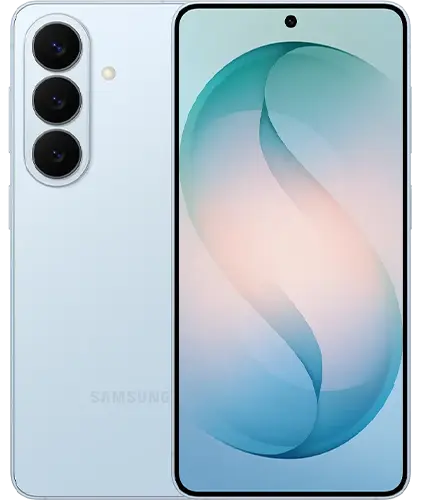
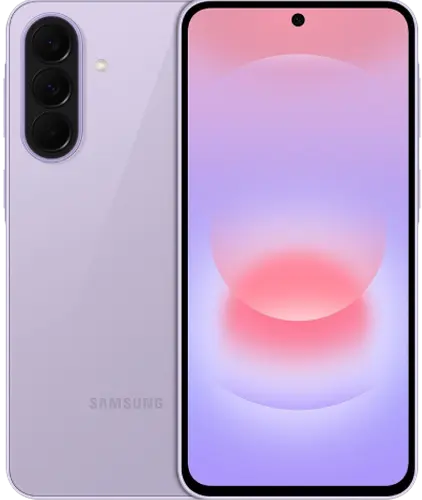
At roughly 146.9 × 70.5 × 7.2mm and 162g, the Galaxy S25 occupies a shrinking category: genuinely compact premium Android phones.
Samsung's design changes are modest. The body is about 0.4mm thinner than the S24, with flat glass surfaces and an Armor Aluminum frame. The phone retains IP68 dust and water resistance, under specified laboratory conditions, and Gorilla Glass Victus 2 protection.
GSMArena's reviewer appreciates the slim feel, but notes that Samsung has not brought the Ultra's more advanced anti-reflective front glass to the smaller model. That is a meaningful omission, not because the S25 screen is poor, but because the Ultra demonstrates how much better reflections can be managed.
The design is not trying to surprise anyone. Its appeal is that it avoids the enormous footprint of many contemporary flagships without dropping premium materials or processing power.
For commuters, smaller hands and anyone tired of two-handed phones, that alone may be a stronger reason to buy it than another benchmark record.
The S25 uses a 6.2-inch Dynamic AMOLED 2X display with 2340 × 1080 resolution and an adaptive refresh rate up to 120Hz. Samsung rates peak brightness under specific conditions, but measured brightness is more useful for understanding everyday behavior.
In GSMArena's tests, the screen reached approximately 750 nits using the manual slider and nearly 1,400 nits in automatic brightness mode. The reviewer considers that sufficient for comfortable outdoor use.
He also praises the contrast, sharpness and HDR10+ support. LTPO technology allows the refresh rate to adjust downward when a scene is static, helping conserve energy.
None of this is a disappointment. The problem is that almost none of it is new. The S24 already had a strong compact flagship display, and Samsung has done little to widen the gap.
The practical verdict is straightforward: buy the S25 because you like this screen's size and quality, not because it represents a dramatic display upgrade.
GSMArena describes the stereo speakers as slightly less loud than those on the previous model, though richer in tone with a little more bass. That is a trade-off, not a clear improvement across the board.
The ultrasonic fingerprint reader beneath the display earns praise for speed and reliability.
Samsung offers the S25 with 128GB, 256GB or 512GB of storage depending on market, and 12GB RAM across configurations. The 12GB baseline is useful for multitasking and longevity, especially as software grows more demanding.
The 128GB entry configuration, however, looks less generous for a premium phone that records high-resolution video. There is no microSD slot to expand storage later.
A buyer who expects to keep the device for years should compare the actual price of a 256GB S25 with alternatives, rather than assuming the cheapest listing is the best value.
Unlike the more familiar exterior, the processor marks a substantial generational step. The Galaxy S25 uses Snapdragon 8 Elite for Galaxy, paired with 12GB RAM. Samsung standardized this chipset across the S25 series in the markets covered by its launch announcement.
GSMArena reports excellent benchmark results and responsive everyday operation. This is not a phone that feels underpowered.
But there is a critical qualification. During the reviewer's prolonged stress tests, performance fell to around half its initial peak. That is heavy thermal throttling, and the compact chassis provides limited space to dissipate heat.
These observations are not contradictory. The S25 can be extremely fast in short bursts while reducing its speed during sustained workloads. Most messaging, navigation, photography and app-launch tasks are brief; long gaming sessions and intensive rendering are different.
The chip is the clearest hardware reason to choose the S25 over its predecessor. Whether that benefit matters depends on how often you push a phone beyond ordinary tasks.
Samsung retains a 4,000mAh battery, the same nominal capacity as the Galaxy S24.
In GSMArena's standardized active-use test, the S25 achieved 12 hours and 21 minutes. The reviewer describes this as respectable for a small phone, but not especially impressive in the wider flagship market.
The result also complicates a common assumption: a more efficient new processor does not guarantee a dramatic endurance improvement. Display use, radio conditions, background activity and workload still shape battery life.
This number is GSMArena's test result, not an estimate of screen-on time and not a promise that every owner will achieve 12 hours of continuous use. Different tests measure different workloads.
A compact phone requires compromise somewhere. Samsung has chosen to keep the battery relatively small rather than increase thickness or weight.
That choice is understandable. It also means battery-focused buyers have good reason to examine the S25+ or competing phones before deciding.
The S25 supports 25W wired charging. GSMArena measured 56% after 30 minutes and a full charge in 1 hour and 17 minutes with a compatible adapter.
There is no charging brick in the box. Samsung also supports wireless charging; the video discusses Qi2-ready compatibility but notes the phone lacks integrated alignment magnets, requiring an appropriate magnetic case for that style of attachment.
The reviewer reports a 15W wireless charging rating in the tested context. Charging performance can depend on the charger, accessories and conditions.
These are acceptable figures in isolation. In a premium smartphone market where many competitors recharge much faster, they are increasingly difficult to celebrate.
Samsung could argue that conservative charging protects battery longevity, but this review does not provide evidence establishing that the S25's charging approach produces a measurable longevity advantage over faster-charging rivals.
For someone who charges overnight, the difference may barely matter. For a frequent traveler or heavy user relying on short top-ups, it matters a great deal.
The rear camera system remains familiar: 50MP main, 10MP 3x telephoto and 12MP ultrawide. The front camera is 12MP.
GSMArena's daylight main-camera samples show pleasing color, wide dynamic range and good detail. The reviewer nevertheless argues that competing camera phones now produce sharper images.
That distinction is important. A camera can be good and still fall behind the market. Samsung's processing produces photographs many users will like, but the unchanged hardware leaves less room for the kind of obvious improvement that would justify a new purchase.
At night, the reviewer observes good highlight control but relatively dark shadows and visible noise in standard mode. Manually enabling Night mode can improve sharpness and reduce noise, though its stronger microcontrast may not appeal to everyone.
These are evaluations of the reviewer's sample images. They are not evidence that every scene or software version will behave identically.
The 10MP telephoto camera provides 3x optical zoom. In daylight, GSMArena finds its color and contrast reasonably consistent with the main camera, but fine detail and sharpness are less impressive.
Low-light zoom is a more obvious weakness. The reviewer reports noisy, soft photographs with washed-out colors. Night mode can improve the appearance, but does not fully close the gap.
The criticism is not that Samsung has omitted telephoto hardware; many compact phones still do. It is that this particular zoom camera is starting to show its age.
For casual portraits and occasional distant subjects, 3x remains useful. For concerts, wildlife or frequent night zoom photography, the S25 Ultra or another camera-focused device makes a stronger case.
The ultrawide section of GSMArena's review requires special care.
The reviewers noticed uneven softness and suspected that their specific S25 test unit had a misaligned ultrawide lens. To illustrate the difference, they showed photographs from the S25+, which has nominally identical ultrawide hardware and produced noticeably sharper results.
That is a possible sample defect, not proof that the Galaxy S25's ultrawide camera is universally poor.
The right editorial conclusion is narrower: GSMArena's tested unit underperformed, but its abnormal focus behavior prevents a fair general judgment of every retail S25. Their S25+ comparison suggests the camera hardware is capable of better results.
Anyone comparing reviews should be alert to this distinction. Treating a suspected faulty sample as representative would exaggerate the phone's weakness.
The larger criticism still stands: Samsung has not upgraded the ultrawide hardware from the previous generation.
GSMArena likes the 12MP autofocus selfie camera, praising exposure, natural-looking skin tones, color and detail. Samsung did not need to reinvent a component that was already performing well.
Video is another bright spot. The review says all four cameras can capture up to 4K at 60fps, while the main camera also supports 8K recording.
The main camera's 4K footage earns praise for detail, contrast and dynamic range. The 3x telephoto video also holds up well, and electronic stabilization is described as particularly effective.
Once again, ultrawide video from the suspected faulty S25 unit looked softer than expected, so the reviewer substituted S25+ footage to show the shared hardware's likely capability.
Low-light main-camera video is good, though GSMArena has seen somewhat cleaner results from rivals.
The takeaway is more balanced than the unchanged camera specifications might imply: the S25 remains a capable video phone, even if its still-photography hardware lacks ambition.
The S25 launched with Android 15 and One UI 7. The reviewer highlights the separated quick-settings and notification views, natural-language searches in settings and the gallery, Circle to Search song recognition and new Galaxy AI features.
Samsung also promoted cross-app actions using Gemini, generative photo editing and Now Brief. Some features depend on supported apps, language, region and software version; a launch demonstration is not proof that every complex workflow is reliable.
Samsung committed to seven generations of operating-system upgrades and seven years of security updates for the S25 series. That support horizon is a genuine strength for someone keeping a compact phone for several years.
There is an important 2026 policy correction. Samsung's support information states that basic Galaxy AI features provided by Samsung are free, while enhanced Samsung AI and third-party services may have separate terms or fees. Older uncertainty about all AI features becoming paid after 2025 should not be repeated as a current fact.
Software support is valuable, but much of One UI's appeal can also reach eligible older Galaxy phones. It is not enough, by itself, to make every S24 owner upgrade.
For an existing S24 owner, the S25 offers a thinner body, 12GB standard RAM and a substantially stronger Snapdragon platform. Its compact feel and display quality remain excellent.
Yet the display dimensions, battery capacity, charging ceiling and core rear-camera configuration are remarkably similar. GSMArena's tests do not reveal a dramatic battery breakthrough, either.
That makes the upgrade calculation unusually simple.
If you play demanding games, need more performance headroom or plan to keep the phone for many years, the newer chip and remaining support life have value. If you mainly message, browse, photograph family events and use social apps, an S24 in good condition may already do almost everything you need.
In 2026, prices and condition matter more than original launch positioning. Compare equivalent storage, warranty and battery health, especially if one option is refurbished.
The S25 is a better processor wrapped in a very familiar phone. For some people, that is precisely the upgrade they want. For many existing S24 owners, it is not enough.
The Galaxy S25 deserves credit for remaining compact without abandoning premium performance, a high-quality AMOLED display, strong video stabilization or long software support.
It also deserves criticism for standing still. GSMArena's 12-hour-21-minute active-use score, 77-minute full-charge result and significant stress-test throttling put real-world boundaries around the flagship marketing. The main and telephoto cameras are competent but no longer especially ambitious.
The suspected ultrawide defect in the review sample must not be treated as a universal camera failure. Even with that caveat, the lack of hardware progress is clear.
Buy the S25 if you want a small Android flagship with powerful hardware and long-term support.
Keep your S24 if it already meets your needs and the upgrade costs substantial money.
Consider the S25+ if screen size, battery capacity and 45W charging matter more than pocketability.
Look at other camera-focused flagships if nighttime zoom, ultrawide flexibility or faster charging are central to your purchase.
The Galaxy S25 is a very good compact smartphone. What Samsung has not shown is why a very good compact smartphone needed to change so little.
Sources and methodology: GSMArena's [Galaxy S25 video review](https://www.youtube.com/watch?v=1HFLee3XkcE) provides the attributed hands-on tests and image-quality observations. Specifications and software commitments are cross-checked against [Samsung's Galaxy S25 launch announcement](https://news.samsung.com/global/samsung-galaxy-s25-series-sets-the-standard-of-ai-phone-as-a-true-ai-companion) and [Samsung's Galaxy AI support guidance](https://www.samsung.com/us/support/answer/ANS10001639/). Belliste did not conduct hands-on testing.
The Galaxy S25 remains attractive if you want a compact Android flagship with Snapdragon 8 Elite for Galaxy, a 6.2-inch AMOLED display and long software support. Compare current prices with the S24, S25+ and newer phones.
GSMArena measured a 12-hour-21-minute active-use score in its standardized test. The Galaxy S25 has a 4,000mAh battery; individual battery life depends on usage, network conditions and settings.
The Galaxy S25 supports up to 25W wired charging. GSMArena measured 56% in 30 minutes and a full charge in 1 hour and 17 minutes with a compatible adapter.
GSMArena suspected a misaligned ultrawide lens in its particular review unit, so that sample's soft ultrawide images should not be generalized to every Galaxy S25. Its 50MP main, 10MP 3x zoom and 12MP ultrawide hardware remain similar to the S24.
The S25 brings Snapdragon 8 Elite for Galaxy, 12GB standard RAM and a refined compact design. However, its display size, 4,000mAh battery, 25W charging and core cameras are similar to the S24, making the upgrade most compelling for performance-focused users.