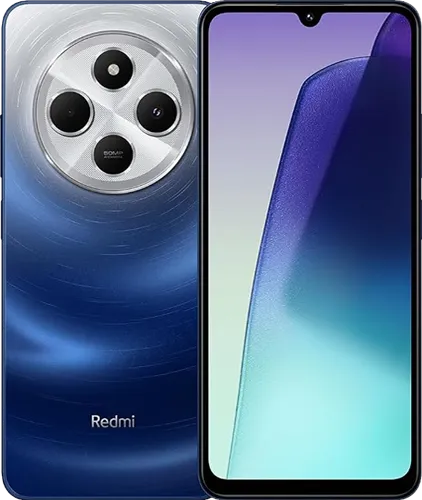
A video-based review of the Redmi Note 14 4G covering Helio G99 gaming, 120Hz AMOLED, 5500mAh battery, 108MP camera and the missing ultrawide lens.
Xiaomi has given the Redmi Note 14 4G a bigger battery, tougher screen glass and a processor that handles games more consistently than its predecessor. It has also removed the ultrawide camera. For someone choosing between the Note 13 and Note 14, that trade-off may matter more than the new model number.
In the linked video, the reviewer examines the phone's design, display, software, gaming, charging and cameras. This Belliste article is an editorial analysis of that review, not independent Belliste testing. Performance, image quality and charging observations are attributed to the reviewer. The prices quoted in the video reflect its original market and review period, not verified October 2026 offers.
The reviewer quotes a starting price of around $150, or roughly ₦253,000 in Nigeria for the 6GB RAM / 128GB storage version at the time of filming. An 8GB/256GB configuration costs more. These figures are historical examples, not a current international price list.
His retail box includes a 33W charger and the usual accessories, but no earphones. Packaging can vary by region. The hybrid tray holds either two nano-SIM cards or one SIM and a microSD card; the reviewer describes expansion up to 1TB. Anyone who needs two SIMs and a memory card simultaneously should note that limitation.
The reviewer's lime-green handset has a matte finish that he finds comfortable in the hand. He notices that the design recalls the Redmi Note 12 rather than taking a completely new direction. That is not necessarily a drawback: the finish and grip matter more in daily use than whether the camera island looks new.
The display glass is upgraded to Gorilla Glass 5, replacing Gorilla Glass 3 on the Note 13. Alongside the larger battery, the change contributes to a weight increase of about 8g compared with the predecessor, according to the reviewer. He does not perform a drop or scratch test, so the improved glass specification should not be mistaken for proven durability in this particular video.
The IP54 rating covers dust and splashes, not immersion. Xiaomi has retained the 3.5mm headphone jack, an infrared blaster and stereo speakers. The reviewer considers the speakers decent for a budget phone. The headphone jack works with wired earbuds without an adapter, and the IR blaster can control compatible home electronics.
The 6.67-inch AMOLED supports 120Hz refresh and has a quoted peak brightness of . The reviewer finds the colors vibrant and the screen bright enough outdoors, but does not show a measured brightness test. The 1,800-nit figure is a manufacturer specification; the video does not independently measure peak brightness.
One visible regression is the bezel-to-screen balance. The reviewer cites 85.9% screen-to-body ratio for the Note 14, compared with 87.5% for the Note 13. He also points out the thicker borders in the footage. The display remains attractive at this price, but existing Note 13 owners should not expect a cleaner-looking front.
Xiaomi replaces the Redmi Note 13 4G's Snapdragon 685 with MediaTek's Helio G99. The reviewer notes that the G99 was already an established processor when the Note 14 arrived; it had also powered the previous Redmi Note 13 Pro 4G. The change is not about introducing cutting-edge silicon.
For everyday tasks, the reviewer reports responsive navigation and reliable multitasking. The optical fingerprint reader beneath the display is quick and accurate in his use. No standardized benchmark chart or controlled app-opening comparison appears in the supplied video, so these are practical impressions rather than quantified performance gains.
Gaming is where the reviewer notices a worthwhile difference. He says the Note 14 sustains graphics settings more consistently than the Snapdragon 685-based Note 13 4G, particularly in Call of Duty: Mobile. On the older phone, high frame-rate settings could require lower graphics quality; he finds the G99 less troublesome.
He reports expected warmth after extended gaming, without major overheating concerns in his experience. Without measured temperatures or sustained FPS results, the video supports a narrower conclusion: games feel more consistent than on the Note 13 in this reviewer's use.
The review unit runs Android 14 with HyperOS 1. The reviewer questions why it did not arrive with a newer Android release and discusses a proposed upgrade policy, but the video does not establish the phone's actual future update delivery. Software versions and support terms should be checked against Xiaomi's current regional information before purchase.
Split-screen multitasking and Second Space are available. The reviewer also complains about preinstalled applications and promotional content. He advises deselecting optional apps during setup, although some remain afterward. That creates unnecessary cleanup work for buyers who prefer a minimal interface.
The built-in AI tools shown are limited, including an eraser and sky-replacement feature. The reviewer notes that services such as Gemini remain available separately; that does not mean the phone has the same native AI features as Xiaomi's more expensive models.
The 5,500mAh battery is larger than the previous generation's. The reviewer finds endurance comfortably sufficient for a full day in his use, provided the workload is not unusually heavy. He does not provide a standardized battery rundown, so we cannot translate that impression into a universal screen-on-time figure.
Wired charging is rated at 33W. Xiaomi's quoted full-charge time is approximately 1 hour 21 minutes, while the reviewer reports closer to 1 hour 30 minutes in his experience. The difference is modest, but useful: a manufacturer estimate and a reviewer's real-world observation are not interchangeable. Charging speed can vary with temperature, remaining capacity and charger conditions.
The main camera uses a 108MP sensor. The reviewer describes its daylight images as sharp and detailed, although the supplied review does not include controlled side-by-side photo measurements. The larger concern is the missing ultrawide lens, which changes the kinds of scenes the phone can capture.
The Note 13 offered an ultrawide camera. On the Note 14 4G, the supporting rear cameras are a 2MP macro and 2MP depth sensor instead. Neither can replace an ultrawide field of view for landscapes, group pictures or tight indoor spaces. For buyers who photograph groups or interiors, that missing field of view is a practical downgrade.
The 20MP selfie camera delivers acceptable results in his experience, but he would like better image processing. He suspects the previous model might handle selfies better, while explicitly noting that he no longer has a Note 13 available for direct comparison. That is an opinion, not a verified head-to-head camera result.
According to the review, both the front and rear cameras support 1080p video, with the rear camera reaching 60fps. The video does not establish a 60fps option for the selfie camera. Nor does the reviewer present a detailed stabilization, microphone or dynamic-range test.
The review establishes a 1080p recording ceiling, but does not test stabilization or microphone quality in detail. Buyers who crop footage heavily or need 4K should look beyond the 108MP still-photo figure.
Compared with the Note 13 4G, the Note 14 gains more consistent gaming in the reviewer's experience, a larger battery and Gorilla Glass 5 instead of Gorilla Glass 3. The AMOLED screen, 120Hz refresh, headphone jack and expandable storage remain.
But the older Note 13 has an ultrawide camera, and the reviewer finds the Note 14's thicker bezels noticeable. For an existing Note 13 owner, neither a modest processor change nor extra battery capacity automatically outweighs losing a lens you already use. For a Note 13 owner who uses the ultrawide camera, the new processor and battery are unlikely to justify losing that shooting option.
The Redmi Note 14 4G suits buyers moving from an older or lower-tier handset who want an AMOLED display, dependable day-to-day speed and a large battery without paying for 5G. The headphone jack, stereo speakers and microSD option add useful flexibility. The reviewer's gaming experience makes it a reasonable choice for budget players who can accept moderate settings.
It is less convincing for Note 13 owners, people who regularly use an ultrawide camera, or buyers expecting premium video tools. If 5G connectivity is important, the separately specified Redmi Note 14 5G needs to be considered rather than treating it as a simple network variant.
The Redmi Note 14 4G is a sensible replacement for an older budget handset if battery life, AMOLED and steadier gaming matter more than camera versatility. The reviewer likes its matte finish and responsive fingerprint reader, but dislikes the thicker bezels and preinstalled apps.
Existing Note 13 owners have less reason to switch, particularly if they use its ultrawide lens. At a similar local price, compare alternatives that keep an ultrawide camera or add 5G; the Note 14 4G earns its place only when its everyday strengths match what you actually need.
No. The Redmi Note 14 4G uses the Helio G99 chipset and supports 4G LTE. The Redmi Note 14 5G is a separate model.
No. The 4G model has a 108MP main camera, a 2MP macro and a 2MP depth camera. Its predecessor had an ultrawide camera, which Xiaomi removed.
The reviewer reports roughly 1 hour 30 minutes for a full charge using 33W charging, compared with Xiaomi's approximately 1 hour 21 minute claim. Charging times vary.
It uses the MediaTek Helio G99. The reviewer finds everyday use smooth and gaming more consistent than on the Redmi Note 13 4G, without providing standardized benchmark results.
According to the linked review, the rear camera records up to 1080p at 60fps; the front camera also records 1080p, but the reviewer does not establish a 60fps option for selfies.