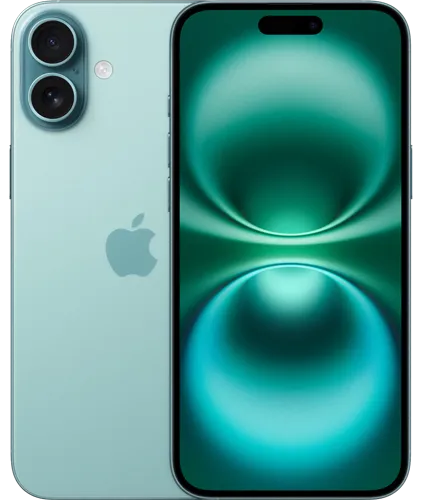
The iPhone Air is impressively thin and unexpectedly sturdy, but short battery life and a single rear camera make it a specialized choice.
The iPhone Air is the kind of product that makes an immediate impression before you switch it on. Pick it up and the appeal is obvious: an unusually thin, light smartphone with a large display and the finish of a premium Apple device. Spend a couple of weeks using it, however, and the more important question emerges. What did Apple remove to make it this thin, and which compromises will you notice after the novelty wears off?
In his detailed review, MKBHD approaches the iPhone Air as a design experiment with a series of trade-offs. His verdict is more nuanced than a simple celebration of thinness. He admires the engineering and is surprised by its durability. But the single rear camera, reduced speaker system and battery endurance keep him from choosing it as his daily phone.
That distinction defines this review. The iPhone Air is not a failed iPhone because it prioritizes design. It is a specialized iPhone whose appeal depends on how much you value lightness over versatility.
This Belliste article analyzes the supplied MKBHD review and the hardware characteristics discussed in it. Belliste did not independently test the device. Screen-time figures, thermal impressions and durability observations are attributed to the reviewer or the external tests he cites.
Apple's goal with the iPhone Air was not simply to make the standard iPhone smaller. It was to reconsider the arrangement of components so the body could become unusually thin.
MKBHD describes how Apple moved much of the computing hardware, memory and logic-board components toward the raised camera plateau. That leaves much of the remaining body available for the battery.
The engineering is visible in the physical details. The buttons occupy nearly the full depth of the sidewalls. The USB-C port has been redesigned to fit the slim enclosure. The edges are softly rounded, and the titanium frame gives the device a premium appearance.
He also notes that the polished titanium picks up fingerprints readily. That is a small cosmetic annoyance rather than a functional problem, but it illustrates the difference between an attractive finish and a low-maintenance one.
The iPhone Air is thin enough to feel distinctly different from a conventional smartphone. It is not merely a standard iPhone with a different name.
The practical benefit is comfort. A lighter device is less tiring to hold for long reading sessions, video calls and casual browsing. The drawback is that internal space is finite, and Apple has spent a considerable amount of it achieving that feel.
The iPhone Air's 6.5-inch OLED display supports refresh rates up to , providing the fluid scrolling and responsive animations expected from a premium phone.
MKBHD describes the screen as bright and gorgeous. His criticism is not the display quality itself, but the challenge of powering a large, high-refresh-rate panel from a relatively small battery.
ProMotion helps manage that trade-off by reducing the refresh rate when full speed is unnecessary. A lower refresh rate can reduce display power consumption during static content, while 120Hz makes fast interactions look smoother.
This is a clever pairing of performance and efficiency, but it cannot eliminate the energy cost of prolonged use at high brightness or with demanding applications.
The screen is a genuine strength for someone who reads, watches video or uses social apps frequently. It also makes the battery compromise more visible: the better and larger the display, the more tempting it is to use it for extended periods.
The Air succeeds at delivering a premium visual experience. Whether it can sustain that experience for your entire day is a separate question.
An extremely thin smartphone invites an obvious concern: will it bend?
MKBHD expected durability to be one of the iPhone Air's major weaknesses. Instead, he came away impressed.
He references bend and scratch testing conducted by JerryRigEverything, noting the titanium frame's ability to resist deformation and recover from substantial bending forces. He also cites iFixit's assessment of repairability and the phone's front-and-back service access.
These are external findings, not tests performed by Belliste or by MKBHD in the supplied review. They are useful context, but should not be expanded into a claim that the phone is indestructible.
MKBHD's own experience supports the impression of a sturdy device. He describes tossing it into bags and placing it on furniture without noticing bending or structural damage.
Apple's water- and dust-resistance rating adds reassurance for ordinary accidents. Still, water resistance is not permanent, and it is not an invitation to submerge the phone intentionally.
The glass surfaces can also break when dropped. A strong frame does not remove the risk of impact damage.
The important result is that thinness does not automatically make the iPhone Air structurally fragile. Apple appears to have spent substantial engineering effort ensuring that its distinctive design can survive normal ownership.
The first clear functional compromise is audio.
To free space inside the body, Apple removed the usual lower loudspeaker arrangement. The iPhone Air relies on the speaker near the earpiece for external playback.
MKBHD says it is acceptable for ordinary listening, but lacks the loudness, bass response and stereo separation of conventional dual-speaker iPhones.
That difference becomes particularly obvious in landscape orientation. When watching a movie or playing a game, sound appears to come predominantly from one side of the device.
It is also easier to obstruct the sound with a finger while holding the phone.
This is not a problem for everyone. People who listen mainly through wireless earbuds or headphones may barely notice it. Users who regularly watch video through the built-in speakers are more likely to find it frustrating.
The Air's display invites media consumption, yet its audio hardware does not match the immersive experience available on less specialized phones.
That is an unusually direct example of form winning over function.
The iPhone Air uses eSIM only, with no physical SIM tray.
Apple gains valuable internal space by removing the tray and its supporting hardware. MKBHD sees this as a logical decision in a device where every millimeter matters.
He also dislikes the inconvenience because he frequently moves a SIM between different phones, some of which do not support eSIM in the same way.
For a typical owner who keeps one phone for several years, that inconvenience may arise only when setting up the device or switching carriers.
For travelers, frequent device switchers and people in markets with limited eSIM support, it can be a serious constraint.
Before buying, confirm that your carrier supports eSIM activation on the iPhone Air and that the transfer process works for your account. Do not assume that a carrier offering eSIM in general supports every device or plan.
This matters especially for international purchases, where local activation and roaming policies can differ.
The lack of a physical SIM is not merely a minor specification detail. For some buyers, it determines whether the phone is practical at all.
MKBHD praises the performance of Apple's C1X modem and N1 wireless networking chip.
The N1 handles technologies including Wi-Fi 7, Bluetooth 6 and Thread. In the reviewer's usage, wireless speed and coverage did not present obvious disadvantages compared with his previous devices.
That is a positive owner impression, not a controlled modem comparison across identical networks and locations.
The Air also lacks mmWave 5G, a high-frequency technology that can deliver exceptional speeds in limited supported areas.
MKBHD considers this a small compromise because mmWave availability remains geographically restricted. For most people, sub-6GHz 5G coverage is far more relevant to daily connectivity.
Another less visible limitation is the USB-C port's USB 2 data-transfer speed. Wired transfers of large video files or photo libraries can be much slower than on phones with faster USB implementations.
Casual users who rely on cloud sync may never notice. Creators who regularly move large files by cable have a reason to care.
The Air's connectivity story is therefore mixed: modern wireless hardware, but a couple of deliberate omissions.
The iPhone Air runs a version of Apple's A19 Pro with one fewer GPU core than the Pro phones.
On paper, that is an impressive processor for such a thin device. It provides more than enough responsiveness for ordinary tasks and has substantial graphics and computational capability.
The problem is sustained heat.
MKBHD reports that the back of the phone became noticeably warm during demanding activity, particularly near the camera plateau where many components are concentrated.
He contrasts this with the thicker iPhone 17 Pro models, which have more room for thermal hardware and use a vapor-chamber cooling system.
He suspects the Air reduces performance during extended heavy workloads, but the video does not present controlled sustained-performance measurements. That distinction matters: heat alone does not quantify throttling.
He also says the phone never displayed an overheating warning during his review.
For messaging, browsing and typical apps, the Air's processor is unlikely to feel inadequate. For extended gaming, demanding editing or other sustained workloads, its compact thermal design is less reassuring.
The Air illustrates an important point: a powerful chip and the ability to sustain peak performance are not the same thing.
The iPhone Air has a single 48MP rear camera.
MKBHD praises the quality of that camera. In normal shooting conditions, he considers it highly capable and broadly comparable to the main camera in the standard iPhone 17.
But the absence of additional lenses changes what the phone can capture.
There is no ultra-wide camera for dramatic landscapes, architecture, cramped interiors or group photographs when you cannot step backward.
There is also no dedicated telephoto camera for distant subjects.
Apple's processing supports a 2x crop from the high-resolution main sensor. That can produce useful results, but it is not the same as a separate optical zoom lens.
MKBHD says quality falls off noticeably at higher zoom levels, particularly beyond approximately 5x in his experience.
That is a subjective observation from the supplied review, not a standardized image-quality threshold.
For people who take almost all their photos at the main camera's default framing, the Air may be perfectly adequate.
For someone accustomed to switching between ultra-wide, main and telephoto lenses, losing those options can feel like a substantial downgrade—even from an older phone.
Camera quality and camera versatility are different things.
The Air's single rear camera can capture sharp, attractive photographs. That does not mean it can reproduce the framing possibilities of a multi-camera system.
Imagine photographing a narrow street while traveling. If you cannot move backward, the missing ultra-wide lens may prevent you from capturing the entire scene.
At a concert or sporting event, a 2x crop may not bring a distant subject close enough without visible loss of detail.
These are not rare laboratory scenarios. They are everyday situations in which lens choice matters.
MKBHD says the camera limitation is one reason he would not make the Air his primary phone. He relies heavily on smartphone photography and values the flexibility of multiple focal lengths.
Someone who mostly photographs family, meals and pets at 1x may feel differently.
That makes the Air's camera system a personal trade-off rather than a universal failure. It is important to recognize it before purchasing, because software updates cannot add a missing ultra-wide lens.
The reviewer is notably more positive about the iPhone Air's front-facing camera.
Apple's updated selfie-camera design offers more flexible framing and makes group photos easier to compose.
It is the kind of improvement that matters during video calls, social events and casual content creation.
The front camera also reinforces the Air's intended audience. People who use the phone for communication, selfies and everyday sharing may benefit from this improvement more often than they would use a professional telephoto lens.
Still, a good front camera does not cancel out the rear-camera limitations.
The Air is strongest when the user's photographic needs are simple and predictable.
For people who regularly capture a wide variety of subjects, the standard iPhone 17 or a Pro model remains the more versatile option.
The most consequential criticism in MKBHD's review is battery life.
He reports ending a normal day with approximately 15% remaining, while using Low Power Mode and accumulating around four hours of screen-on time.
That is a concerning result for a new premium smartphone, especially for someone who wants to keep a device for several years.
It is also a personal usage report, not a standardized battery test. Screen brightness, signal strength, app selection, ambient temperature and background activity can all affect endurance.
MKBHD says standby behavior was generally good, but more demanding activities drained the battery quickly. He specifically mentions wireless CarPlay as an example of an activity that could consume substantial power even with the screen off.
He gives the battery a C-minus grade. That is his editorial judgment, not a numerical industry standard.
The central issue is predictability. A phone that reaches bedtime during light use may still become inconvenient on days involving maps, video, photography and mobile data.
For heavy users, the Air's slim body is a constant benefit, but its smaller energy reserve becomes a recurring cost.
MKBHD also finds the iPhone Air's charging behavior less convenient than the rest of the iPhone 17 lineup.
When battery endurance is limited, charging speed matters more. A device that requires a midday top-up is easier to live with if it can recover quickly.
The reviewer describes keeping the Air near wireless chargers as often as possible during heavy-use days.
That is workable in an office or at home, but less convenient while traveling or spending hours away from power.
Apple offers a dedicated MagSafe battery accessory for the Air. The reviewer criticizes its value, saying that wireless-transfer losses mean its effective additional charge is substantially lower than its nominal battery capacity might suggest.
Accessory performance depends on conditions, and his estimate should not be generalized to every charging session.
The broader point stands: carrying an extra battery partly defeats the appeal of an ultra-thin, lightweight phone.
If endurance is already a problem with your current device, the Air is unlikely to be the most reassuring upgrade.
MKBHD raises a reasonable long-term concern: what happens after three or four years of battery aging?
Rechargeable lithium-ion batteries gradually lose usable capacity. The rate depends on temperature, charging patterns, cycle count and other conditions.
A phone that starts with a modest endurance margin has less room for that decline.
This does not establish that the Air will age faster than other iPhones. The supplied video provides no multi-year degradation measurements, and the device was only a few weeks old during the review.
But it does highlight a purchasing consideration.
If you routinely finish the day with plenty of charge remaining on your current phone, you may be comfortable with the Air.
If you already struggle to make it through the day, prioritizing a larger battery or more efficient overall system is the safer choice.
Battery replacement may help years later, but it cannot change the device's original physical capacity.
The standard iPhone 17 is the Air's most important alternative.
The regular model provides a more versatile rear-camera setup, conventional audio hardware and a less extreme physical design.
The Air counters with its strikingly thin construction, lower weight and premium titanium frame.
For many buyers, the standard iPhone is easier to recommend because its benefits are practical and broadly distributed. You do not have to be particularly interested in industrial design to appreciate better speaker balance or an ultra-wide camera.
The Air asks for a more specific preference: you must care enough about the feel of the device to accept reduced versatility.
This is not an irrational choice. A phone is something you carry and hold constantly. Weight and comfort matter.
But the benefits are difficult to quantify, while the missing hardware is easy to identify.
Try holding both devices before buying. The Air's appeal is unusually physical, and specifications alone cannot convey it.
The iPhone 17 Pro takes almost the opposite approach.
Its thicker construction makes room for a more ambitious camera system and thermal management. It is designed for people who want additional creative tools and more headroom for demanding work.
The Air pursues elegance, portability and a distinctive feel.
MKBHD ultimately says he would daily-drive the Pro rather than the Air, largely because of the battery and cameras.
That conclusion follows naturally from his usage pattern. He creates video, takes photographs and spends long periods working on his phone.
A lighter user may place less value on those capabilities and more value on the Air's design.
The right comparison is not which device has the more impressive specification sheet. The Pro clearly offers more specialized hardware. The question is whether you would use it often enough to justify its weight and cost.
For some buyers, the Air will feel better every time they pick it up. For others, the Pro will be more useful every time they need the camera or battery.
Toward the end of the video, MKBHD suggests that the Air's internal engineering could be relevant to future foldable iPhones.
That is an interesting interpretation. Miniaturized components, custom networking chips and careful internal packaging could help Apple develop thinner devices in other form factors.
However, the idea that the Air was designed specifically as one half of a future foldable is speculation, not a confirmed Apple product strategy.
Belliste does not treat the reviewer's proposed foldable roadmap or launch timing as established fact.
The Air is worth evaluating as a product available today, not as a promise about hardware that may arrive later.
Even if its engineering influences future designs, that would not improve the battery or camera system in the device you purchase now.
Design experiments can be important for a company without being the best purchase for every customer.
The video concludes with a Ridge-sponsored accessory segment.
The reviewer discusses a power bank and its features, but those claims are promotional content rather than independent comparative testing.
Belliste excludes the sponsor's charging and product-superiority claims from its assessment of the iPhone Air.
This distinction is particularly important because battery endurance is one of the review's central criticisms.
A sponsored battery accessory may be relevant to how someone works around limited endurance, but its marketing does not resolve the underlying design trade-off.
The editorial judgment should rest on the phone's own capabilities and the reviewer's disclosed firsthand experience.
The iPhone Air is one of Apple's most interesting hardware designs because it pushes thinness much further than a typical annual refresh.
Its lightness, titanium construction and unexpectedly strong structural performance are genuinely impressive. The display is excellent, the A19 Pro is powerful, and the main camera is capable.
But the compromises are substantial. The single rear camera removes ultra-wide and dedicated telephoto flexibility. The mono speaker is less immersive. USB 2 transfer speeds limit wired workflows. Heavy sustained activity can generate noticeable heat. And battery endurance is the concern most likely to affect everyday ownership.
MKBHD's conclusion is persuasive because he separates admiration from recommendation. He loves what Apple built but would not choose it for his own demanding routine.
Buy the iPhone Air if you strongly value a thin, light phone, mostly use the main camera, listen through headphones and have modest battery demands.
Choose the standard iPhone 17 if you want the more balanced everyday option with fewer functional compromises.
Choose the iPhone 17 Pro if you frequently shoot photos and video, need a telephoto lens or push your phone hard throughout the day.
The Air succeeds at the goal Apple set for it. The harder question is whether that goal matches yours.
Sources and methodology: This article is based on [MKBHD's iPhone Air review](https://www.youtube.com/watch?v=tDARtYjUiHs). Durability and repairability findings attributed to JerryRigEverything and iFixit are secondary references discussed in that video, not tests performed by Belliste. The foldable-iPhone interpretation is speculation. Ridge sponsorship is excluded from independent evaluation.
The iPhone Air is attractive for buyers who prioritize an exceptionally thin, light design and use their phones relatively lightly. Heavy users and photographers may prefer the standard iPhone 17 or 17 Pro.
In MKBHD's review, a normal-use day ended at about 15% battery with Low Power Mode and approximately four hours of screen-on time. This is one owner's experience, not a standardized battery test.
No. It has one 48MP rear camera, with no separate ultra-wide or telephoto lens. Its 2x option uses a crop from the main sensor.
MKBHD cites external bend testing that found the titanium-framed phone impressively resistant to bending. That does not mean its glass cannot crack in a drop.
No. The iPhone Air is eSIM-only. Buyers should confirm that their carrier and plan support eSIM activation before purchasing.