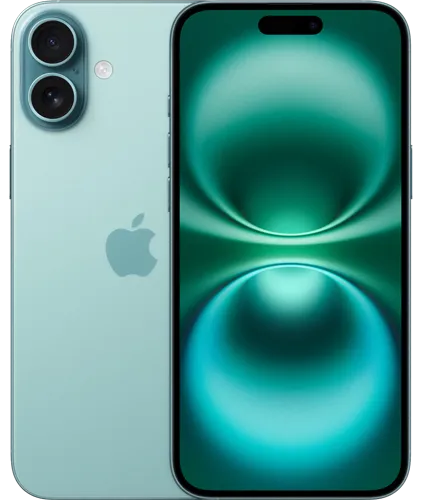
The iPhone 17 fixes the standard model’s biggest display compromise, but a missing telephoto lens and changing prices still matter.
The regular iPhone has spent years feeling like the model you bought only after deciding that the Pro was too expensive. The iPhone 17 changes that calculation. With a 120Hz ProMotion display, Apple's A19 processor, a stronger dual-camera system and a more generous storage starting point, the standard model finally addresses several of the compromises that once made an upgrade feel obligatory.
In the supplied video, Andrew calls it the “Goldilocks iPhone”: neither the thin but compromised iPhone Air nor the expensive Pro, but the model that gets the balance right for most buyers. It is a persuasive argument. Yet a value recommendation still needs scrutiny. A $799 launch price is not the same as the best price in October 2026, and a good standard iPhone does not automatically replace the specialized cameras and recording tools of the Pro.
This Belliste review evaluates the argument behind that recommendation, what the specifications actually mean, and who should still spend more—or less. It is an editorial analysis of the linked video and publicly stated device capabilities, not an independent Belliste hardware test.
The strongest point in Andrew's review is not a benchmark or a camera sample. It is that Apple's entry into the main iPhone 17 lineup no longer feels conspicuously limited.
For years, the standard iPhone carried visible disadvantages compared with the Pro, particularly in display smoothness. The absence of ProMotion was hard to defend as high-refresh-rate screens became common on less expensive phones.
The iPhone 17 changes that. Its display, cameras and everyday performance make it easier to recommend without explaining a long list of things the buyer is missing.
That does not mean the Pro has become redundant. It means the gap has shifted toward specialized uses rather than obvious everyday comfort.
If you spend your days messaging, browsing, streaming, using maps, making video calls and taking family photos, the standard iPhone now addresses those needs without asking you to accept a visibly less fluid screen.
That is a more meaningful form of value than a long specification sheet. It is the absence of frustrating compromises.
The headline improvement is the 6.3-inch OLED display with ProMotion, which can refresh at up to 120Hz.
Higher refresh rates make scrolling, animations and transitions appear smoother than on a conventional 60Hz display. The difference is most apparent when moving quickly through websites, social feeds and menus.
It does not make every movie look different; much video content is mastered at lower frame rates. Nor does 120Hz guarantee that every app or game runs at 120 frames per second.
But a phone is interacted with hundreds of times a day. That makes a fluid display a practical benefit, not just a luxury specification.
The iPhone 17 also offers an always-on display, another feature previously associated with higher-tier iPhones. It lets owners glance at information without fully waking the screen, though its usefulness depends on personal preferences and battery settings.
Apple's display refinements make the regular iPhone feel more contemporary. For many users, this is the single strongest reason the 17 feels closer to a Pro.
It is also the feature that makes upgrading from an older standard iPhone particularly noticeable.
Andrew praises the design and color choices, presenting the iPhone 17 as a phone that feels complete rather than deliberately restrained.
The device keeps a more conventional shape than the iPhone Air and avoids the larger, heavier camera-focused approach of the Pro Max.
That balance matters. A thin phone can be delightful to hold, but extreme thinness may force compromises elsewhere. A large flagship can offer more battery and screen space while becoming awkward in pockets or smaller hands.
The regular iPhone occupies the middle ground. It is meant to disappear into everyday routines rather than call attention to its hardware.
Ceramic Shield 2 improves the front-glass protection story, but no glass phone is immune to drops or scratches. Marketing claims about resistance should not be interpreted as guarantees against damage.
Likewise, the design's apparent simplicity is a strength for buyers who want a comfortable daily device. It is not proof that everyone should prefer it to the Air's lightness or the Pro's heavier construction.
Choosing among them is still a question of priorities.
The iPhone 17 uses Apple's A19 processor rather than the A19 Pro found in the higher-end models.
That distinction matters in sustained graphics-heavy workloads and certain professional tasks, but it is unlikely to be a meaningful limitation for typical browsing, messaging, streaming and photography.
Andrew's argument is that most people do not choose a phone based on benchmark charts. They judge it by how effortlessly it handles the activities they already enjoy.
That is reasonable. Modern flagship-class chips have reached a point where common tasks rarely demand their maximum capability.
The A19 also supports the computational photography, on-device processing and software features that define much of the iPhone experience.
There are still reasons to buy a Pro. Users who frequently export complex videos, push demanding games for extended sessions or rely on specific professional capture formats may benefit from its extra capabilities and cooling design.
But paying for headroom you will never use is not inherently better value.
The standard iPhone 17 is fast enough to make performance a relatively minor concern for its intended audience.
The iPhone 17's camera system centers on 48MP main and 48MP ultra-wide cameras.
That is a substantial everyday package. The main camera handles ordinary scenes, portraits and general photography, while the ultra-wide is useful for architecture, landscapes and group shots in tight spaces.
Apple's computational processing offers additional framing options, including a 2x crop from the main sensor. But a processed crop is not equivalent to a dedicated optical telephoto lens.
That is the most important camera difference between the regular iPhone 17 and the Pro.
The Pro models provide a separate telephoto camera for more flexible portrait and distant-subject shooting. For wildlife, sports, stage performances or frequent zoom photography, that can matter a great deal.
For someone who mostly takes photos of friends, meals, pets, holidays and everyday scenes, the standard system may be entirely sufficient.
Andrew describes it as solid rather than as a tool that competes with every professional camera workflow. That is the right expectation.
The iPhone 17 is a capable camera phone with an obvious specialization gap. It should not be marketed as a three-camera Pro in disguise.
Apple's updated front-camera system brings more flexible framing, particularly for selfies and video calls.
A square-sensor approach makes it easier to capture people in different orientations without constantly repositioning the phone. That is useful at gatherings, during FaceTime calls and when recording short social videos.
This kind of improvement rarely dominates a launch presentation, but it affects a task many owners perform frequently.
It also illustrates why the iPhone 17 can feel more complete than previous standard models. Apple has improved parts of the experience that people actually notice rather than reserving every convenience for a higher price tier.
A better selfie camera does not replace a telephoto lens or professional video recording, but it makes the standard phone more versatile for its audience.
The value lies in fewer missed moments and less fiddling with framing.
Andrew's video describes the iPhone 17 as a phone with relatively few compromises, but it does not provide a controlled battery rundown or detailed screen-on-time measurements.
That is an important limitation. Belliste cannot infer a precise real-world runtime from the reviewer's enthusiasm.
Apple's published battery-life figures describe playback under defined conditions. Real endurance changes with screen brightness, mobile signal, navigation, camera use, background apps and software updates.
The standard iPhone's position is attractive because it avoids the extreme thinness of the Air without carrying the bulk of the Pro Max.
That does not mean it automatically lasts longer than every alternative. Buyers with demanding travel days should compare independent endurance tests and consider the larger models.
For most users, the useful question is whether a phone reliably reaches bedtime under their typical workload. If it does, extra battery capacity may offer diminishing returns.
If it does not, battery life should take priority over aesthetics or marginal camera improvements.
The supplied video supports a general everyday-value recommendation, not a specific battery-life claim.
The iPhone Air is the most distinctive design in the lineup, but Andrew sees it as the more compromised choice.
Its extreme thinness is appealing, yet the simplified camera setup and other hardware trade-offs can make it less practical for buyers who prioritize versatility.
The regular iPhone 17 takes a more conventional approach. It is not trying to win the thinness contest. It is trying to deliver a comfortable display, dependable camera system and broadly useful hardware.
That makes it easier to recommend without knowing much about the buyer.
Still, there is a legitimate audience for the Air. Someone who values low weight and a slim profile more than zoom flexibility or maximum endurance may prefer it.
The correct conclusion is not that the Air is a bad phone. It is that its defining benefit comes with compromises that are more obvious in everyday use.
For buyers who do not strongly value thinness, the iPhone 17 is the more balanced starting point.
The Pro models offer additional camera hardware, specialized video capabilities and more performance headroom.
Those benefits are real. They are also concentrated in workflows that many owners rarely use.
A dedicated telephoto camera matters if you regularly photograph distant subjects. Advanced recording formats matter if you edit footage professionally. Stronger sustained performance matters if you push the phone hard for extended periods.
If your typical use consists of communication, social apps, streaming, casual gaming and everyday photography, the standard iPhone 17 now provides a similar level of perceived fluidity thanks to ProMotion.
This is why Andrew calls it the first non-Pro iPhone that feels like a Pro to an average user.
That statement should be read as a judgment about daily experience, not as technical equivalence. The camera systems, chips and specialist capabilities are not identical.
The sensible approach is to identify which Pro-only feature you would actually use. If you cannot name one, the extra spending may not improve your life much.
Andrew emphasizes the iPhone 17's $799 US launch price and describes it as an unusually strong value within Apple's lineup.
At launch, that price was central to the argument. By October 2026, however, it is a historical reference, not a verified current retail quote.
Actual prices depend on country, retailer, storage capacity, trade-in terms and whether the phone is new, refurbished or offered through a carrier.
The review also mentions a monthly payment illustration. Financing can make the initial expense easier to manage, but it does not automatically reduce the total purchase price. Contract conditions and fees matter.
Trade-in promotions can be worthwhile, but buyers should compare the credit offered with the device's resale value and the obligations attached to the deal.
The right question is no longer simply whether the iPhone 17 was a good buy at $799. It is whether its current price is sufficiently lower than newer models and competing phones.
Value is a relationship between what you pay and what you get. That relationship changes over time.
The video speculates about a possible change in the release schedule for the next standard iPhone and suggests that future prices could rise.
The reviewer explicitly presents part of that discussion as rumor. Belliste does not treat it as a confirmed release schedule or pricing announcement.
Likewise, references to future iOS 27 and Siri capabilities should not be mistaken for a verified list of model-specific features available to every user.
Product roadmaps can change, and software availability may vary by region, language and hardware.
Buying a phone because an unannounced replacement might be delayed is risky. So is buying because an expected future price increase might happen.
The stronger reason to choose the iPhone 17 is what it already does well: a fluid display, capable cameras and performance that comfortably handles ordinary tasks.
If you need a phone now, compare actual available options and current prices. If your current device works well, there is no need to rush based on speculation.
Andrew specifically mentions people who have kept an iPhone 11 for years because newer models never seemed different enough.
For those users, the iPhone 17 offers a much more obvious upgrade: a modern OLED display, higher refresh rate, newer cameras, stronger processing and updated connectivity.
Owners of an iPhone 12 or 13 may also appreciate the cumulative improvements, particularly if battery health has declined.
For an iPhone 15 or 16 owner, the calculation is less straightforward. The ProMotion display is a meaningful change for those coming from standard 60Hz models, but a recent phone with a healthy battery and good cameras may still be entirely adequate.
If the current device is slow because its storage is full or its battery is worn, addressing that issue could be more economical than upgrading.
The best upgrade is one that removes a frustration you actually experience.
The iPhone 17 is unusually easy to recommend, but it is not a mandatory purchase for everyone.
Andrew's review is deliberately enthusiastic. That enthusiasm is understandable, but a useful buying guide needs to spell out the remaining compromises.
First, there is no dedicated telephoto camera. If zoom photography matters, the Pro models have a real advantage.
Second, the A19 is not the A19 Pro. For most people that distinction will be minor, but heavy creators and gamers should examine sustained performance and their preferred apps.
Third, the video does not establish battery endurance through a repeatable test. The phone may be balanced, but buyers with exceptional endurance needs should seek comparable measurements.
Fourth, the $799 figure is a launch price. Current value must be assessed against real offers and newer devices.
Finally, the iPhone 17 is still a premium-priced smartphone. Calling it a value phone means it offers strong value within Apple's lineup, not that it is inexpensive relative to the entire smartphone market.
These qualifications do not overturn the recommendation. They make it more useful.
The iPhone 17 is compelling because it fixes one of the standard model's most visible weaknesses without forcing most buyers into a Pro.
The 120Hz ProMotion display makes daily interaction feel premium. The A19 delivers more than enough performance for typical tasks. The two 48MP rear cameras cover the situations most people photograph, while the updated front camera improves everyday social use.
It is not a Pro replacement for everyone. Dedicated telephoto photography, specialist video workflows and maximum sustained performance still justify higher-end hardware for some buyers.
The reviewer's 'Goldilocks iPhone' description is a useful shorthand, provided it is not mistaken for a universal verdict.
Choose the iPhone 17 if you want a smooth display, reliable everyday cameras and a well-balanced iPhone without paying for specialist Pro features.
Choose the iPhone 17 Pro if telephoto photography, demanding content creation or advanced video capture are important to you.
Consider the iPhone Air if minimal weight and thinness matter more than hardware versatility.
Keep your current phone if it still meets your needs and the upgrade would solve no clear problem.
By October 2026, price is the final deciding factor. The iPhone 17's hardware remains attractive, but its best-value status depends on the deal available today—not merely the launch price Andrew praised.
Sources and methodology: The editorial argument and the reviewer's opinions come from the [supplied iPhone 17 video](https://www.youtube.com/watch?v=wCEMOBUTL98). Hardware descriptions use Apple's publicly stated iPhone 17 capabilities. Belliste has not performed independent device testing. Rumors, financing examples and future software predictions in the video are not treated as verified facts.
The iPhone 17 remains a balanced choice thanks to its 120Hz display, A19 processor and dual 48MP cameras. Its value depends on current pricing relative to newer models.
Yes. The 6.3-inch OLED screen supports ProMotion with refresh rates up to 120Hz, a major improvement over earlier standard iPhones.
No. It has 48MP main and ultra-wide rear cameras. A 2x crop from the main camera is available, but there is no dedicated optical telephoto lens.
For many everyday users, the standard model offers better value. The Pro is more appropriate for dedicated telephoto photography, specialized video recording and demanding workloads.
The standard iPhone 17 launched at $799 in the United States. This is a historical launch price, not a verified current retail offer.