A week-long reviewer test reveals impressive 4K120 video, a stronger ultra-wide camera and better battery life, alongside heat concerns and mixed feelings about Camera Control.
The iPhone 16 Pro was not a dramatic redesign when Apple launched it in September 2024. It looked familiar, retained the titanium construction of its predecessor and arrived with features whose usefulness was not immediately obvious. But after a week of testing, the reviewer in the supplied video found more meaningful changes than the exterior suggested: a larger display, a substantially improved ultra-wide camera, 5x telephoto zoom, impressive 4K120 Dolby Vision video and better battery life.
He also encountered frustrations. The new Camera Control button was awkward in some situations, Apple Intelligence felt unfinished at launch, and the phone became uncomfortably warm during intensive use. One episode even triggered an iPhone temperature warning.
Those details make this a more useful review than a simple specification rundown. The iPhone 16 Pro is a strong device with identifiable strengths and weaknesses. In 2026, the additional question is whether its age and market price make it a sensible purchase.
This Belliste article is an editorial analysis of the supplied week-long review. Belliste did not independently perform the battery, thermal, camera or benchmark tests described below. The video's observations reflect its original launch-period software and test conditions; they are not automatically representative of current firmware or every unit.
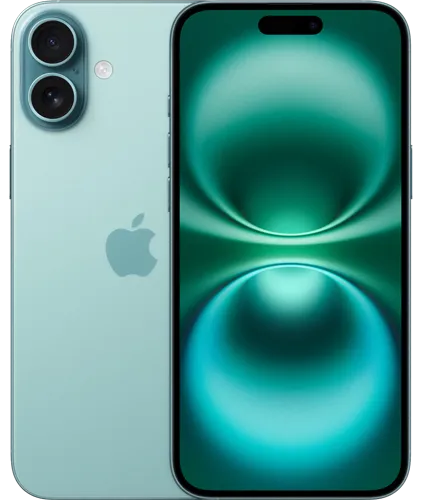
The reviewer initially found the iPhone 16 Pro almost indistinguishable from earlier Pro models. From across a room, its camera arrangement and flat-sided silhouette could pass for several previous generations.
The meaningful physical change is the 6.3-inch display, up from 6.1 inches on the iPhone 15 Pro. The reviewer notes that the phone is also roughly 10 grams heavier.
The titanium construction remains a premium touch. It feels solid and retains the understated appearance that made the 15 Pro appealing. The bezels are thinner, making more of the front surface available to the screen.
Yet thinner borders do not transform how the phone works. The reviewer correctly treats Apple's bezel marketing with skepticism, noting that Android manufacturers had already experimented with similarly narrow or more adventurous displays.
For owners of an iPhone 14 Pro or earlier, the combination of titanium, USB-C and a larger screen may feel like a meaningful refresh. For 15 Pro owners, the visual differences are much harder to justify on their own.
The reviewer's launch-day unboxing revealed a familiar minimalist package. Apple included a braided USB-C cable but no power adapter, and the traditional Apple stickers were absent.
The reviewer paired the natural titanium finish with a stone-gray silicone case and liked the combination. That is a personal aesthetic preference rather than a reason to buy the phone.
He also notes that models sold outside the United States commonly retain a physical SIM tray alongside eSIM support. SIM configurations can vary by sales region, so buyers of imported or refurbished units should verify the exact model.
A phone bought secondhand may not include its original cable or packaging. That should be reflected in the price, but it does not necessarily indicate a problem.
The iPhone 16 Pro introduced Camera Control, a dedicated control on the side of the phone that can open the camera, capture photos and access adjustments through pressure and touch gestures.
At first, the reviewer enjoyed the tactile shutter-like response. A press launches the camera, another takes a photo, and additional interactions provide access to functions such as zoom and exposure.
After several days, however, he returned to using the touchscreen for most photography. It was more familiar and often more convenient.
His most specific complaint concerned vertical shooting while holding the phone in his right hand. The position of his palm could make the button awkward to reach or operate.
This is an ergonomic observation, not a universal defect. Some users may enjoy the physical control, especially when shooting horizontally. Others may barely use it.
The important conclusion is that Camera Control is an optional convenience rather than a compelling reason to upgrade. The iPhone remains fully capable of taking photos through its touchscreen.
The iPhone 16 Pro uses a 48MP Fusion main camera. The reviewer explains Apple's Fusion terminology as computational processing that combines information to balance detail and light.
The exact processing pipeline is more complex than that shorthand, but the practical idea is familiar: modern smartphones use multiple frames and sophisticated image processing to improve the final photograph.
In the review, the main camera remains reliably strong. It produces the sort of detailed, attractive images expected from a recent Pro iPhone.
The reviewer does not argue that the main camera alone represents a dramatic leap from the 15 Pro. Instead, he focuses on the improvements elsewhere in the system.
That distinction matters. Buyers should not assume that a new branding term necessarily means an entirely new photographic experience.
For most people, the main camera is already more than capable. The stronger case for the 16 Pro is its flexibility across lenses and video modes.
The move from a 12MP ultra-wide camera on the iPhone 15 Pro to 48MP on the iPhone 16 Pro is one of the reviewer's favorite improvements.
During a riverside photo session, he captured numerous wide scenes and compared the results with his previous iPhone and a Google Pixel 9 Pro Fold.
He observed greater clarity and deeper-looking blacks in many of the 16 Pro ultra-wide images. He particularly enjoyed the wider lens and found himself using it almost exclusively during part of the test.
There is a qualification: when examining images closely, he says some differences are less obvious than the specification jump might suggest.
That is important. A fourfold increase in megapixel count does not guarantee four times the perceived detail in every situation. Lens quality, lighting, processing and viewing size all influence the result.
Still, for travelers, landscape photographers and people who shoot architecture, a stronger ultra-wide camera is a meaningful improvement.
The reviewer's comparisons support a positive conclusion, but they are not a controlled laboratory ranking of all competing phones.
Another significant upgrade is the 12MP 5x optical telephoto camera.
The iPhone 15 Pro offered 3x optical zoom, while the 15 Pro Max had a 5x tetraprism system. With the iPhone 16 Pro, Apple brought that longer optical reach to the smaller Pro model.
The reviewer demonstrates the progression from ultra-wide to standard framing, 2x crop and 5x telephoto, showing how much closer the longer lens can bring distant subjects.
He compares the results with a Pixel 9 Pro Fold and sometimes prefers the Pixel's more natural-looking image treatment. That is an aesthetic preference, not a definitive technical verdict.
The 5x camera is particularly useful for distant architectural details, wildlife in favorable conditions and compressed perspectives.
There is a trade-off. A long telephoto lens can be less convenient for indoor portraits or subjects at intermediate distances.
For buyers who previously chose a Pro Max mainly to get longer zoom, the 16 Pro offers a more compact alternative without sacrificing that 5x capability.
The reviewer notices quicker capture and processing when shooting large 48MP ProRAW photographs. He describes the iPhone 16 Pro as feeling nearly instantaneous compared with occasional pauses on his iPhone 15 Pro.
That is his firsthand impression. The video does not provide a controlled shutter-lag measurement across multiple lighting conditions.
He also enjoys the updated Photographic Styles, which let users adjust the tone and color character of images while shooting and refine compatible images afterward.
He compares the flexibility to applying creative adjustments in an editing application, while appreciating the convenience of doing it directly in the camera interface.
This is one of those features whose value depends on workflow. People who enjoy tuning their photos may use it constantly. People who prefer the default camera look may rarely open it.
It does not replace every editing tool, but it makes personalized color rendering more accessible.
Together, the faster capture experience and more flexible styles help explain why the camera upgrade feels larger than the main-sensor specifications suggest.
Video recording is where the reviewer is most enthusiastic.
The iPhone 16 Pro supports 4K Dolby Vision recording at up to 120 frames per second using the supported camera and modes. The reviewer films test clips, slows them down and praises the detail, color and smoothness.
Recording at 120fps provides flexibility for slow-motion playback while retaining 4K resolution. Dolby Vision HDR can preserve a richer presentation of highlights and color on compatible displays.
The reviewer correctly points out that compressed YouTube playback cannot fully reproduce the original files' visual quality.
The feature is genuinely useful for creators who film movement, action or cinematic slow-motion sequences. But it also produces demanding files that require storage, processing and compatible editing workflows.
Not every viewer needs 4K120. Someone who mainly records short family clips may be perfectly happy with standard 4K recording.
For videographers, however, this is a substantive improvement rather than a marketing-only feature.
The iPhone 16 Pro also improves its audio recording capabilities.
The reviewer describes a four-microphone system that captures spatial audio in compatible video modes. He hears a more realistic soundstage and a lower apparent noise floor when listening through good headphones.
He also reports clearer FaceTime call audio than on the iPhone 15 Pro, based partly on feedback from people on the other end of his calls.
These are qualitative impressions, not calibrated microphone tests. Room acoustics, network quality and playback equipment can change the results.
For video creators, better built-in audio is valuable because it reduces the need for external accessories in casual situations.
For more demanding production, an external microphone may still be the better choice.
The overall point is that the iPhone 16 Pro's camera improvements extend beyond lenses and image processing. Sound capture received attention too.
The reviewer appreciates the larger 6.3-inch Super Retina XDR OLED display, which maintains approximately 460 pixels per inch.
ProMotion supports adaptive refresh rates up to 120Hz, making scrolling and animations smooth.
The review discusses peak outdoor brightness of up to 2,000 nits and the ability to dim to approximately one nit under supported conditions.
These specifications should not be interpreted as a guarantee that the screen always reaches its peak brightness in every application. Display output depends on content, lighting and system conditions.
The slimmer bezels are visually pleasing, but the reviewer does not consider them revolutionary.
In daily use, the screen is an excellent balance of size and portability. It provides more room for reading and video than the 15 Pro while remaining smaller than the Pro Max.
The choice between Pro and Pro Max remains primarily about preferred size and battery capacity, not basic display quality.
Apple's A18 Pro processor gives the iPhone 16 Pro more performance headroom than the preceding model.
The reviewer cites Geekbench 6 improvements of roughly 12–14% over his iPhone 15 Pro in the tests he discusses.
Those figures are from the supplied review and should not be generalized to every benchmark, device temperature or software version.
In normal browsing, gaming and multitasking, he finds the phone extremely smooth. He also acknowledges that the iPhone 15 Pro was already fast, so the extra speed does not dramatically change routine use.
That is an important perspective. Modern flagship processors are powerful enough that generation-to-generation gains can be difficult to notice outside demanding workloads.
The reviewer wishes Apple offered a desktop-like mode comparable to Samsung DeX, arguing that the hardware could do more than iOS currently exposes.
That is a software-product critique, not a limitation in raw processing power.
Despite Apple's thermal-design improvements, the reviewer encountered uncomfortable warmth while running intensive apps and shooting outdoors.
He says the iPhone 16 Pro became noticeably warmer than his iPhone 15 Pro under some conditions, including a hot riverside environment.
At one point, the phone displayed an iPhone needs to cool down warning.
This is an important firsthand observation and should not be minimized. It shows that under the reviewer's workload and environmental conditions, the device reached a protective thermal threshold.
It does not establish that every iPhone 16 Pro overheats or that the issue persists unchanged across later software versions.
Outdoor temperature, direct sunlight, camera use, charging, cellular signal and background processing can all contribute to heat.
For buyers who frequently record long videos in hot environments, thermal behavior deserves special attention. Look for independent sustained-performance tests and current owner reports.
The reviewer speculates about heat dissipation, but the video does not prove the specific cause of the warning.
Battery life is one of the reviewer's strongest positive findings.
During his first days of heavy photography and video capture, he reports approximately 10–12 hours of overall use before the battery was depleted.
With more typical usage later in the week, he reports roughly 15 hours of real-world use.
These figures describe his broad usage periods, not necessarily standardized screen-on time. They should not be compared directly with controlled battery tests.
He estimates an improvement of about 15–20% over the iPhone 15 Pro in his experience.
The iPhone 16 Pro has a larger battery than its predecessor, while the A18 Pro's efficiency may also contribute to longer endurance.
The reviewer concludes that the phone can comfortably last a day. That is encouraging, but actual results vary with brightness, cellular conditions, apps and battery age.
A used 2026 unit may perform differently from the new launch-day device tested in the video.
The reviewer highlights MagSafe wireless charging at up to 25W with appropriate compatible equipment, an increase over the previous 15W limit.
He describes reaching approximately half a charge in around 30 minutes under his charging conditions.
It is important to distinguish MagSafe's supported maximum from a guaranteed charging rate. Actual speed depends on the adapter, charger, temperature and battery level.
For someone who charges overnight, this may not matter much. For people who regularly top up during the day, faster wireless charging is convenient.
USB-C also makes the phone compatible with a broad range of modern cables and accessories, although charging and data capabilities vary by accessory.
The review does not provide a full standardized wired-versus-wireless charging comparison, so no stronger ranking is warranted.
At launch, the reviewer was disappointed by the limited Apple Intelligence experience.
He describes text summarization, proofreading and an updated Siri interface as underwhelming compared with the expectations created by Apple's marketing.
Many advertised capabilities were not available when he recorded the video. This is a historically accurate description of his launch-period experience, not a definitive assessment of Apple Intelligence in October 2026.
Software features evolve. Availability also depends on language, region, account and software version.
The video does not establish which later features are now present, which remain limited or how they compare with current competitors.
A buyer in 2026 should verify the specific AI tools they intend to use rather than relying on either launch-day disappointment or future promises.
The A18 Pro provides the required hardware foundation for supported Apple Intelligence capabilities, but that alone does not guarantee every future function.
The reviewer compares the two models throughout his week.
The iPhone 16 Pro's most tangible advantages are the larger 6.3-inch screen, 48MP ultra-wide camera, 5x telephoto lens, 4K120 Dolby Vision recording and improved battery life in his use.
The A18 Pro is faster in his benchmarks, but ordinary tasks already ran smoothly on the iPhone 15 Pro.
The Camera Control button is new but did not transform his shooting habits.
That means an upgrade from a well-functioning 15 Pro is difficult to justify unless you specifically want longer zoom, better ultra-wide photos, high-frame-rate 4K video or additional endurance.
The reviewer reaches a similar conclusion: the phone is excellent, but excellence alone is not a reason to replace a recent device.
For someone coming from an iPhone 13 or 14 generation, the cumulative improvements can feel much larger.
The smaller Pro and Pro Max share many of the same camera and processing features.
The principal differences are physical size and battery capacity. The 16 Pro has a 6.3-inch display, while the 16 Pro Max offers a larger 6.9-inch screen.
If you read extensively, edit video on-device or want the largest possible viewing area, the Pro Max may be more comfortable for content.
If you prioritize pocketability and easier one-handed use, the 16 Pro is the more manageable choice.
Battery endurance is another consideration. The larger Pro Max generally has more room for a bigger battery, but individual used-device condition still matters.
Do not assume the smaller Pro is missing the 5x telephoto system: Apple brought that feature to both Pro sizes in this generation.
The right choice is less about status and more about how you carry and use the phone.
By October 2026, the iPhone 16 Pro is no longer a new-generation device. That changes how it should be evaluated.
The launch video provides useful evidence about hardware quality and initial performance, but it cannot establish current used prices or the condition of a specific phone offered for sale.
Check the display, cameras, Face ID, buttons, USB-C port, speakers and wireless charging. Review battery health, cycle count and parts history where available.
Confirm that the device is not Activation Locked and that its SIM configuration works with your carrier.
Ask whether the seller offers a return period and warranty. A low price can lose its appeal if the battery needs replacement or a damaged camera requires repair.
Compare the total price with newer models, not just the original launch price.
A well-maintained iPhone 16 Pro can be an excellent purchase. A poorly maintained one can be expensive even at a discount.
The iPhone 16 Pro suits people who want a compact-ish flagship with a versatile camera system and strong video features.
It is particularly appealing to photographers who use ultra-wide and telephoto lenses, creators who can benefit from 4K120 Dolby Vision, and buyers who value a 120Hz OLED display.
It also suits people upgrading from older iPhones who want a noticeable step forward without necessarily paying for the latest Pro.
It is less compelling for satisfied iPhone 15 Pro owners unless one of the specific camera or battery improvements addresses a real need.
Buyers who regularly record in high heat should investigate current thermal performance carefully.
And anyone purchasing used should treat battery condition and warranty as part of the specification sheet.
The iPhone 16 Pro is a genuinely capable flagship. The 48MP ultra-wide, 5x telephoto camera, 4K120 Dolby Vision recording and improved battery endurance are meaningful additions to an already strong foundation.
The reviewer finds the screen beautiful, the A18 Pro extremely fast and the video output particularly impressive.
But he also identifies real drawbacks: Camera Control did not become essential to his workflow, Apple Intelligence was unfinished at launch, and the phone became uncomfortably hot during intensive use.
In 2026, the buying decision depends on the price and condition of the exact unit.
Choose the iPhone 16 Pro if you want excellent cameras and video in a manageable size at a substantial discount.
Keep the iPhone 15 Pro if it already meets your needs and you do not need 5x zoom or 4K120.
Consider a newer model if you want a fresh warranty, more remaining hardware headroom or improvements that directly address your priorities.
The iPhone 16 Pro's strengths have aged well. Its launch-day criticisms still deserve attention, but they should be understood in their original context.
Editorial methodology: Based on the supplied [iPhone 16 Pro week-long review](https://www.youtube.com/watch?v=F7_Wi-soS3E). Battery, benchmark, camera and overheating observations are attributed to that reviewer. Belliste has not independently tested the device or verified current used-market pricing. The sponsored eSIM segment of the video is excluded from the editorial assessment.
It can be a strong value if the device is in good condition and meaningfully cheaper than newer Pro models. Check battery health, warranty and repairs.
Yes. Its 12MP tetraprism telephoto camera offers 5x optical zoom, replacing the 3x lens on the iPhone 15 Pro.
Yes. The iPhone 16 Pro supports 4K Dolby Vision video recording at up to 120fps in supported modes.
The supplied reviewer encountered uncomfortable heat and one temperature warning while filming in hot conditions. This does not establish that every unit overheats.
The reviewer estimated 15 to 20 percent better endurance in his week of use, but results depend on usage, software and battery condition.