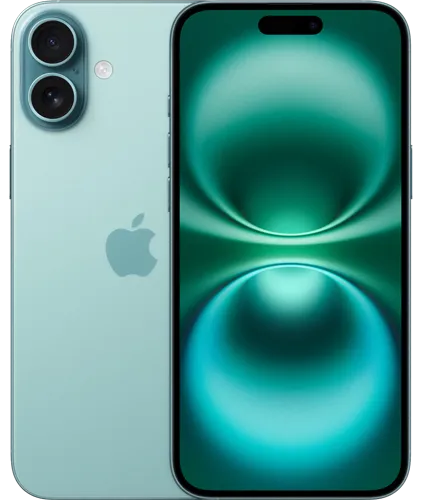
The iPhone 16 Pro Max still delivers a premium screen, versatile cameras and capable performance. The real question is how much you can save and what condition it is in.
The iPhone 16 Pro Max was Apple's largest flagship when it launched in September 2024. Two years later, it no longer carries the excitement of a new release, but it still offers many of the things people actually use: a large, excellent OLED display, a versatile camera system, strong performance and substantial battery endurance. The question for 2026 is not whether the phone works well. It is whether its reduced resale or refurbished price makes it a smarter purchase than a newer iPhone.
In the supplied February 2026 video, the reviewer makes an enthusiastic case for buying last-generation flagship hardware. He points to the titanium construction, 6.9-inch screen and triple-camera system, and suggests that buyers could save hundreds of dollars compared with the iPhone 17 Pro Max. That argument is compelling, but it needs a qualification: a secondhand phone's condition, battery health and warranty can determine whether the apparent discount is real.
This Belliste analysis uses the supplied video as its primary editorial source. We have not independently tested the device or verified current local resale prices. The reviewer's observations are identified as such; hardware specifications and buying considerations are discussed separately.
Smartphone improvements are not equally noticeable from one generation to the next. A faster processor, slightly improved battery life or revised camera processing can be welcome without transforming how someone reads, watches video or takes ordinary photographs.
The iPhone 16 Pro Max arrived with high-end hardware that has not suddenly become obsolete. Its 120Hz OLED screen remains premium, its cameras cover multiple focal lengths, and its A18 Pro chip is powerful enough for demanding applications.
The reviewer argues that many buyers would be better served saving money than purchasing the newest Pro Max. That is reasonable in principle, but his suggestion that nearly everyone should make that choice is an opinion rather than a measured finding.
An older flagship is attractive when its practical capabilities remain strong and the discount is substantial. It is less attractive when sellers price it too close to a newer model or when battery replacement and repair costs erase the savings.
The iPhone 16 Pro Max uses a titanium exterior design that the reviewer prefers to the aluminum construction of the newer iPhone 17 Pro models. He describes the titanium finish as especially premium and says the older phone still looks beautiful after extended use.
That is a subjective aesthetic judgment. Materials alone do not establish that one device will always age better than another. Surface finishes, cases, impacts and ordinary wear all influence appearance.
He also comments on the shape of newer phones, suggesting their rounder edges feel different in the hand. Comfort is personal: a rounded edge can feel smoother, while a flatter side may offer a more secure grip for someone else.
The iPhone 16 Pro Max is a large device, and its size matters more to daily comfort than the material comparison alone. People who prefer one-handed use may find a smaller iPhone more practical.
When shopping used, inspect the titanium frame, corners, buttons and camera housing. Cosmetic wear is not necessarily a functional problem, but it should be reflected in the price.
The iPhone 16 Pro Max features a 6.9-inch Super Retina XDR OLED display with ProMotion up to 120Hz. This is one of the strongest reasons it still feels current.
OLED technology allows individual pixels to switch off for deep blacks. The reviewer especially enjoys reading on the screen at night and watching video, where its contrast and size create an immersive experience.
ProMotion makes scrolling and animations feel smooth, while adaptive refresh rates help avoid running at the maximum speed when it is unnecessary.
The reviewer says he has little to criticize about the screen. That is an experience-based endorsement rather than a controlled comparison with newer panels.
There are still reasons to prefer a newer model, such as refinements in brightness or protection, but the basic experience of a large, sharp 120Hz OLED has not become outdated.
If your main uses are reading, streaming, browsing and messaging, the 16 Pro Max delivers an excellent display without requiring the latest generation.
A 6.9-inch display is excellent for content, but the overall device is not small. Its weight and dimensions may become tiring during extended one-handed use.
The reviewer's praise for reading and video reflects a particular use case. Someone who frequently carries a phone in a small pocket or uses it while commuting may prefer a smaller model.
The large screen is also more expensive to replace if damaged. On a used phone, inspect it carefully for cracks, persistent image retention, discoloration and touch problems.
Check whether True Tone, automatic brightness and the full range of touch inputs work correctly. These are practical inspection steps, not faults claimed by the reviewer.
A premium display remains valuable only if the particular unit you buy is in good condition.
The reviewer describes the iPhone 16 Pro Max battery life as fantastic and says it comfortably gets through his day. He acknowledges that the iPhone 17 Pro Max can improve on it, but considers the difference too small to justify the price gap for his needs.
Those are firsthand impressions, not standardized battery measurements. The supplied video does not report a controlled screen-on-time comparison, a repeatable battery drain test or the tested device's battery health percentage.
This distinction is crucial when shopping for a phone released in 2024. A used 16 Pro Max may have experienced hundreds of charging cycles. Its endurance could differ significantly from that of a new unit.
Before purchasing, check the battery health and cycle information available in iOS, as well as any repair or parts history. Consider the cost of a future battery replacement.
A discounted phone with a heavily worn battery may still be worthwhile, but only if the price accounts for the additional expense.
The iPhone 16 Pro Max is powered by Apple's A18 Pro chip. It remains a high-performance processor for everyday tasks, multitasking, games and video workflows.
The supplied video focuses more on overall ownership value than benchmarks. It does not establish numerical performance differences between the A18 Pro and the newer generation.
In ordinary use, many people will not notice a meaningful speed difference when opening messaging apps, browsing websites or watching video. More demanding graphics workloads and future features may benefit from newer hardware.
The A18 Pro also supports the device's existing software capabilities. However, no video can guarantee the exact date on which Apple will stop providing future updates.
For buyers who keep phones for many years, the newer model's longer remaining lifecycle may be worth paying for. For someone planning to upgrade sooner, the 16 Pro Max may offer more than enough performance.
The iPhone 16 Pro Max has a versatile camera system: a 48MP main camera, a 48MP ultra-wide camera and a 12MP telephoto camera with 5x optical zoom.
The reviewer praises the quality of photographs and notes that having ultra-wide, standard and telephoto views makes the phone flexible. He does not use the telephoto lens often himself, but recognizes its value for people who need it.
That flexibility is a major advantage over entry-level models with one or two cameras. The ultra-wide lens helps with architecture, landscapes and groups in confined spaces. The telephoto camera brings distant subjects closer without relying entirely on digital cropping.
Megapixel counts do not by themselves determine image quality. Lens design, sensor characteristics, processing and lighting also matter.
The reviewer describes the photos as excellent, but the video does not include a controlled gallery or systematic low-light comparison. His conclusion is a useful ownership impression rather than a comprehensive camera test.
A three-camera system can be more useful than a small improvement in main-camera processing. It gives you framing options that cannot be recreated simply by stepping backward or digitally cropping.
Travel photography is a good example. A wide scene may require the ultra-wide lens, while a distant architectural detail benefits from telephoto reach. A single-lens phone cannot offer the same optical flexibility.
For portraits, the 5x lens can be useful at longer distances, though it may be less convenient in tight indoor spaces.
The 16 Pro Max's main and ultra-wide cameras remain capable tools for everyday photography. Newer iPhones may offer refinements, but those improvements do not make the older hardware ineffective.
The best choice depends on what you photograph, not just the generation number.
The reviewer points out that the iPhone 16 Pro Max records 4K video, making it suitable for content creators who want a capable camera always available.
The phone also supports advanced video features beyond the basic capabilities of less expensive iPhones. However, the supplied video does not conduct a detailed evaluation of recording modes, codecs, stabilization or microphone quality.
For creators, the 16 Pro Max remains attractive because of its combination of multiple focal lengths, powerful processing and a large display for reviewing footage.
There are limits. The reviewer correctly notes that smartphone sensors are physically much smaller than those in many dedicated cameras. This can affect natural background separation and low-light performance.
Software-based portrait effects can imitate shallow depth of field, but they are not identical to the optical rendering of a large-sensor camera.
That does not diminish the phone's usefulness. It simply means the 16 Pro Max should be judged as an excellent smartphone camera, not a universal replacement for professional equipment.
The reviewer's main argument is that the iPhone 17 Pro Max offers improvements but not necessarily enough to justify paying hundreds more.
The 17 Pro Max has a newer chip, revised thermal design and updated hardware. The 16 Pro Max counters with a mature flagship experience that may be available at a substantial discount.
The reviewer personally prefers the titanium appearance of the older model and says the battery difference does not change his daily routine. Those are valid preferences, but they should not be generalized to all buyers.
Heavy gamers, demanding video creators and people who prioritize maximum battery endurance may benefit more from the newer model.
Other buyers may find the older device nearly indistinguishable in the tasks they perform most often.
The correct comparison is between actual offers: a new 17 Pro Max with full warranty versus a specific 16 Pro Max with documented condition, battery health and return terms.
The reviewer says that in February 2026 the iPhone 16 Pro Max could be found for about $800, compared with its $1,199 US launch price in 2024.
That $800 figure is a historical market observation from the video, not a verified October 2026 retail price or a guarantee that every seller offers it.
Used and refurbished pricing varies by country, storage capacity, condition, carrier lock, battery health and warranty.
The reviewer's estimated $400 saving versus a newer Pro Max is a useful illustration, but it should not be treated as a universal price difference.
Before deciding, compare the total cost of ownership. Include shipping, taxes, any battery replacement, accessories and the risk of buying from an unreliable seller.
A meaningful discount can make the 16 Pro Max a smart purchase. A small discount may not.
A used phone may be sold directly by an individual, while a refurbished device may have undergone inspection, cleaning or parts replacement. Neither label guarantees a particular standard.
Look for a seller that clearly explains its grading process, battery policy, return period and warranty coverage.
Confirm that the phone is not Activation Locked and that it can be activated with your carrier. Check the IMEI status through appropriate channels and ensure the storage capacity matches the listing.
Inspect the cameras, display, speakers, microphones, USB-C port, buttons, Face ID and wireless charging. Review the iOS parts and service history where available.
A device with a replacement screen or battery is not automatically a bad purchase, but you should know what was replaced and whether the repair was performed correctly.
These checks matter more than a small cosmetic difference between titanium and aluminum.
Battery condition deserves its own consideration because the reviewer praises endurance so strongly.
His experience reflects the device he used, not every 16 Pro Max offered for sale. An older battery can reduce the very advantage that makes the Pro Max attractive.
A battery replacement may restore useful endurance, but it adds cost and inconvenience.
When comparing two listings, a more expensive unit with a healthy battery and clear warranty may be better value than a cheaper unit requiring immediate service.
Ask for current battery information rather than relying on a seller's statement that the phone lasts all day.
Battery percentage alone does not capture every aspect of condition, but it is a useful starting point alongside cycle count, repair history and real-world performance.
The iPhone 16 Pro Max remains a modern iPhone with access to current software features compatible with its hardware.
Apple's continued software ecosystem is one reason older flagship models can remain appealing. But the exact remaining support period is not established by the supplied video.
A buyer who plans to keep the phone for only two or three years may view that uncertainty differently from someone who wants to use it for six more years.
Future AI features, demanding games and software requirements could create differences between generations that are not obvious today.
The 16 Pro Max is powerful enough for many current tasks. That is not the same as guaranteeing every future feature.
Make the purchase based on present capability and realistic ownership plans.
The reviewer suggests that the older Pro Max can offer a better overall experience than a newer base iPhone.
There is a credible argument behind that view: the 16 Pro Max provides a large 120Hz screen, dedicated 5x telephoto camera and premium build.
However, a newer standard iPhone can bring a newer chip, fresh battery, full warranty and different ergonomic advantages.
Whether the Pro Max is better depends on the specific base model and the buyer's priorities.
For someone who values zoom photography and a huge display, the older flagship may be preferable. For someone who values a lighter phone and new-device reassurance, the base model could make more sense.
The label Pro does not settle the comparison on its own.
The strongest candidates are buyers who want a premium large-screen iPhone but do not want to pay the newest flagship price.
It is especially attractive for readers, frequent video watchers, photographers who use multiple focal lengths and people who prefer the titanium-era design.
It also suits buyers comfortable evaluating used or refurbished electronics, checking battery health and comparing warranties.
It is less suitable for people who insist on a brand-new device, want the longest possible remaining software lifecycle or need the very latest performance and thermal improvements.
If your current phone already handles everything you need, upgrading may not be necessary at all.
The goal is to buy the capabilities you use, not the newest generation number.
The iPhone 16 Pro Max remains a strong premium smartphone in 2026. Its 6.9-inch 120Hz OLED display, A18 Pro processor, 48MP main and ultra-wide cameras, 5x telephoto lens and capable video recording still cover demanding everyday needs.
The reviewer makes a persuasive case that buying an older flagship can be smarter than paying full price for the newest Pro Max. His praise for the titanium design and battery life explains why the device continues to feel premium.
But the best recommendation is conditional, not universal. The historical $800 example is not a current market quote. Battery health, device condition and warranty can change the economics substantially.
Buy the iPhone 16 Pro Max when you find a well-maintained unit at a meaningful discount and you value its screen and camera versatility.
Choose the iPhone 17 Pro Max if you need the latest hardware, maximum performance headroom or the reassurance of buying new.
Keep your current phone if it already meets your needs and the upgrade would add little practical benefit.
The 16 Pro Max does not need to be the newest iPhone to be an excellent one. It only needs to be priced—and maintained—appropriately.
Editorial methodology: This article analyzes the supplied [February 2026 iPhone 16 Pro Max video](https://www.youtube.com/watch?v=UA1rbr0N1NM). Personal impressions and historical price references belong to the reviewer. Belliste has not independently performed battery, camera or benchmark testing, or verified live resale listings.
Yes, if the used or refurbished unit is in good condition and significantly cheaper than a newer Pro Max. Check battery health, warranty and carrier compatibility.
Yes. It has a 6.9-inch Super Retina XDR OLED display with ProMotion up to 120Hz.
It has a 48MP main camera, 48MP ultra-wide camera and 12MP telephoto camera with 5x optical zoom.
The reviewer cited approximately $800 in February 2026. This is a historical example, not a verified current price; actual offers vary by storage and condition.
Choose the 16 Pro Max for substantial savings and capable flagship features. Choose the 17 Pro Max for newer hardware and a fresh warranty. Compare the exact offers.