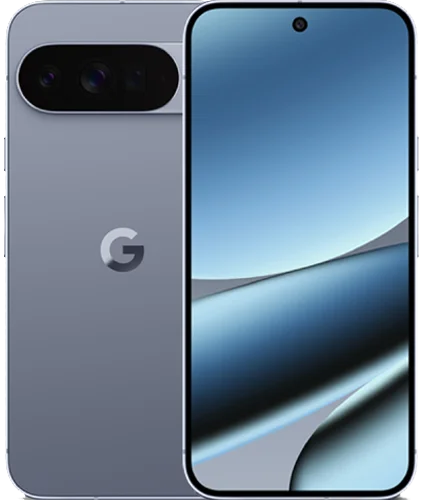
An editorial Pixel 10 Pro XL review covering its 5200mAh battery, 45W wired and 25W Pixelsnap charging, Tensor G5, cameras and value versus the smaller Pro.
The Google Pixel 10 Pro XL is not simply the Pixel 10 Pro stretched to 6.8 inches. It also has a larger 5,200mAh battery, faster wired charging and a higher magnetic wireless-charging ceiling. Those are practical differences for people who spend hours navigating, recording video or working away from a power outlet.
They come at a cost. At $1,199 in the US at launch, the XL was $200 above the smaller Pro's entry price, although that comparison also involves different starting storage capacities. It weighs about 232g and is less comfortable for one-handed use. The cameras and Tensor G5 processor are shared, so paying more does not buy a fundamentally different photographic system.
This Belliste article is an editorial analysis of the supplied material and published specifications, not an independent phone test. The accompanying YouTube video is included above; its spoken claims have not been independently transcribed here. Battery-life anecdotes and charging results below are attributed to their sources or identified as manufacturer claims rather than presented as Belliste measurements.
The generational upgrades include Google's Tensor G5, made using TSMC's 3nm-class manufacturing process, and Pixelsnap magnetic Qi2 charging. The XL supports up to 25W with compatible magnetic charging equipment, versus 15W on the smaller Pixel 10 Pro.
The battery grows to 5,200mAh. Wired charging is rated at up to 45W with a compatible USB-C PPS charger. Google also advertises 100x Pro Res Zoom, which uses computational processing beyond the 5x optical telephoto.
The external design remains familiar: glass surfaces, a prominent horizontal camera bar and a substantial frame. These changes make the phone more convenient to charge, but they do not turn it into a different class of camera phone.
| Feature | Google Pixel 10 Pro XL |
|---|---|
| Display | 6.8-inch Super Actua LTPO OLED, 1344 × 2992, 1–120Hz |
| Advertised brightness | Up to 2,200 nits HDR and 3,300 nits peak |
| Processor | Google Tensor G5 |
| RAM |
| 16GB |
| Storage | 256GB, 512GB or 1TB |
| Main camera | 50MP |
| Ultrawide | 48MP with macro focus |
| Telephoto | 48MP, 5x optical |
| Front camera | 42MP |
| Zoom | Up to 100x Pro Res Zoom, computational |
| Battery | 5,200mAh typical |
| Charging | Up to 45W wired; up to 25W Pixelsnap wireless |
| Weight | Approximately 232g |
| Durability | IP68 dust and water resistance |
| Software support | Seven years of OS, security and Pixel Drop updates |
| US launch price | $1,199 for 256GB |
The storage options and included accessories may vary by region. No power adapter is included in the standard retail box.
A 6.8-inch LTPO OLED gives the XL room for maps, editing photos, reading long pages and watching video. The screen can refresh from 1Hz to 120Hz, depending on content. Google rates peak brightness at 3,300 nits; that figure describes a specific peak condition, not continuous brightness across the entire display.
At roughly 232g, the XL is noticeably less pocket-friendly than the smaller Pro. Reaching the top of the display or typing one-handed may require shifting your grip. The larger canvas is useful, but buyers should decide whether they actually want to carry it every day.
The IP68 rating covers specified dust and water-resistance conditions, not unlimited immersion or immunity to water damage. Physical durability and battery health also matter for a phone intended to receive updates for years.
Pixelsnap brings magnetic alignment to Google's Qi2 accessory ecosystem. A compatible charger, stand or car mount can attach in the right position without repeatedly adjusting the phone on a charging pad.
The XL supports up to 25W wireless charging with compatible Pixelsnap equipment. That is higher than the smaller Pro's 15W ceiling. Existing nonmagnetic Qi pads may still charge the phone, but they do not gain magnets or necessarily reach the maximum charging rate.
For wired charging, Google specifies up to 45W with suitable USB-C Power Delivery PPS equipment. The power rating is a maximum, not a constant charging speed. The phone may draw less as the battery fills or when temperatures rise. Buyers who already own a compatible adapter may not need to purchase Google's own charger.
The XL uses the same core imaging arrangement as the Pixel 10 Pro: 50MP main, 48MP ultrawide with macro focus, 48MP 5x telephoto, and 42MP selfie cameras. Its larger body does not buy a larger zoom lens or a separate sensor tier.
Google's image processing remains central to the experience. Published reviews praise the system's dependable exposure and color in a wide range of scenes, but results still depend on motion, lighting and the lens selected. This article does not present those judgments as photographs captured by Belliste.
The 5x optical telephoto is the meaningful long-range tool. At moderate digital zoom, processing can help recover an attractive image. 100x Pro Res Zoom is different: AI-assisted reconstruction may invent or misinterpret tiny details, particularly distant lettering and repeating patterns. It should not be used as a reliable way to document signs, serial numbers or other evidence.
For video, Video Boost can process supported footage through Google's cloud services to improve certain aspects of the result. That means additional processing time and service requirements. It is useful for selected clips, but it is not equivalent to an instant, entirely on-device recording workflow.
The Tensor G5 gives the XL the same processor generation as the smaller Pro, paired with 16GB RAM. Google's pitch emphasizes camera computation and AI-assisted software rather than winning every graphics benchmark.
Everyday navigation, messaging, photography and multitasking are the workloads where reviewers generally find the Pixel experience responsive. Demanding 3D gaming is a weaker argument for choosing Tensor G5 over competing flagship chips. If gaming is your main use case, compare sustained frame-rate testing before deciding.
The phone launched with Android 16 and Google's AI features, including Gemini, Magic Cue and Camera Coach. Some functions can run partly on-device, while others require network access, cloud processing or supported services. Availability can vary by country, language and account; it would be misleading to say that every Gemini feature works fully offline.
Google promises seven years of OS, security and Pixel Drop updates from the phone's initial availability. That extends the software support horizon into 2032, but it does not guarantee seven years of unchanged battery capacity, gaming performance or repair costs. Promotional Google AI Pro subscriptions should also be treated as time-limited offers, not permanent included service.
The XL's 5,200mAh battery is larger than the 4,870mAh unit in the Pixel 10 Pro. It is a tangible reason to consider the bigger phone, particularly for navigation, long video sessions and days away from a charger.
The supplied material describes mixed reviewer experiences: some heavy users reported approximately 18–24 hours between charges, while another account was less impressed by endurance relative to capacity. These are usage reports, not standardized Belliste tests. Signal strength, screen brightness, background activity and camera use can change the result substantially.
Google advertises more than 24 hours of typical battery life and longer endurance under Extreme Battery Saver. Such figures are conditional estimates; buyers should not read them as a promise that every user will get two days.
Google advertises roughly 70% charge in about 30 minutes with appropriate wired charging equipment. The supplied review material also cites an independent result nearer 64% in that interval. Without a fully identified test setup, the difference cannot be treated as a controlled head-to-head comparison. It does show why the advertised 45W figure is not a guarantee of identical results with every adapter.
The standard box does not include a wall charger. If your existing USB-C charger supports the necessary PD/PPS profile, it may be sufficient. Otherwise, factor a suitable adapter into the total cost rather than assuming the phone requires Google's branded option.
Pixel 10 Pro XL vs Pixel 10 Pro: both share Tensor G5, 16GB RAM and the main camera system. The XL offers a 6.8-inch display, 5,200mAh battery, faster wired and wireless charging, and 256GB starting storage. The smaller Pro is easier to hold and carry. A bigger battery is useful, but the extra weight is unavoidable.
Pixel 10 Pro XL vs Pixel 10: the standard Pixel 10 shares the Tensor G5 generation and magnetic charging but costs less at launch. The XL adds the larger LTPO screen, more RAM, a more capable ultrawide and telephoto system, and higher charging ceilings. Buyers who mainly use the main camera and messaging apps may get better value from the base model.
Against other large flagships: Samsung's Ultra phones and Apple's Pro Max models deserve comparison for sustained gaming, video, ecosystem features and current price. Neither a Pixel camera reputation nor an AI feature list settles every buyer's priorities.
The $1,199 launch price is useful historical context, not today's transaction price. If the Pixel 10 Pro XL is substantially discounted against newer alternatives, its case improves. If it costs nearly as much as a newer flagship, compare actual features and support timelines before paying.
Buy it if: you regularly need a large screen, want the longest battery capacity in the Pixel 10 Pro family, value Google's camera processing and intend to keep the phone through several years of updates.
Skip it if: you prefer one-handed use, prioritize demanding mobile games or do not need faster charging and a larger display. The smaller Pixel 10 Pro delivers essentially the same camera hardware in a more manageable body.
Check the total cost: compare storage tiers, current retailer prices and whether you already own a compatible fast charger. A discount is less impressive if you also have to buy accessories you did not budget for.
The Pixel 10 Pro XL earns its size through battery capacity, charging headroom and screen space. It retains the Pixel 10 Pro's versatile camera system and long update policy. Those are worthwhile advantages for people who actually use the extra display area and spend long stretches away from power.
It is less convincing as an automatic upgrade from the previous Pro XL, or as a purchase driven by the 100x zoom headline. Tensor G5 is not a gaming-first chip, and a 232g phone is a daily compromise for anyone who values pocketability.
Buying advice: choose the XL when its larger screen, charging speeds and battery capacity solve a real problem. Otherwise, the smaller Pro—or a well-priced base Pixel 10—can deliver much of the same Pixel experience for less.
The Pixel 10 Pro XL launched in the United States at $1,199 for 256GB. Check current prices by region and storage capacity before buying.
It has a 5,200mAh typical battery, compared with 4,870mAh in the smaller Pixel 10 Pro. Actual endurance varies by use and network conditions.
Google rates it for up to 45W wired charging and up to 25W Pixelsnap magnetic wireless charging with compatible equipment. A suitable USB-C PPS power adapter is required for the fastest wired charging.
No USB-C wall power adapter is included in the standard retail box. Buyers who need maximum charging speeds should check compatibility before purchasing an adapter.
Both use Tensor G5 and share the main camera system. The XL has a 6.8-inch screen, 5,200mAh battery, faster wired and wireless charging and 256GB starting storage, while the smaller Pro is easier to carry.