A look back at the Find X8 Pro’s dual telephoto cameras and original test results, with practical checks for buying an older flagship today.
The OPPO Find X8 Pro is easier to understand when you stop asking whether it is still the newest flagship. Its more useful distinction is the camera arrangement: separate 3x and 6x telephoto cameras alongside the main and ultrawide. For someone buying an older premium phone, that is a tangible capability to weigh against newer mid-range hardware and a shorter remaining support window.
GSMArena’s supplied video is a review from the phone’s original generation, not a fresh test of its current software. Its findings remain useful evidence about the hardware and launch experience, but they need a different frame today. A strong battery result on a new review unit does not measure the condition of a used example, and an early gaming limitation does not establish the behavior of every later update.
Belliste has not tested the handset. This review revisits the supplied GSMArena findings, checks the core specifications and examines the conditions under which an older Find X8 Pro could still be a sensible purchase. There is no assumed discount: value depends on the actual seller, condition, warranty and competing offers you can obtain.
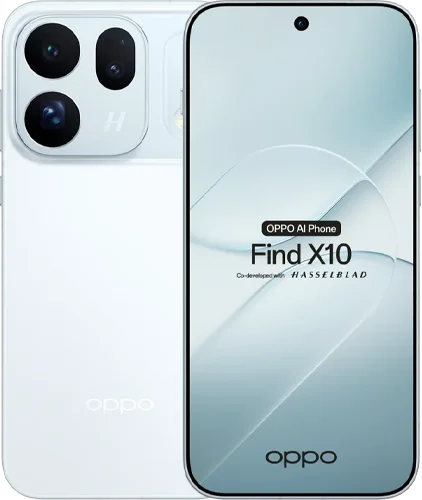
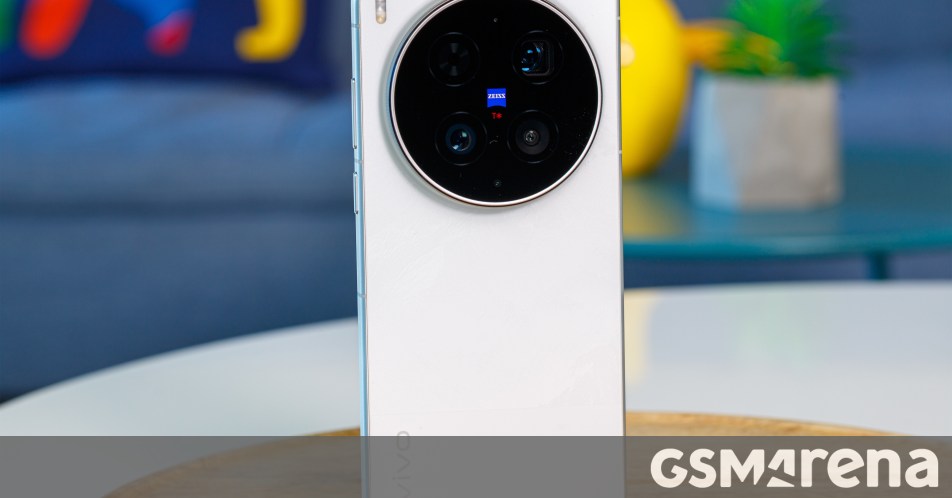
Four 50MP rear cameras give the Find X8 Pro a wide view, an ordinary main-camera view and two longer perspectives. The number of megapixels is not the decisive part. Dedicated 3x and 6x cameras provide different framing choices without requiring every longer shot to come from a crop of the main sensor.
GSMArena likes the 3x camera for people. Its shooting distance provides a flattering perspective in the reviewer’s assessment, with sharp daylight pictures and pleasing nighttime detail. The team does note processing that can look slightly digital and a white-balance tendency shared with the main camera.
That makes the shorter telephoto a useful reason to consider the phone for portraits and ordinary details. A person across a table, a feature on a building or an animal that will not come closer can give it regular work. You do not need an ambition to photograph the moon for a dedicated zoom camera to matter.
The 6x camera is less straightforward. The reviewer sees haze and glow in some daylight images, particularly when bright light is present, and does not consider them the sharpest. The useful lesson is to judge a lens by its output, rather than assuming a longer optical label guarantees a better picture.
In low light, the reviewer also finds that the 6x setting may use either the longer camera or a digital crop from the 3x. That distinction matters: selecting a zoom number in the interface does not necessarily prove which module made the image. When assessing a phone in a shop or comparing samples, look at the result and the capture information where available.
GSMArena finds the main camera strong in daylight and particularly convincing at night. Its positive comments concern exposure, highlight preservation, shadow detail and restrained sharpening. Those qualities are more useful to a buyer than arguing over whether the phone has the largest available sensor.
There is a qualification for photographs of people. The reviewer notices a slightly greenish white balance and would prefer warmer rendering in some portraits. The effect is not described as disastrous, but it is worth examining if faces account for most of your pictures. A rendering preference can remain irritating even when the technical detail is good.
The ultrawide receives a broadly favorable assessment as well, with sharp daylight results and respectable night images. That makes the system more rounded than a phone whose additional cameras exist mainly to increase the count. Landscapes, interiors and group photographs need a different field of view from portraits; a useful ultrawide earns its place through those situations.
We would still look for photographs resembling your own subjects. Attractive buildings at night do not establish how consistently a camera handles a moving child indoors. The supplied review is informative, while leaving room for personal priorities and for software changes since testing.
The rear system’s flexibility can distract from the front camera. GSMArena is much less enthusiastic about the 32MP selfie module: it lacks autofocus, and the reviewer finds the detail less impressive than the resolution suggests.
For someone who primarily photographs scenery and other people, that may be an acceptable compromise. For someone who records themselves, takes frequent group selfies or moves the phone through different arm’s-length positions, it deserves more attention. A high-resolution label does not remove the practical restrictions of fixed focus.
Try the framing you actually use rather than inspecting only a carefully positioned sample. Include more than one person, move the phone slightly closer and farther away, and examine faces at the edges. If the result does not suit you, an otherwise attractive older flagship is still the wrong camera phone for that routine.
Video offers a more encouraging part of the story. The review reports 4K/60fps capability across the cameras, and likes the main-camera footage, nighttime recording and overall stabilization. It still notices some walking imperfections and the longer lens’s haze. Those are useful distinctions within a generally positive account, rather than a claim of flawless recording.
The Find X8 Pro has a 5,910mAh battery and supports 80W wired and 50W wireless charging. In the supplied review, GSMArena reports a 15-hour-18-minute active-use score. It also measures 70% charge after half an hour and a full charge in 53 minutes with the supplied charging equipment.
Those results show why battery life was one of the phone’s strengths when tested. The active-use score is a measure from GSMArena’s mixed test method, not a promise of continuous screen time or a prediction for every owner’s day. Navigation, signal conditions, brightness and camera use can change the outcome substantially.
A used or refurbished example adds another variable: the condition of its particular battery. Age, temperature exposure and charging history matter. Ask what the seller means by battery condition, what any refurbishment includes and whether a return period lets you assess ordinary endurance.
The charging adapter deserves the same attention. The original review’s box contents do not establish what accompanies a used phone or a different regional retail package. Confirm compatible equipment rather than assume any existing USB charger will deliver the advertised maximum.
An older flagship can be a good purchase without matching its original review unit in every respect. The important point is to price the condition you are buying, including any likely battery or accessory cost, rather than purchase a historical test result.
The 6.78-inch LTPO OLED panel refreshes at up to 120Hz and can reduce its rate when appropriate. GSMArena finds it sharp and readable outdoors, measuring roughly 900 nits manually and over 1,300 in automatic mode. Those measurements concern the review’s test conditions; they are different from small-area peak-brightness advertising.
The surprise is gaming. During its original testing, the team could not get games to run above 60fps, despite the faster-refreshing panel. A display’s capability does not guarantee that every application is permitted or able to render at the same rate.
This article does not assert that the restriction is unchanged on current software. If high-frame-rate play is a priority, seek a current test of your actual games and version, or try them during a return window. General scrolling smoothness cannot answer that question.
The Dimensity 9400 produced strong results for its generation, but GSMArena also observed gradual throttling under prolonged stress, eventually reaching around 60% of maximum performance in that test. That is not a statement that every game runs at 60% speed, nor a measurement of how today’s applications compare with newer phones.
For ordinary messaging, browsing and photography, launch-era flagship headroom may still be useful. For a purchase centered on demanding games, current sustained performance and application limits deserve more weight than the processor’s former flagship status.
The alert slider and camera Quick Button give the Find X8 Pro a distinctive everyday arrangement. The supplied reviewer describes using the camera control to launch the application, change zoom and take photographs, with haptic feedback rather than a conventional mechanical click.
A shortcut is valuable when its position matches your grip. If it triggers accidentally or makes zooming awkward, the presence of dedicated hardware is not automatically an advantage. Handle the phone in both portrait and landscape orientations before treating the button as a purchase reason.
The reviewer also likes the stereo speakers and finds the optical fingerprint reader quick and dependable. These may be less exciting than a new AI mode, but they are interactions an owner repeats constantly. Assess the fingerprint reader with your normal grip and listen at an ordinary volume, rather than only judging the phone’s maximum output.
The glass-and-aluminum body remains a large handset with a prominent camera module. Water-resistance ratings are useful protection under specified conditions, not permission to assume an older or repaired unit retains its original sealing. If a seller has replaced the screen or battery, ask what protection and warranty remain afterward.
The Find X8 Pro launched with Android 15 and ColorOS 15. The review describes five major operating-system updates and six years of security patches. Buying it later does not restart that original support period.
Check OPPO’s regional support information for the security end date applicable to the precise version you are buying. An imported version’s firmware, services and warranty should not be assumed identical to those of an officially sold local unit.
The video’s discussion of AI editing, text summaries and assistant tools likewise reflects the software at the time. This article does not present ColorOS 15 as the latest available version or promise that every demonstrated feature is identical today. Check the installed update and any feature you rely on before buying.
Remaining support affects value differently for different owners. Someone keeping a phone briefly may accept an older model’s timeline, while someone planning a long replacement cycle should compare the actual end date with newer alternatives. A good original commitment is useful, but the calendar still counts.
The Find X8 Pro’s enduring argument is its useful rear-camera spread, backed by strong original battery and video findings. It is particularly interesting for someone who values portraits and moderate-to-long framing options more than selfie autofocus or the latest processor label.
The purchase becomes convincing only when the specific offer supports it. Compare condition, battery, storage, regional firmware, warranty and remaining support against the real price of a newer alternative. A low headline price can stop being attractive if the battery needs attention or the seller offers little recourse.
For selfie-first buyers and players who require high frame rates, the original review identifies questions that deserve explicit answers before purchase. For everyone else, the X8 Pro shows why an older premium phone can remain useful: its best hardware features still solve ordinary problems. The sensible deal is the one that buys those capabilities in a condition you can trust, at a price that acknowledges its age.
Camera judgments, brightness readings, charging results, active-use score and original gaming observations are attributed to the supplied GSMArena video and transcript. Hardware was checked against GSMArena’s specifications and OPPO’s regional specification page. Support context was checked against OPPO’s launch information and UK security-period listing. Belliste has not retested the phone on current software.
Its rear-camera range can remain useful, but value depends on the actual price, battery condition, warranty, regional version and remaining support. This article does not assume a discount or claim to have retested it.
Yes. It has separate 50MP 3x and 6x telephoto cameras. The original review found the 3x particularly useful, while noting haze in some longer-lens results.
The supplied review could not get games above 60fps during its testing. This article has not verified current software behavior; check the games and version you intend to use.
No. The 32MP front camera is fixed-focus, and the source reviewer found its detail less impressive than expected for this class of phone.
No. Support runs from the original product timeline rather than the purchase date. Confirm the remaining security-support period for the applicable regional model with OPPO.
It should not be assumed. The original result describes GSMArena’s test unit and method. A used phone’s battery condition, software and workload can produce a different outcome.