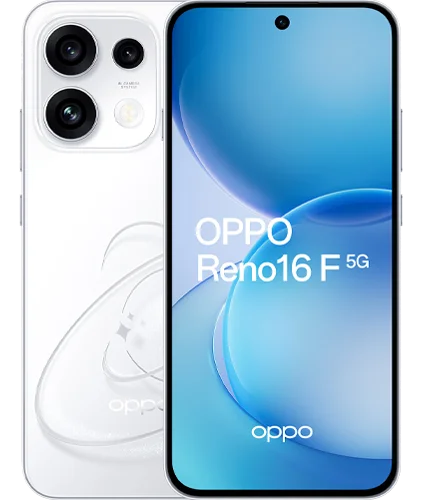
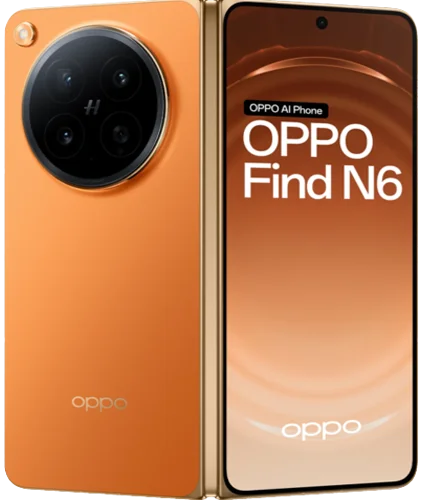
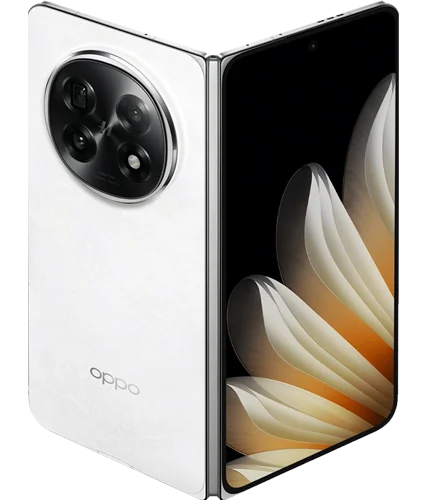
The telephoto camera is the reason to take the OPPO Reno16 F seriously. The price is the reason to hesitate. In YugaTech’s supplied review, the new zoom camera produces useful photographs, everyday performance is comfortable and the screen is enjoyable. Yet the presenter reaches the end of the review struggling with what the Philippine model costs.
That tension gives the Reno16 F a more specific audience than its position at the bottom of the Reno16 range might suggest. It is the less expensive member of this family, but that does not automatically make it an inexpensive phone or the strongest purchase at a particular budget. Whether it makes sense depends on which of its strengths you will use and which compromises you will notice.
This OPPO Reno16 F review approaches the device through those buying priorities. Hands-on observations come from the supplied YugaTech video and transcript, recorded before the Philippine launch. Belliste checked regional specifications and price references separately. We have not tested the phone ourselves, and early software observations should not be mistaken for confirmed behavior on every current retail unit.
For the buyer who wants better zoom photographs
A dedicated telephoto is a substantial addition because it changes where you can stand when taking a picture. The Reno16 F has a 50MP main camera, a 50MP telephoto with 3.5x optical zoom and an 8MP ultrawide. There is also a 50MP front camera. Those are useful choices of framing, even if you never photograph at the cameras’ full advertised resolution.
YugaTech finds the main and telephoto cameras pleasingly consistent in good light, with sharp, vivid results. In its samples, photographs remain convincing around 5x before clarity deteriorates further into the digital range. The presenter also likes the relationship between the main camera and 3.5x view in low light. Those judgments describe the scenes shown in this review; they do not establish identical performance across every subject or lighting condition.
The strongest practical case is someone who often cannot get close enough. Photographing a detail on a building, a pet across a garden or a person on a small stage gives the additional lens something useful to do. A person who mainly photographs food from arm’s length may get much less value from it.
We would resist buying it for extreme zoom. A longer digital setting can be handy for identifying an object or saving a quick record, but that is different from producing a photograph worth printing or cropping again. The review’s positive findings are most helpful around ordinary main-camera and moderate telephoto use.
The weak point is the ultrawide. YugaTech finds less clarity even in good light and noticeably smoothed detail at night. If your favorite photographs are wide interiors or landscapes, the telephoto upgrade does not solve the camera limitation you are most likely to encounter.
For the person who records as much as they photograph
The video discussion deserves a separate decision. YugaTech likes the stabilization in its 4K samples, but reports poor detail when zooming during 4K recording and suspects that the telephoto is not being used. That is a useful warning about the reviewer’s experience, rather than a verified specification that the telephoto can never record at that resolution.
OPPO’s Philippine specifications list recording up to 4K at 30fps and list optical video zoom among the supported features. They do not clearly establish which lenses and modes can be combined at every resolution. We therefore would not convert the reviewer’s suspicion into a universal hardware restriction.
For a buyer, this is something to test directly: begin recording at the resolution you normally use, change zoom and examine whether detail and color remain acceptable. A phone can offer good zoom photographs while making less convincing zoomed video. The same camera menu can conceal different processing and capture paths.
The reviewer also notices pauses when zooming in photo mode. He explicitly identifies the software as pre-launch. It would be unfair to assume the issue remains unchanged, and equally unsupported to say it has been fixed. Check current software behavior if quick changes of framing matter to you.
For ordinary work, with games kept in perspective
The Dimensity 7300-Energy platform is paired with 8GB RAM in the Philippine configurations discussed here. The reviewer’s unit has 128GB of UFS 3.1 storage. He finds everyday work, social browsing and switching between background applications comfortable, making this a more convincing daily-use phone than a device whose appeal depends entirely on its cameras.
Gaming is more conditional. YugaTech reports a good experience in Mobile Legends, while Genshin Impact requires more restrained settings. The presenter selects medium graphics and a 60fps target, then finds higher settings increasingly prone to drops. Selecting 60fps is not evidence of maintaining that frame rate throughout play; the transcript does not provide a measured frame-time record.
That distinction helps set a reasonable expectation. Someone who plays casually between other tasks may be satisfied with the compromise. Someone buying primarily for elaborate games should compare devices on sustained performance and temperature at the same price. The presence of a telephoto camera cannot compensate for a gaming experience you dislike every evening.
YugaTech also reports warmth during play without finding that it ruined the session. We would keep that observation in proportion. It neither proves the handset stays cool nor establishes a serious thermal problem. It is one account of a particular workload on an early review unit.
For a buyer hoping 7000mAh guarantees exceptional stamina
The Philippine phone has a 7,000mAh battery and supports up to 80W wired charging. Those numbers create a strong expectation, but YugaTech’s experience is less flattering: it describes surprisingly ordinary endurance and reports 13 hours and 5 minutes in its video-loop test. Heavy mixed use also depleted the review unit faster than the presenter expected.
That result needs context before it becomes a reason to reject the phone. The supplied transcript does not specify all the brightness, connection, refresh-rate and software conditions needed to reproduce the test. A runtime from this video cannot be compared fairly with another publication’s result just because both call their procedure a video-loop test.
It is still relevant evidence. The reviewer used the handset for photographs, recording, games and entertainment, then found the capacity promise more impressive than the experience. Buyers who prioritize endurance should seek current-software testing with a clearly described method, rather than assume the battery size settles the question.
Regional differences matter as well. GSMArena lists a European Reno16 F configuration with 6,500mAh and 45W charging, alongside the 7,000mAh and 80W international version. A review of the Philippine device should not be used as a runtime or charging prediction for the European one. Wireless charging is not part of the package.
For someone deciding between 128GB and 256GB
The Philippine launch prices discussed in the video are ₱44,999 for 8GB/128GB and ₱49,999 for 8GB/256GB. OPPO’s regional material corroborates those price references. They provide context for the reviewer’s criticism, but buyers should compare current checkout prices and bundles rather than assume launch pricing still applies unchanged.
There is a less obvious difference to include in that calculation: OPPO’s Philippine product documentation says the 8GB/128GB version does not include the charger. A phone supporting 80W charging does not automatically arrive with the equipment needed to use that maximum. If you need a compatible charger, add its cost before judging the smaller-storage model’s saving.
Memory-card support is welcome, particularly for someone who keeps photographs and downloaded media locally. It does not make internal storage irrelevant. Applications, updates and some working files still consume internal space, and a card should not be treated as an interchangeable replacement for a larger internal drive.
The review also criticizes the amount of preinstalled software. Removing unwanted applications may make the interface tidier, but it does not change the physical capacity you bought. If you routinely install large games or keep extensive offline content, the cheaper configuration deserves a careful storage calculation.
Finally, read the RAM label correctly. A store listing that combines physical and expanded memory should not be interpreted as having that entire total in physical RAM. Compare the actual hardware configuration when assessing multitasking or value.
For an owner who likes ColorOS and watches a lot of video
The 6.57-inch 120Hz AMOLED panel is one of YugaTech’s uncomplicated positives. The reviewer enjoys its contrast, viewing angles and relatively even borders, and finds scrolling and casual video watching pleasant. A familiar specification can still be valuable when it is a part of the phone you use constantly.
The stereo speakers are more ordinary. The reviewer finds them sufficiently loud and clear for casual use, but hears a loss of quality at the maximum boosted volume. A percentage in a volume setting is not a standardized comparison with another handset’s loudness. For long listening sessions, the sound at a comfortable everyday level is the more relevant test.
ColorOS 16 brings the customization and familiar tools the presenter expects from a recent OPPO phone. He describes translation, writing and transcription features, gallery editing and a configurable Snap Key. These may be convenient, but the review’s stronger daily-use argument is the combination of a pleasant screen and comfortable ordinary performance.
Someone already happy with ColorOS has less of a software adjustment to make. A buyer moving from another interface should try the home screen, notification controls and unwanted-app cleanup before letting an AI feature list decide the purchase. The button is useful only if its available assignments include something you actually want to reach quickly.
For a Reno15 F owner, the upgrade has more to prove
The presenter advises recent Reno15 F buyers to keep their phones. His reasoning is sensible: an improved processor and useful telephoto do not automatically justify replacing a handset bought earlier in the same year. The relevant cost is the money you must spend after selling or trading the old device, not simply whether the successor has more features.
The camera improvement becomes persuasive if your current phone repeatedly fails at photographs you care about and this one demonstrably solves that problem. If your existing phone already handles your daily tasks, changing mainly for a new model name is difficult to justify from this review.
For someone replacing a much older device, the calculation changes. A better screen experience, more usable performance and a flexible camera arrangement can arrive together. We would still compare the local price with other phones offering the particular improvement you need, rather than judge the Reno16 F only against more expensive members of its own family.
The Philippine specification page also explicitly lists no eSIM support. The video agrees on that point. Other regional listings can differ, so travelers who rely on digital SIM profiles should verify the exact version rather than generalize from the Reno16 F name.
Belliste’s buying judgment
The Reno16 F is easiest to recommend to an OPPO buyer who values telephoto photographs, expandable storage and an enjoyable everyday screen. The source review gives those strengths enough substance to make the phone worth considering, while identifying the ultrawide and demanding-game performance as weaker areas.
Price determines how forgiving the decision should be. At a high asking price, ordinary battery results and a limited starting storage configuration become harder to accept. A substantial discount can change that balance, provided it applies to the correct regional version and does not conceal an additional charger purchase.
For a prospective owner, the order of questions is straightforward: will you use the telephoto, is the current price competitive for your storage needs, and is recent battery testing reassuring enough for your routine? If those answers are positive, the Reno16 F has a defensible place. If the first answer is no, its most meaningful upgrade may be one you are paying for without needing.
Sources and review basis
Hands-on impressions and the reported battery result come from the supplied YugaTech video and transcript, recorded before the Philippine launch. Specifications and regional differences were checked against GSMArena and OPPO Philippines’ specification page. Price references were cross-checked with OPPO’s Philippine pricing material, and the charger exclusion with the official store. Belliste has not conducted hands-on testing.