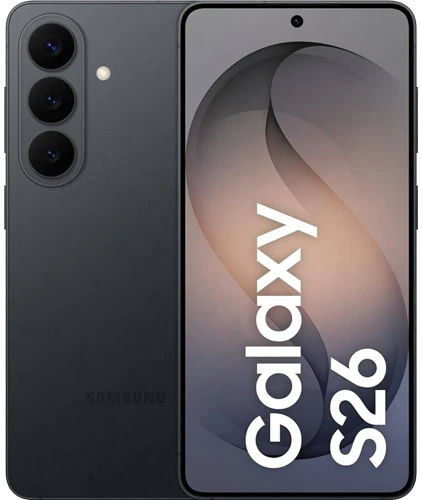
The regular Galaxy S26 has a stronger argument than its position at the bottom of Samsung's flagship lineup might suggest. It costs less than the Plus and Ultra, fits more comfortably in a pocket, and now borrows several features that Samsung previously kept for its larger phones.
The catch is the price. At $899 in the US, the S26 is $100 more expensive than the previous base model, according to the launch hands-on video. Samsung has doubled the starting storage and increased battery capacity, but it hasn't substantially reinvented the cameras.
That makes this year's smallest Galaxy less of a bargain and, paradoxically, a more complete phone.
Belliste analyzed the supplied third-party early hands-on video. This is an editorial assessment of its observations and specifications, not an independent Belliste battery, camera or performance test.
The Smallest S26 Is Getting Less Small
The reviewer likes compact flagships, which makes his first reaction revealing: the Galaxy S26 has grown from 6.2 inches to 6.3 inches. It's a small increase on paper, but not a change he personally wanted.
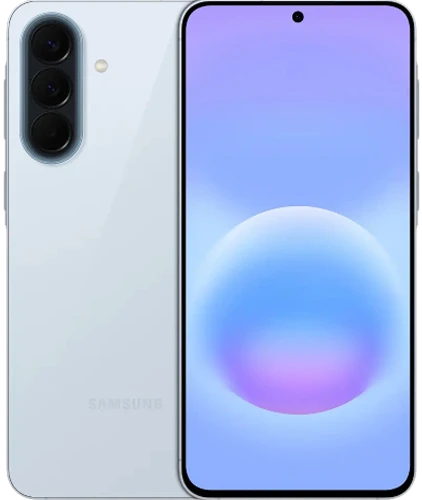
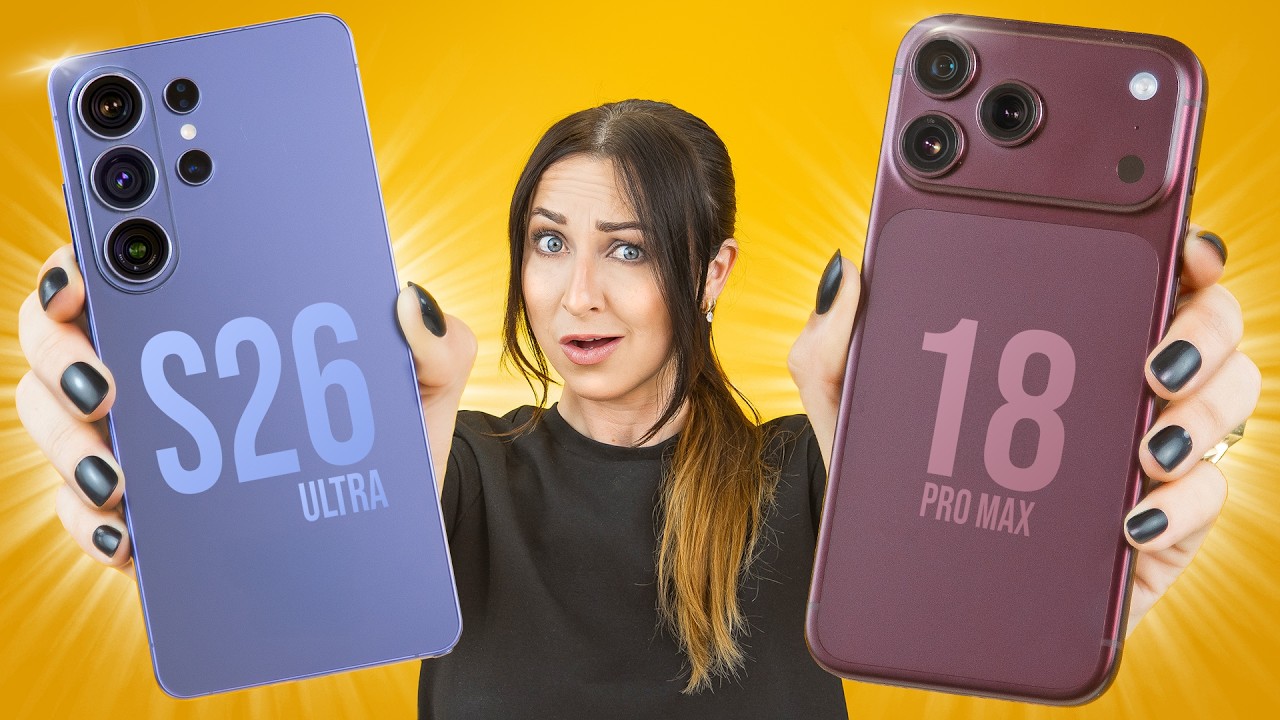
Samsung has also made the flagship family look more cohesive. In the reviewer's view, the base S26 no longer feels visually separated from the more expensive Ultra. Build quality makes a good early impression, and the camera housing fits the broader S26 design language.
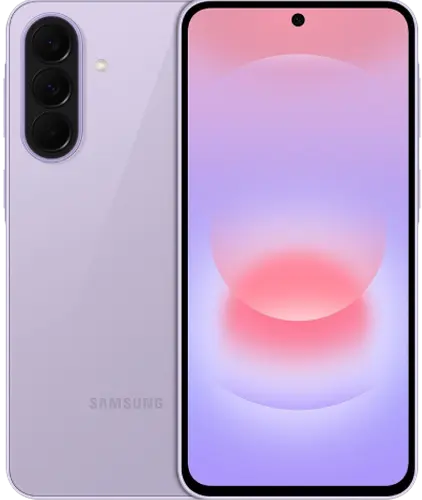
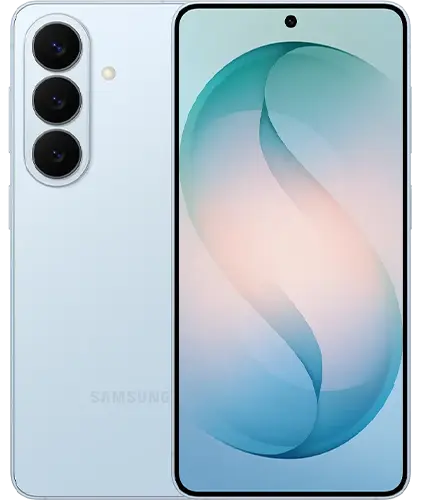
The launch colors are Cobalt Violet, White, Black and Sky Blue, with Pink Gold and Silver Shadow listed as Samsung online exclusives.
For someone who wants the smallest current Galaxy S flagship, the S26 remains the obvious starting point. Just don't expect the same compact dimensions as its predecessor.
A 6.3-Inch AMOLED Display Without the Ultra's Privacy Trick
The screen is a 6.3-inch Super AMOLED panel with an adaptive 1–120Hz refresh rate and a claimed peak brightness of 2,600 nits. An in-display fingerprint reader rounds out the familiar flagship experience.
The reviewer likes the display immediately. Samsung hasn't had to take an obvious shortcut here to make the entry-level flagship feel less expensive.
There is one deliberate omission: Privacy Display is exclusive to the S26 Ultra, not the standard S26 or the Plus. If you regularly read confidential messages in crowded spaces, that distinction may matter. It isn't a reason for most buyers to spend substantially more on a larger phone.
The real trade-off is size. The S26 gives you a high-end screen in the smallest package of the three, even if that package is slightly larger than before.
The Cameras Are Familiar—and That's Easier to Accept Here
Samsung hasn't made the base S26 a showcase for new camera hardware. The setup discussed in the video is:
Main camera: 50MP
Ultrawide: 12MP
Telephoto: 10MP with 3x optical zoom
Selfie camera: 12MP
These numbers closely resemble the previous generation. The reviewer has liked the main camera in earlier testing and expects the new processor could change how some photos are processed. That isn't a substitute for a side-by-side S26 camera test.
The key point is price positioning. On the $1,100 Galaxy S26+, the same general camera formula is difficult to defend against rivals with more ambitious telephoto systems. On the $899 S26, it's a less surprising compromise.
A dedicated 3x lens still helps with portraits and moderate-distance subjects. What Samsung isn't giving buyers is a major step forward in optical reach.
If you're upgrading from an older base Galaxy primarily for better camera hardware, this is the section to examine most carefully. The improvements that justify the S26 are elsewhere.
Flagship Processing Power, Even in the Base Model
The unit in the video uses the Snapdragon 8 Elite Gen 5 for Galaxy, the same processor family the reviewer discusses in the S26 Ultra.
He cites a 39% improvement in NPU performance and 24% in GPU performance, along with faster CPU performance. These are launch performance claims rather than measurements from the short hands-on demonstration.
For a smaller phone, sustained performance and heat will be worth watching. Powerful silicon is attractive, but how long a compact device can maintain its speed under gaming load matters more than a brief peak result.
Samsung also equips the model discussed with 12GB RAM. That's a useful amount of memory for multitasking and demanding apps, although most everyday users are unlikely to buy a new phone specifically for its AI processing score.
Processor configurations may vary by market. Buyers should confirm which chipset is fitted to the S26 sold in their region.
UWB Is the Quiet Upgrade That Changes the Base Model
One of the most useful changes is easy to miss on a spec sheet: ultra-wideband (UWB).
The reviewer points out that Samsung previously withheld this feature from the base model. On the S26, UWB enables compatible precision-finding experiences, such as locating a supported Galaxy tracking tag more accurately.
That may be more valuable than another small performance increase. Someone who regularly misplaces keys or a bag can actually benefit from precise directional finding.
There is still a network distinction in the model the reviewer describes. It supports sub-6GHz 5G, but not mmWave 5G. Many people won't notice, particularly where mmWave coverage is limited. Network capabilities should always be checked against the local model and carrier.
The larger story is that the regular Galaxy now inherits more of the conveniences that once encouraged buyers to step up to the Plus.
Battery Capacity Grows, Charging Speed Doesn't
Samsung has increased the battery from 4,000mAh on the S25 to 4,300mAh on the S26, a 7.5% capacity increase.
That is a welcome change in a phone the reviewer already wishes were a little smaller. A larger battery and an efficient processor could be a good combination, but the video doesn't include a battery rundown.
Charging is less exciting:
Wired charging: Up to 25W
Wireless charging: Up to 15W
Samsung hasn't used the new generation to close the wired-charging gap with the Plus. For someone who regularly needs a quick top-up before leaving home, that limitation is more tangible than a processor benchmark.
A Galaxy Watch Charging Surprise?
The reviewer notices that Samsung's press material appears to include the Galaxy Watch 7 and Watch 8 among devices associated with reverse wireless charging.
That's intriguing because newer Galaxy Watch designs have presented compatibility challenges when charged from the back of Galaxy phones. The reviewer questions whether the listing is accurate and says he wants to test it.
It would be convenient to travel with just a phone charger. But Galaxy Watch 7 and 8 reverse-charging compatibility is not established by this video. Treat it as an interesting question, not a confirmed buying feature.
The $899 Price Increase Comes With a Real Storage Upgrade
The regular Galaxy S26 now starts at 256GB, rather than 128GB, with a 512GB option and 12GB RAM in the configurations discussed.
That's a meaningful change. Large games, offline video and years of photos can fill 128GB surprisingly quickly, especially for someone who keeps a phone for several years.
But Samsung has also raised the US starting price by $100 to $899.
The reviewer sees the logic: the new entry price is closer to what buyers previously paid to move up to a higher storage tier. He's also aware that some people simply wanted the cheapest Galaxy S available and would have been happy with 128GB.
Both points can be true. The S26 is a better-equipped base phone, but the barrier to entry has increased. A buyer who doesn't need 256GB isn't necessarily getting $100 of personal value from the upgrade.
The phone retains IP68 water and dust resistance, another expected but welcome part of the flagship package.
Galaxy AI Is More Interesting When It Saves You Time
Samsung's Gallery app adds more generative editing tools. The reviewer describes replacing backgrounds and moving clothing or other objects between images, rather than merely erasing unwanted details.
Having those tools in the Gallery app is convenient, even if similar effects are available through separate AI services.
Enhanced Circle to Search is also discussed, alongside assistant choices involving Bixby, Gemini and Perplexity.
The more practical addition may be call screening. An assistant can interact with a caller and show a transcript before you decide whether to answer. The reviewer compares it to a feature he already uses on Pixel phones.
Samsung also discusses warnings for patterns associated with scam calls. The idea is especially relevant to people who receive suspicious calls frequently, but the video doesn't demonstrate how reliably the system recognizes fraud.
The difference between a useful AI feature and a forgotten one is simple: whether it solves a problem you actually have. Call screening has a clearer everyday purpose than another collection of photo effects.
Galaxy S26 vs S26+: Is the Bigger Phone Worth More?
The base S26 is no longer missing as many essentials as it used to.
Screen: The S26 has a 6.3-inch display; the S26+ moves up to 6.7 inches with QHD+ resolution.
Battery: The S26 has 4,300mAh; the S26+ has 4,900mAh.
Wired charging: The S26 tops out at 25W; the Plus reaches 45W.
Cameras: Both use a familiar 50MP main, 12MP ultrawide and 10MP 3x telephoto arrangement in the hands-on videos.
Storage: Both start at 256GB in the configurations discussed.
UWB: The base S26 now includes it, removing a previous reason to choose a larger model.
The Plus is still the more comfortable choice for people who watch lots of video, prefer a bigger keyboard or want the additional battery capacity and faster charging. But the base S26 has a stronger case for buyers who value pocketability.
The camera system alone no longer provides a compelling reason to pay more for the Plus.
Verdict: The Most Sensible Galaxy S26 for Many Buyers
The Galaxy S26 doesn't have the Ultra's attention-grabbing Privacy Display or an ambitious new camera system. Its wired charging is still capped at 25W, and the screen has grown slightly despite the appeal of a smaller flagship.
But Samsung has made improvements where everyday owners will notice them: 256GB starting storage, a 4,300mAh battery and UWB. It also retains the premium screen, flagship processor and familiar Galaxy camera versatility.
The $899 starting price is the biggest obstacle. It's a genuine increase for buyers who were perfectly happy with the previous 128GB entry model.
Still, if you want a current Samsung flagship without paying for the size and extras of the Plus or Ultra, the regular S26 looks like the most rational place to start.
Buy the Galaxy S26 for the compact flagship experience and better base-model features—not for a dramatic camera upgrade.
Source: Third-party Galaxy S26 early hands-on video supplied for this article. Battery endurance, photographic comparisons and sustained benchmarks were not independently tested by Belliste.