Android’s SMS Crash Report Makes Your Phone’s Update Status the Urgent Check
By BellistePublished:
A newly disclosed Android telephony flaw can disrupt calls without a tap. The practical question is whether your specific phone has received the fix.
A phone can lose its calling service without its owner opening a suspicious message, according to newly published Android security research. That makes the usual advice to avoid unknown links insufficient for this particular problem.
GSMArena reported the issue on October 30. Researcher Mark Blaszczyk’s disclosure describes malformed WAP Push messages crashing Android’s telephony process. His testing found dropped calls and, when messages kept being processed, persistent disruption that could require technical assistance to clear.
The useful response begins with the software on your own device. A fix existing in Android’s code does not establish that every manufacturer and carrier has delivered it.
Belliste’s view: update availability deserves as much attention as the camera or processor when choosing a phone, and this disclosure is a practical reason to check the support status of the handset you already own.
What has actually been demonstrated
The researcher reports reproducing the problem on Pixel and Samsung devices. The failure concerns the service handling cellular communications; describing it as permanent hardware destruction would misrepresent the evidence.
This is also different from a message asking someone to install an application. In the reported scenario, background processing is enough to trigger the failure. A missing suspicious item in the inbox therefore cannot tell an owner that nothing happened.
These are research findings. They do not establish that every Android handset behaves identically, that an individual dropped call was an attack, or that widespread exploitation is occurring. Belliste has not reproduced the attack and is not presenting the researcher’s results as its own testing.
A patch timeline needs a device-specific answer
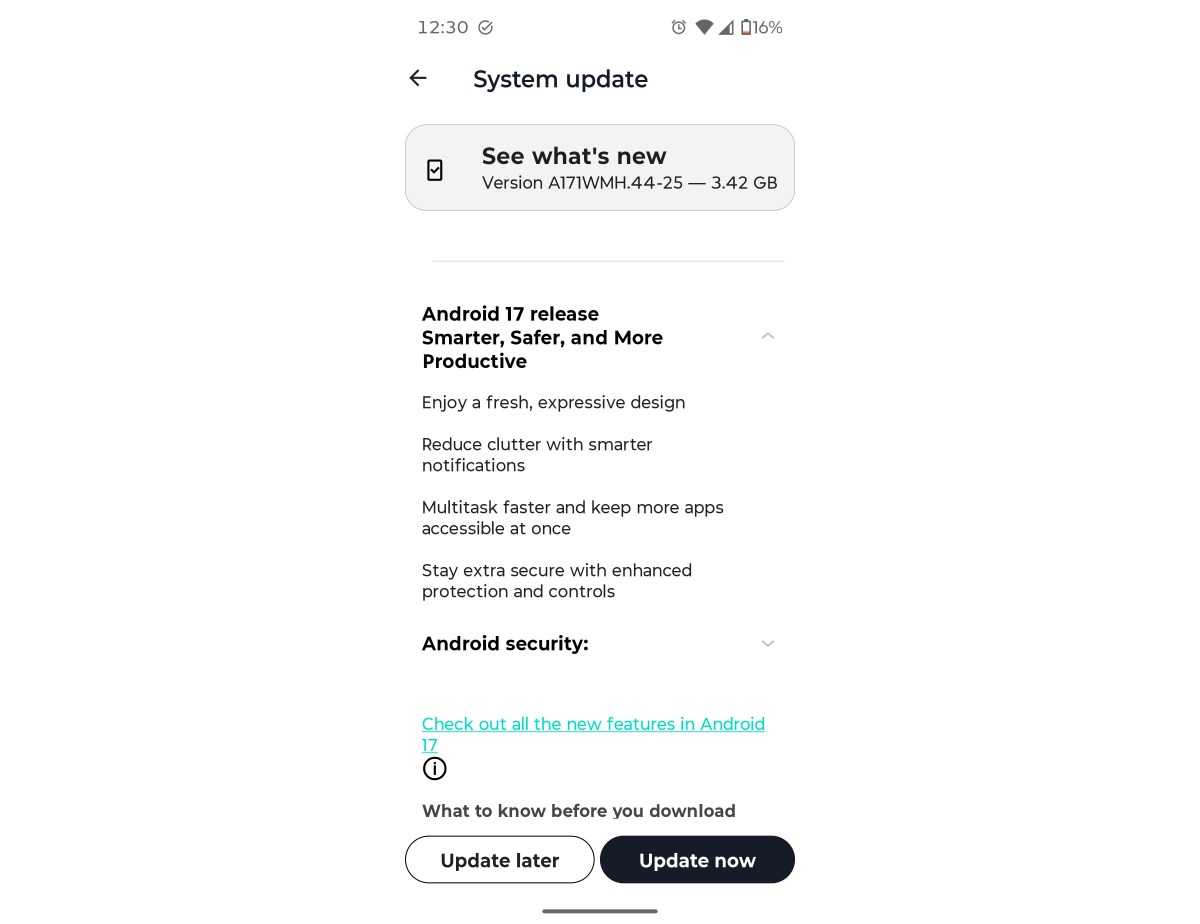
The researcher says fixes reached Android 14 through 17 in October updates. Android Authority’s follow-up points to an earlier code change and discusses a November security-bulletin listing, while noting uncertainty about delivery to individual phones.
Those dates describe different stages: developing a correction, sharing it with partners, documenting it publicly and delivering a particular handset’s firmware. Treating them as one event produces an unreliable promise of protection.
Install the latest security update offered through the phone’s normal settings, then check the manufacturer’s guidance for the exact model and regional build. If a device remains in support but has no relevant update, its support team is the appropriate place to ask about this issue. A newer Android version by itself is not proof that a particular correction is present.