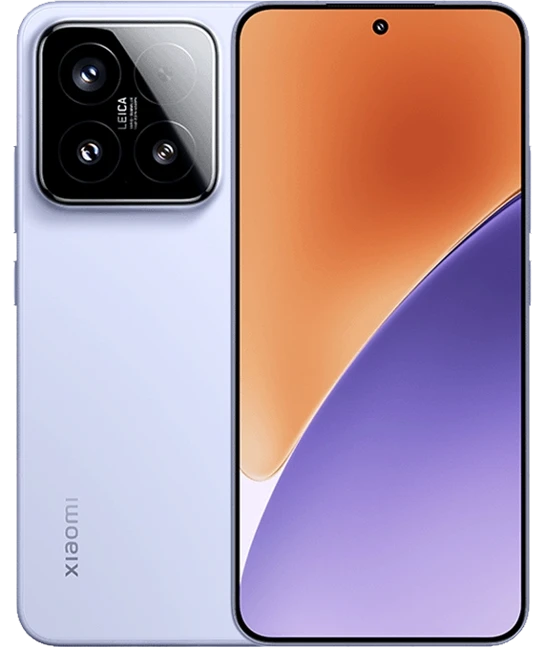
The Xiaomi 15 makes a straightforward promise: a smaller flagship without the usual battery penalty. In the linked review, its owner says he used the device as his primary phone for more than two months, taking it on work trips, shooting photographs and playing games. He comes away impressed by the battery and Leica-inspired camera experience, but the software and heat management are not trouble-free.
This article is based on the linked two-month review, not independent Belliste testing. Its travel-day account is informative; its charging and temperature comparisons are informal.
Design: Compact Without Feeling Lightweight
The Xiaomi 15 has a matte back, matte sides and subtly curved edges. Its dense, substantial feel immediately appeals to the reviewer, who compares it with his wife's iPhone and finds the size and hand feel surprisingly similar. He also admires the narrow display bezels, while making clear that his visual comparison with other flagships is not a measured test.
The result is a smaller phone that still feels substantial. The reviewer also appreciates that Xiaomi has addressed several frustrations he experienced with the Xiaomi 14, including the move to an ultrasonic fingerprint reader.
Battery Life: A Long Workday With Charge Left
The video distinguishes between the global Xiaomi 15, which it lists at 5,240mAh, and the Chinese model at 5,400mAh. The reviewer points out that the global figure exceeds the 5,000mAh capacity he cites for the much larger Galaxy S25 Ultra. Capacity alone does not determine endurance, but his travel-day example is more persuasive than the comparison on paper.
He starts a business trip around 5 a.m., using the phone for email, work documents, a boarding pass and other routine tasks. After landing in Brisbane, he reports roughly 84% remaining. By 5:44 p.m., after a shoot that involved tethering his laptop, the battery is at 53%. At around 9 p.m., it still shows 34%.
It is one travel day, not a controlled battery benchmark. Still, finishing a 16-hour stretch with 34% remaining while using the hotspot is a strong practical result.
Charging: Fast, but Warm
The Xiaomi 15 supports 90W wired charging and 50W wireless charging according to the video. The reviewer demonstrates a brief charging comparison against a OnePlus 13, starting the phones at different battery levels. After approximately ten minutes, the Xiaomi reaches about 90% from 63%, while the OnePlus reaches roughly 70% from 43%.
The phones started at different charge levels, so this is not a like-for-like speed comparison. More concerning to the reviewer is how warm the Xiaomi feels: he shows a temperature reading around 41°C during the exercise.
He worries about the effect of repeated hot charging sessions, but the video does not measure long-term battery degradation. It supports a simpler finding: fast charging is convenient, and this unit became noticeably warm during the demonstration.
Display: Thin Bezels and a Brightness Claim
The display earns praise for its narrow borders and polished appearance. The reviewer mentions a claimed peak brightness of 3,200 nits, but says sustained brightness in his experience does not clearly stand apart from other premium phones. Peak figures should not be confused with sustained full-screen visibility.
He also mentions a 12-bit panel claim, then openly asks viewers to fact-check it. Because the video itself treats that specification as uncertain, it should not be presented here as independently confirmed. His firsthand impression is of an attractive screen, not a calibrated color-accuracy assessment.
Photography: The Reason He Enjoys Using It
The camera experience is the strongest emotional draw of the Xiaomi 15 for this reviewer. He enjoyed the Xiaomi 14 as a camera but found the newer model more convincing as an everyday phone. HyperOS 2 makes shooting and editing feel smoother, and the Leica-influenced rendering gives images a character he prefers to the more predictable output of some competitors.
That enthusiasm comes with an important qualification. He does not consider the Xiaomi 15 as consistent as the iPhone 16 Pro series, Google Pixel or Galaxy S25 Ultra for photography. Instead, he likes the striking color and contrast of its successful shots. His wife also responds positively to the look of the photographs, particularly the filters and color treatment.
The attraction is the look of the images, not a demonstrated lead in color accuracy.
Camera Hardware: Refinements Rather Than a Reinvention
The reviewer says much of the rear camera hardware resembles the Xiaomi 14. The main camera sensor is described as unchanged, while the telephoto moves from roughly 3.6x to 2.6x with a newer sensor. He acknowledges that he struggles to identify a clear image-quality difference in his own comparisons, despite the stated sensor improvement.
He also describes the ultrawide as broadly similar, with a different lens and wider field of view. Those details suggest that the Xiaomi 15's appeal rests less on a dramatic hardware overhaul than on the combination of optics, processing and a more enjoyable camera interface.
Video Recording: Exposure Can Be Jumpy
Still photography is not the same as video reliability. In the reviewer's footage, automatic exposure sometimes changes abruptly, producing a jumpy look as the scene shifts. He prefers the behavior of Google Pixel and Samsung Galaxy phones for video recording.
This is a specific criticism, not a claim that every Xiaomi 15 video will be poor. It matters most to people who film while moving between bright and dark areas and expect the phone to adjust smoothly without intervention. For that use, the reviewer's experience makes the Xiaomi less convincing than its still-camera performance.
Gallery Editing and AI Image Expansion
The built-in Gallery editor is another reason the reviewer enjoys the phone. He uses filters, grain and other image adjustments directly on the device, without treating every photograph as a file that must be exported to desktop software.
His favorite AI tool expands an image's canvas to fit a different aspect ratio. He demonstrates the idea of taking an existing photograph and generating extra content above or below it for a vertical social-media story. He says he has relied on that feature for Instagram posts during his time with the phone.
Generated extensions are creative edits, not original camera detail. The feature is valuable for composition and sharing, but the expanded portions should not be mistaken for a wider photograph captured by the sensor.
HyperOS 2: Better Daily Use, Familiar Irritations
HyperOS 2 fixes several complaints the reviewer had with the Xiaomi 14. He likes the ultrasonic fingerprint sensor, the option to dim the screen more comfortably and the ability to open the camera with a double press of the lock button. The interface also offers floating mini-windows, a side dock, responsive haptics and separate swipe-down areas for notifications and quick settings.
Not every detail is polished. He dislikes the widget picker, which he finds poorly organized, and reports that his Gallery app continues synchronizing Google Photos content despite his attempts to stop it. Those are concrete workflow frustrations rather than abstract complaints about Android skins.
Advertising is another issue. He initially believed HyperOS 2 had eliminated the ads he remembered from the previous version, then encountered one while filming. Following advice from other users, he disabled the MSA authorization setting and restarted the phone; he reports that this helped. Menu paths and behavior may vary by region or software version, so this should not be treated as a universal fix.
Snapdragon 8 Elite: Fast Gaming, Higher Heat
The Snapdragon 8 Elite gives the Xiaomi 15 substantial performance headroom. The reviewer says it can maintain a steadier 60fps in some gaming situations than his OnePlus 13, despite the Xiaomi's smaller body. He also suspects Xiaomi permits higher operating temperatures to achieve that result.
The video offers no repeatable thermal benchmark to explain the behavior. What it does show is smooth gaming alongside noticeable heat.
Xiaomi 15 vs Xiaomi 14: Which Changes Matter?
The reviewer identifies a handful of improvements that make the newer phone more satisfying: the ultrasonic fingerprint sensor, a more refined HyperOS interface, stronger battery endurance and a more complete daily-driver experience. The camera remains enjoyable, although much of its hardware carries over and the telephoto focal length changes.
For an existing Xiaomi 14 owner, that means the upgrade case depends on the problems they want solved. Someone frustrated by fingerprint unlocking, battery endurance or software details may value the Xiaomi 15 more than someone expecting an entirely new camera system.
Verdict: Small Phone, Fewer Compromises
The Xiaomi 15's best argument is its battery. In the reviewer's demanding travel day, the compact phone still had 34% remaining at 9 p.m. Its matte finish, fast fingerprint reader and expressive Leica-style photos make it pleasant to use beyond the endurance figures.
The trade-offs are harder to ignore if you record a lot of video or dislike tinkering with software. Exposure changes can look abrupt, HyperOS 2 still surfaces ads and awkward menus, and the phone became hot during rapid charging.
Choose it for compact size, long days away from a charger and creative still photography. Look elsewhere if reliable automatic video exposure or cooler heavy-load operation matters more.