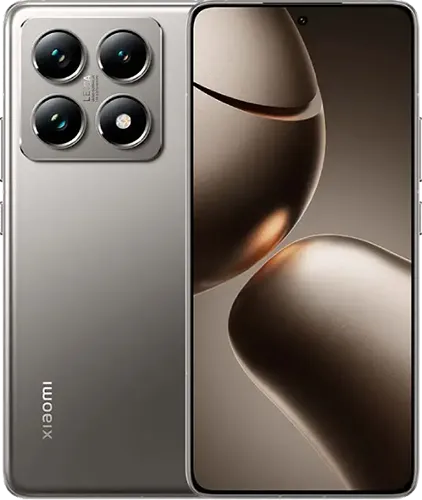
The Xiaomi 14T runs demanding games comfortably in the supplied hands-on review, but its battery sometimes needs help before the day is over. That imbalance matters more than the 'flagship killer' label: the Dimensity 8300-Ultra and creator-focused camera tools are persuasive, while endurance is harder to recommend.
This review is based on the linked hands-on video, not independent Belliste testing. Prices, software and box contents may have changed since filming.
Price and What's in the Box
The reviewer quotes a global price around $600 and a Nigerian price equivalent to roughly $450 at the exchange rate then, or about ₦765,000. These are historical figures from the video, not verified October 2026 retail prices. Buyers should check local pricing and warranty terms.
The phone supports 67W wired charging, but Xiaomi omits the charger from the box in some regions. That distinction matters when comparing the total purchase cost. A compatible power adapter may be a separate expense.
Design: Flatter Edges, Less Gloss
Compared with the 13T, the Xiaomi 14T adopts flatter sides and a different camera layout. The reviewer is undecided about the arrangement of the individual camera rings but likes the overall look in certain finishes.
His unit has a matte-feeling rear panel. He believes the back and frame are plastic, while acknowledging that he could not verify the rear material from documentation. It would therefore be wrong to treat his impression as a confirmed materials specification. The phone carries an IP68 dust- and water-resistance rating.
A textured power button is easy to locate, although he occasionally mistakes it for a fingerprint sensor. The actual optical fingerprint reader is under the display and unlocks reliably in his use.
Display: A 144Hz Specification With a 120Hz Observation
The 6.67-inch AMOLED panel has a 1220p-class resolution, HDR10+ and Dolby Vision support. Slimmer bezels make it look more modern than the 13T, even though the basic display proposition is familiar.
Xiaomi advertises peak brightness of up to 4,000 nits. The reviewer cannot measure that figure, but finds the screen comfortably legible outdoors on a sunny day. That observation supports practical visibility, not a verified peak-nit result.
Although Xiaomi advertises up to 144Hz, the reviewer never sees the on-screen refresh-rate indicator exceed 120Hz. It drops to about 30Hz on the always-on display. The panel also lacks LTPO; the video does not establish why 144Hz was not observed.
Stereo speakers with Dolby Atmos receive a positive assessment for loudness and clarity at higher volume. No audio measurements are provided.
HyperOS and AI: Useful Tools, Familiar Clutter
The review unit runs HyperOS based on Android 14. The interface offers extensive customization, but the reviewer still notices some preinstalled software and advertising. He would also like deeper system-wide icon theming.
AI functions include Gemini access, Circle to Search, translation, proofreading and summarization in Notes, plus an AI eraser in the Gallery. The AI services menu is useful as a central location, although it loads slowly in his demonstration.
Some gallery functions require an additional plugin download that he reports as approximately 820MB. AI image expansion is one of the examples shown. Feature availability may depend on software version, region and installed components, so the footage should not be read as a permanent feature guarantee.
Dimensity 8300-Ultra: Gaming Without Flagship Pricing
The Dimensity 8300-Ultra is the biggest performance change from the Xiaomi 13T's Dimensity 8200-Ultra generation. The reviewer describes quick navigation, responsive apps and a clear benchmark improvement, although the transcript does not supply numeric benchmark scores suitable for independent comparison.
PUBG Mobile offers a Smooth/Extreme+ combination in his session, while higher graphics settings require lower frame-rate presets. Call of Duty Mobile also exposes an Ultra frame-rate option at medium graphics. Even Warzone Mobile feels smooth to him, though it starts at a low visual-quality preset. The takeaway is responsive play with compromises in visual fidelity, not proof of a particular sustained frame rate.
The creator reports noticeable heat during benchmarks but no overheating in his gaming sessions. Because he describes himself as a relatively casual mobile gamer, the footage cannot settle how the phone behaves during hours of continuous play.
The phone uses UFS 4.0 storage, with 256GB and 512GB options discussed in the video. Memory configurations can vary by market; the source describes a 12GB base configuration and a higher-memory option. There is no microSD card slot.
Battery: The Main Reservation
A 5,000mAh battery sounds sufficient on paper, but the reviewer's day-to-day experience is mixed. He remembers better endurance from the Xiaomi 13T and says the 14T sometimes needs another charge before the end of the day.
He no longer has the 13T available for a direct comparison, so this is a recollection rather than a controlled battery test. The video provides no standardized screen-on time or repeatable rundown score.
He reports a full wired charge in approximately 50 minutes with 67W charging. That is his video-based result, not a Belliste measurement. Charging hardware and conditions can affect the outcome, particularly in markets where the power adapter is sold separately.
Leica Cameras: Strong Telephoto, Occasional Color Shifts
The rear camera setup described in the review combines a 50MP main camera, a 50MP telephoto and a 12MP ultrawide. The reviewer identifies a Sony IMX906 main sensor; this is a meaningful hardware change even though the camera arrangement resembles the 13T on paper. The front camera is 32MP.
Telephoto portraits are among the most convincing shots, even in low light. Color consistency is the weakness: the creator notices shifts in tone between images that otherwise look well exposed. For someone shooting a series of portraits, those changes mean extra editing to keep a consistent look. Leica branding does not eliminate that problem.
Selfies look sharp at normal viewing sizes, though some fine detail takes on an overly smoothed, painting-like texture when enlarged. This is a processing issue visible in his examples rather than a resolution limitation alone.
The examples show both the camera's appeal and the processing inconsistency; they are not a blind comparison with competing phones.
Video Tools: Log Recording and a Teleprompter
Video is where the Xiaomi 14T distinguishes itself from many straightforward midrange devices. The reviewer describes recording up to 4K at 60fps and highlights Log capture in Pro mode, which provides a flatter image intended for later color grading.
He also demonstrates or discusses a teleprompter feature when recording with the selfie camera. That is especially useful for creators who deliver scripts directly to the lens without relying on a second screen.
Neither feature automatically guarantees professional footage. Log video requires a grading workflow, and the supplied review does not test rolling shutter, stabilization across every lens, recording limits or audio quality under controlled conditions. Still, these are practical tools rather than decorative menu entries.
Xiaomi 14T vs Xiaomi 13T: What Actually Changes?
Compared with the 13T, the 14T has flatter sides, narrower bezels and a newer Dimensity chip, plus more AI and video tools. Battery capacity stays at 5,000mAh, yet the creator remembers the older phone lasting longer.
Because he does not retest both devices together, the video cannot establish an exact performance or battery-life percentage advantage. Buyers upgrading from the 13T should prioritize whether the faster processor and video features address something their existing phone cannot do.
Verdict: Performance and Creator Tools, With a Battery Caveat
The Xiaomi 14T is a strong fit for buyers who want smooth gaming, useful telephoto portraits and video tools such as Log recording and a selfie teleprompter without paying flagship prices. Its screen is easy to see outdoors in the reviewer's experience, and the camera delivers appealing results when its color processing stays consistent.
The catch is battery life. He sometimes needs to recharge before bedtime, and some regional packages omit the charger. If endurance matters more than performance or creative features, compare battery tests before buying. Otherwise, the 14T deserves consideration at the right local price.