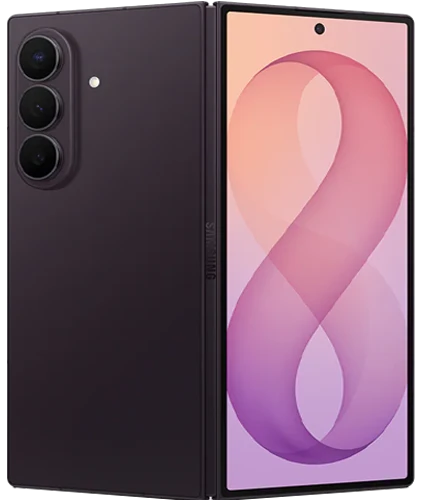
The Galaxy Z Fold8 is a strange proposition at $1,900. It has fewer cameras than a conventional flagship, some apps struggle with its unusual screens, and even the stereo speakers behave awkwardly when you unfold it. Yet after a week of using it as his main phone, the reviewer in the supplied video still doesn't want to put it down.
That contradiction is the story of Samsung's latest foldable. It isn't trying to win a conventional specification contest. Its appeal is physical: a thinner, lighter, notebook-like device that changes how you hold, read and use a phone.
Whether that experience is worth nearly two thousand dollars depends less on benchmark numbers than on the compromises you can live with.
Belliste's assessment is based on the linked third-party review and the reviewer's week of daily use. Belliste has not independently tested the device.
A Foldable That Finally Feels Different in the Hand
The reviewer describes the Z Fold8 as thinner, more squared-off and easier to handle than earlier foldable designs. The outside screen has a 5.5-inch diagonal and an unusual, relatively squat shape.
That sounds restrictive until you see how he uses it. The power button doubles as a fingerprint reader and sits where his finger naturally lands. Many controls remain reachable with one hand, including the camera interface, which groups its buttons along the right edge.
The shape has a downside: vertical feeds feel cramped compared with a tall conventional smartphone. But for quick tasks, the reviewer finds the short, wide screen surprisingly comfortable.
This is an important distinction. A folding phone isn't automatically better because it opens. The Fold8's strongest argument begins when both the closed and open forms have a clear purpose.
The 4:3 Inner Display Changes the Experience
Unfolded, the phone reveals a 4:3 AMOLED display with a high refresh rate and an anti-reflective coating. The video doesn't provide a verified diagonal size for this panel, so there's no reason to invent one.
Samsung's Titanium Flex Hinge also reduces the visual prominence of the crease, although the reviewer gives it a qualified rather than perfect endorsement.
The inner screen is wide enough for two apps side by side. Turn it sideways and it becomes a comfortable reading surface. That may sound modest, but the reviewer repeatedly returns to the simple pleasure of holding a thin, book-like screen for longer sessions.
There's a surprise with video, too. Despite the 4:3 aspect ratio, he finds widescreen playback physically larger than on the Galaxy Ultra phone he compares it with. Some older or specially formatted 4:3 content fills the display particularly well.
The appeal isn't just screen area. It's the way the hardware invites different habits: read on the inside, handle quick tasks on the outside, and switch between the two without carrying a tablet.
The Hinge Is Satisfying, but Flex Mode Is Missing
The Fold8's spring-loaded hinge feels enjoyable to open and snap shut. That mechanical character is part of what makes the device feel distinctive.
But Samsung has made a trade-off. There's no supported Flex Mode of the sort associated with foldables that remain partially open and offer software layouts for that position.
You can physically prop the device partway open, according to the reviewer, but there is no dedicated interface built around it.
That matters if your idea of a foldable includes placing it on a desk for a hands-free video call or using half the screen as a control surface. The Fold8 is optimized more clearly for fully open or fully closed use.
Flagship Power and a 4,800mAh Battery
The review describes a Snapdragon 8 Elite for Galaxy chipset and a 4,800mAh battery using some silicon-enhanced battery technology. The reviewer explicitly says Samsung isn't pushing that approach as aggressively as certain Chinese phone makers.
During his week of daily use, the battery was sufficient for a full day, including substantial time on the inner screen. That's useful real-world testimony, though it isn't a standardized endurance result and won't predict every user's experience.
Wired charging reaches 45W, which the reviewer describes as faster than previous Samsung folding phones.
The video doesn't provide repeatable benchmark figures, charging-time measurements or controlled battery scores. The strongest supported conclusion is that the Fold8 delivers capable flagship hardware without forcing the reviewer to ration inner-screen use throughout the day.
That's encouraging, especially for a device built around opening a large display often.
App Compatibility Is the Biggest Everyday Risk
The reviewer's enthusiasm survives a particularly frustrating discovery: some apps simply don't adapt properly to either display.
Milder cases involve black bars, wasted space or awkward layouts. The worst example in the video is a game whose Play button cannot be reached on the outside screen and doesn't appear correctly on the inside screen either. The reviewer calls it effectively unplayable on the Fold8.
That isn't a theoretical complaint about aspect ratios. It's a feature-breaking problem on an expensive device.
The exact impact will depend on your own apps. Someone who spends most of their time reading, browsing and multitasking in well-optimized software may rarely encounter trouble. Someone whose favorite game or work tool has a rigid interface could find the phone genuinely frustrating.
Before buying a $1,900 foldable, app compatibility deserves the same attention as camera quality or battery life. A screen can be excellent and still be the wrong shape for software you rely on.
The Speakers, Chargers and Camera Bump Have Their Own Quirks
Not every compromise is dramatic. Some are small annoyances that become more noticeable after a week.
When closed, the stereo speakers sound reasonably balanced. Open the phone, however, and both speakers sit on the left side of the device. The reviewer notices the lopsided audio while watching video in landscape orientation.
Wireless charging is another irritation. The Fold8's shape doesn't line up well with some upright chargers, including certain in-car mounts. There are no built-in alignment magnets, so a compatible magnetic case may be needed for chargers that previously worked without thought.
The phone also rocks noticeably on a table when used without a case.
These details rarely headline launch presentations. They're precisely the kind of things a daily-use review is better at uncovering.
Two 50MP Cameras—and No Telephoto
The Fold8 has a 50MP main camera and a 50MP ultrawide, according to the video. There is no dedicated telephoto camera.
The reviewer doesn't call the photos unusable. He calls them fine—and at this price, that's faint praise.
He finds the images short of the sharpness, color quality and low-light results he expects from top-tier conventional flagships. Without a telephoto lens, buyers also give up dedicated optical reach.
This is the Fold8's clearest hardware compromise. Samsung has prioritized a thin body, hinge design and battery capacity over a more versatile camera system.
A $1,900 device can be excellent for reading and multitasking while still being a disappointing choice for someone who travels to take photos. Both judgments can be true.
If mobile photography is your main priority, a conventional flagship with a dedicated zoom camera deserves serious consideration before you pay a foldable premium.
One UI 9: Small Details That Make More Sense on Two Screens
The reviewer says the Fold8 is his first test device running One UI 9 on Android 17.
He points to a lock-screen clock that responds to the wallpaper, thicker brightness and volume controls in Quick Settings, and other subtle interface changes.
More important for this device is the ability to separate the outside and inside home-screen layouts rather than mirroring them.
That's a genuinely useful foldable feature. You might want a compact grid of everyday apps on the outside and a different arrangement for reading, multitasking and larger widgets inside.
The software is therefore a mix of thoughtful adaptation and unfinished work. Samsung's own interface recognizes that the screens serve different purposes; third-party apps don't always follow.
Galaxy Z Fold8 vs a Conventional Flagship: What Are You Paying For?
At $1,900, the Fold8 isn't an obvious bargain on paper.
A conventional high-end phone can offer a large display, powerful chipset, strong battery life and more versatile cameras for less. The Fold8 asks buyers to value something those phones can't provide: a thin device that opens into a different kind of screen.
The reviewer also mentions a more expensive Ultra foldable positioned above it. That makes the Fold8 sound like the relatively accessible option within a very expensive category, not an inexpensive phone.
Choose the Fold8 for: its thin notebook-like design, unusually reachable cover screen, inner 4:3 display, reading experience and occasional two-app multitasking.
Think twice if you need: a telephoto camera, flawless app scaling, wireless-charger alignment without accessories, a supported half-open Flex Mode or perfectly balanced stereo sound when unfolded.
The video speculates about a future folding iPhone, but those comments are predictions, not confirmed Apple specifications or launch details. They shouldn't determine a purchase decision today.
Verdict: A Brilliant Shape With Expensive Compromises
After a week, the reviewer is still enthusiastic about the Fold8. That matters because the review isn't based only on an exciting first impression. He has encountered broken layouts, charging annoyances, lopsided speakers and ordinary cameras, yet he still likes using it.
The reason is simple: the form factor delivers a genuinely different experience. The closed phone feels manageable, and the open screen is especially appealing for reading, video and multitasking.
But enthusiasm isn't the same as universal value. At $1,900, missing telephoto hardware and app-compatibility problems are not minor footnotes. They're reasons for some buyers to walk away.
The Galaxy Z Fold8 makes sense for people who specifically want this folding shape—not for people seeking the strongest all-round flagship specifications.
If that compact-notebook experience is what you've been waiting for, the Fold8 sounds unusually convincing. If you're unsure whether you'll actually use the inner display, don't let the novelty make the decision for you.
Source: [Galaxy Z Fold8 review video](https://www.youtube.com/watch?v=Z6z_feacXW8). All firsthand impressions and observed shortcomings are attributed to the reviewer.