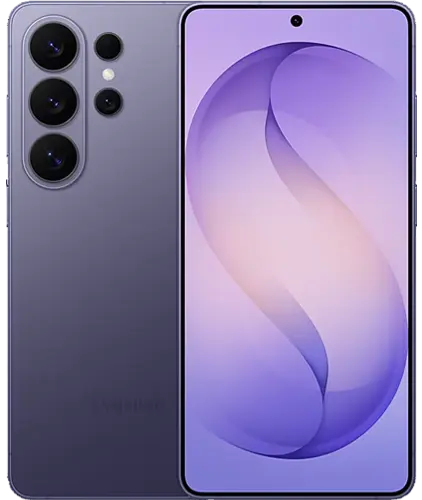
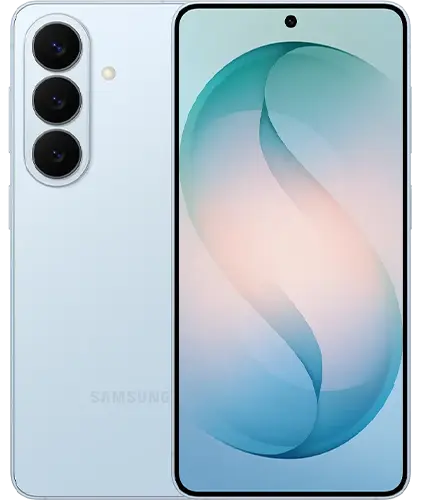
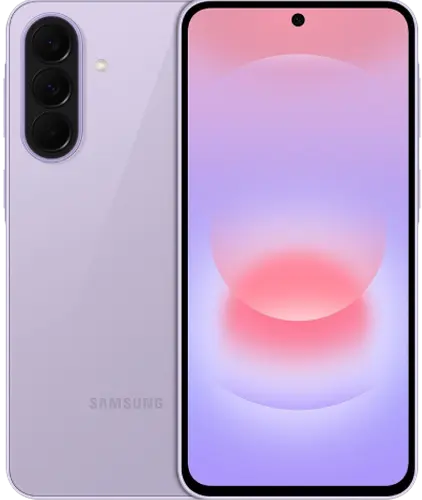
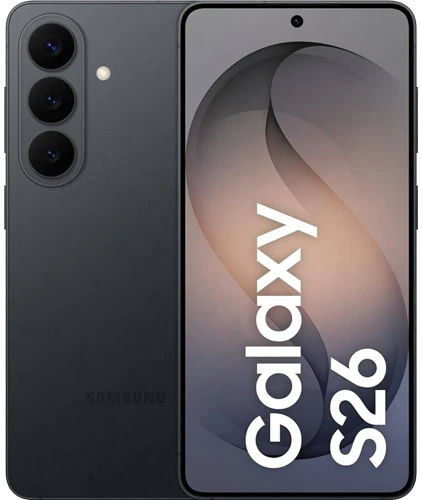
The most revealing moment in the Galaxy S26 Ultra hands-on review comes about two and a half minutes in. The reviewer has just demonstrated Samsung's new Privacy Display, a feature that can hide a notification from someone sitting beside you. It works. Then he puts the phone next to last year's S25 Ultra, tilts both screens, and notices something unexpected.
The S26 Ultra develops a blue tint and loses brightness more quickly at an angle—even with Privacy Display switched off.
That's a difficult detail to overlook. Samsung has introduced one of the more unusual smartphone features in years, but its underlying display design may carry a cost even when the feature isn't being used.
The rest of the phone tells a different story. Its slimmer frame feels better in the hand. The cameras produce cleaner footage in the reviewer's early comparisons. A new video stabilization trick is genuinely useful. Some Galaxy AI features are clever, while one of the most ambitious struggles to work consistently.
This Belliste analysis is based on the linked third-party hands-on review and published device specifications. It is not an independent Belliste hands-on test or a long-term review.
The Privacy Display Problem
Privacy Display isn't a conventional darkened screen protector. Samsung has built the effect into the panel, allowing the phone to restrict side-angle visibility when needed.
The reviewer demonstrates it hiding the entire screen, activating inside particular apps and concealing individual notifications. He also shows how it can protect sensitive information during password entry.
Watching a notification disappear from an off-axis view while the rest of the interface remains readable is an effective demonstration. There is an obvious use for it on trains, in waiting rooms or anywhere people sit close together.
The limitation becomes apparent when the reviewer enables privacy across the whole screen. It grows visibly dimmer and less crisp from the front, too.
That's manageable if you're entering a password. It becomes harder to accept if you want to leave the setting on throughout the day.
Then comes the S25 Ultra comparison.
At around 2:22, the reviewer rotates both phones side by side. The S26 Ultra appears to shift toward blue and darken sooner. His concern is not that the privacy setting makes the screen worse while active; that behavior is expected. It's that the panel appears to have different viewing-angle characteristics in normal operation.
The footage supports the observation, but not a definitive explanation. It doesn't establish whether every S26 Ultra behaves identically, how large the color shift would be under controlled measurement or whether most owners would notice it during everyday use.
Samsung's new pixel architecture is a plausible factor. More detailed display testing is needed before calling it the cause.
A Better Picture Straight On
The display isn't simply a downgrade. Viewed directly, the reviewer praises the panel's color presentation and the effect of Samsung's ProScaler image processing.
He plays the same footage on the S25 Ultra and S26 Ultra, pointing to the extra apparent detail in moving water. The difference is visible in his comparison.
There are now two separate questions for buyers. Do you value privacy controls that work without an accessory? And how much do you care about viewing-angle consistency?
Someone who spends most of the day looking straight at the phone may barely notice the second issue. Someone who frequently shares photos across a table or watches videos with another person could care more.
The Small Design Changes Add Up
The S26 Ultra is 7.9mm thick and weighs 214g. The S25 Ultra measures 8.2mm and 218g.
Four grams won't transform a large smartphone. Neither will three-tenths of a millimeter. Yet the reviewer notices the difference because Samsung has also softened the corners and made the edges feel less abrupt against the hand.
Samsung has returned to an aluminum frame after promoting titanium on the previous generation. The reviewer finds the change less important than the resulting ergonomics. He also speculates that aluminum could help heat transfer, although he doesn't present thermal measurements to establish a performance benefit.
The integrated S Pen survives the slimmer design, with a modified shape to accommodate the reduced thickness.
His main aesthetic complaint is the color selection. He wants something less restrained. It's a matter of taste, but one that makes sense for a device with such an established identity.
The Camera Improvements Are Easier to See Than to Find on a Spec Sheet
The S26 Ultra still has a 200MP main camera. Someone comparing resolution figures with the S25 Ultra could miss the most relevant changes.
Samsung has widened the main camera aperture from f/1.7 to f/1.4 and the 5x telephoto aperture from f/3.4 to f/2.9. Wider apertures allow more light to reach the sensors, although final image quality also depends on processing and shooting conditions.
The reviewer's low-light comparison provides an early example of the difference.
Filming himself, he finds the S26 Ultra's footage brighter and cleaner. Noise is less distracting. Highlights on his face are better controlled, and fine detail remains visible without the exaggerated smoothing that can make faces look artificial.
He notices similar processing improvements on the selfie camera.
These are useful changes, particularly for people who shoot indoors or record themselves after dark. But the video contains selected comparisons, not a broad camera test across lighting conditions, subjects and competing phones.
The Camera Feature I'd Pay Attention To
At approximately 6:07, the reviewer demonstrates Horizontal Lock, a new addition to Super Steady video.
He rotates the phone while recording, but the resulting footage stays level. It's a simple demonstration and a persuasive one.
Imagine recording a child running through a park, following a cyclist or filming while moving through a crowded event. You don't necessarily need more resolution. You need the horizon to stop wandering every time your wrist turns.
Horizontal Lock addresses that problem directly.
Samsung has also improved Auto Framing to support 4K and introduced APV recording for production workflows where preserving video quality during editing matters.
Those features will appeal to different people. APV is specialized. Horizontal Lock has a benefit almost anyone can understand after watching a few seconds of footage.
Samsung Chose Thinness Over a Bigger Battery
The Galaxy S26 Ultra has a 5,000mAh battery.
So does the S25 Ultra.
Samsung has kept the same nominal capacity while making the phone slimmer, at a time when some rival flagships are moving toward substantially larger batteries.
That doesn't automatically mean poor endurance. The Snapdragon 8 Elite Gen 5 for Galaxy, display settings, network conditions and software all influence how long the phone lasts. But it does mean buyers shouldn't expect a battery-capacity upgrade.
The hands-on video doesn't include a full battery rundown. Any claim that the S26 Ultra comfortably outlasts its predecessor would need additional evidence.
Charging is a clearer improvement. Wired charging now reaches up to 60W, with Samsung advertising up to 75% in around 30 minutes under specified conditions. Wireless charging supports up to 25W.
There's still no integrated magnetic alignment system for attaching compatible charging accessories. A magnetic case can help, but it adds another purchase and another layer around a phone Samsung has worked to make thinner.
The review includes a sponsored case-and-charger segment. Its accessory claims aren't evidence of the phone's own charging performance.
Galaxy AI: The Ordinary Features Work Better Than the Ambitious Ones
Some of the most convincing software changes are surprisingly modest.
The reviewer likes automatic screenshot organization. It's easy to imagine why: screenshots accumulate quickly, and finding a saved address or booking confirmation weeks later can be tedious.
He also praises the more accessible Finder interface and demonstrates Audio Eraser reducing unwanted background sound in videos being watched.
None of these features needs to predict your intentions. They make familiar tasks less annoying.
Samsung's AI photo editing looks more ambitious and, in the demonstration, works well. The reviewer replaces objects, combines images and watches the software adjust surrounding details to make the composition believable.
He finds the results unusually faithful to the original image.
Thirty Minutes With Now Nudge
Now Nudge is supposed to offer timely suggestions based on context. Someone asks where you are; the phone recognizes the request and helps you respond.
The reviewer tries to make the feature work for roughly half an hour.
Sometimes it suggests something irrelevant. Other times, when he expects a suggestion, nothing appears.
That inconsistency is a problem for a feature built around convenience. If you have to check every suggestion carefully, or wait to see whether one appears at all, the time saved can disappear.
It may improve with updates or personalization. The footage doesn't establish that it will.
The reviewer also explores Bixby's integration with Perplexity. He finds the transition smooth, but isn't convinced it offers a better everyday experience than Gemini.
Other advertised capabilities, including some notification and action-taking features, weren't available for full testing in his early review.
Should S25 Ultra Owners Upgrade?
Samsung has made several worthwhile improvements, but they won't matter equally to every buyer.
Privacy in public: Built-in, selectively activated Privacy Display.
Screen consistency: Early footage raises a viewing-angle concern requiring more testing.
Hand comfort: A slimmer, lighter body with softer corners.
Night photography: Wider camera apertures and promising early processing improvements.
Handheld video: Horizontal Lock adds a useful stabilization option.
Battery capacity: Still 5,000mAh.
Charging speed: Up to 60W wired and 25W wireless.
Proactive AI: Promising ideas, but inconsistent Now Nudge behavior in the review.
An S25 Ultra owner who mainly browses, takes ordinary photographs and values battery life has little reason to rush.
A buyer coming from an older Ultra may find the combined improvements more persuasive. The slimmer body, upgraded camera behavior, faster charging and new privacy controls make a stronger package when considered across several generations.
Video creators have a particularly interesting reason to investigate the S26 Ultra. Horizontal Lock is the kind of feature that could change how often you reach for the phone instead of a dedicated camera or stabilizer.
Privacy Display is a more personal decision. It might be essential for someone who regularly handles sensitive information in crowded spaces. For others, the possible display compromise may outweigh the convenience.
Verdict: An Interesting Phone With an Unfinished Argument
The Galaxy S26 Ultra isn't short of improvements. The problem is that its most distinctive one needs the most scrutiny.
The reviewer clearly appreciates the more comfortable body, cleaner camera footage and useful video stabilization. His experience with Samsung's smaller software tools is encouraging, too.
But the viewing-angle comparison is difficult to dismiss, and Now Nudge isn't reliable enough in the footage to support Samsung's more ambitious vision of proactive AI.
Neither observation is a final judgment on the hardware or software. Both deserve follow-up testing.
For buyers considering an upgrade from the S25 Ultra, the sensible move is to identify which new feature would actually change their daily use, then look for independent tests of that specific feature. For owners of older models, there's more here to justify a closer look.
The S26 Ultra may prove to be an excellent flagship. What this early review establishes is something narrower, and more useful: Samsung has made meaningful changes, but not all of them are uncomplicated improvements.
Source methodology: Belliste analyzed the linked third-party hands-on review and published specifications. The reviewer's impressions are attributed to the original video. Belliste has not independently tested the phone.