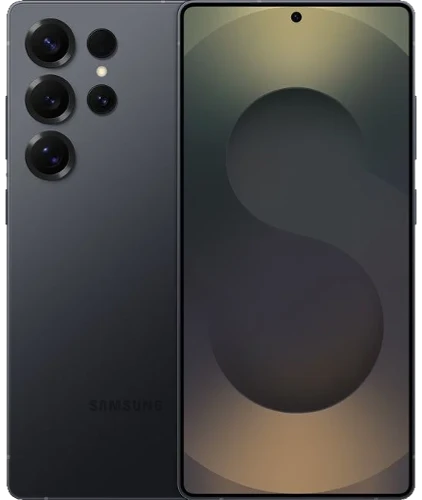
The Samsung Galaxy S25 Ultra presents a peculiar problem: it is easy to admire and surprisingly difficult to recommend at any price.
In the video that anchors this review, the creator describes one of the most satisfying smartphones he has used. He loves its design, screen, speed and One UI 7. Yet his advice to most viewers is not to rush out and buy one. At the time of filming, a new Galaxy S24 Ultra was available to him for around $800, while the S25 Ultra cost roughly $1,300. The newer phone was better; the extra $500 was harder to defend.
That tension is more useful than a conventional list of flagship specifications. With the S25 Ultra now an older generation, the buying decision depends on today's actual price and condition—not the reviewer's launch-era retail comparison.
Belliste has not independently tested this handset. Hands-on judgments and benchmark observations below are attributed to the linked video; hardware and AI-policy details are checked against Samsung's published documentation.
The Phone That Makes Its Predecessor Look Like a Bargain
The reviewer is almost disarmingly enthusiastic about the S25 Ultra's daily experience. He carried it without a case, enjoyed the finish and praised its resilience after ordinary contact with bags, pockets and even his wedding ring. A roughly 1.5-meter fall onto concrete did leave a mark, however. That anecdote demonstrates neither indestructibility nor a reproducible drop-test result.
Samsung specifies a titanium-framed body weighing 218g, with Gorilla Armor 2 protection at the front. The 6.9-inch QHD+ Dynamic AMOLED 2X display refreshes adaptively up to 120Hz. The reviewer finds its anti-reflective finish especially effective: the screen remains legible without constantly pushing brightness upward.
His enthusiasm is credible because he points to mundane improvements, not just showroom spectacle. The phone gets dim enough to feel comfortable before bed. Its edges, animations and layout make repeated interactions enjoyable. These are things people notice hundreds of times a day.
They are also hard to price. If the S24 Ultra already provides an excellent screen and much of the same software experience, how much extra should refinement command?
One UI 7: A Better Reason to Love Samsung Than a New Chip
One UI 7 is arguably the star of the video. The reviewer sees a design that feels more familiar to iPhone users, from notification and quick-settings gestures to lock-screen customization and smoother animations.
He prefers Samsung's gallery search and the ability to describe a setting in ordinary language instead of remembering its exact menu name. These are subjective preferences, but they reveal why the phone feels fast even when no demanding app is running.
There is an uncomfortable implication for Samsung: software is one of the S25 Ultra's strongest selling points, yet a substantial portion of the experience can reach compatible older Galaxy phones through updates. Exact features and rollout timing vary by model and region, so it would be wrong to promise complete parity.
The buyer should separate the quality of the experience from the exclusivity of the hardware. The S25 Ultra may be delightful to use without being the only Samsung capable of delivering that delight.
The Snapdragon 8 Elite Has Power to Spare—and Sometimes Nowhere to Spend It
Samsung equips the S25 Ultra with the Snapdragon 8 Elite for Galaxy and 12GB RAM in the listed configurations. Samsung's launch materials claim generational improvements of 37% CPU, 30% GPU and 40% NPU performance over the preceding platform. These are manufacturer comparisons, not independent Belliste measurements.
The video offers a more interesting perspective. In a 30-minute stress test against the S24 Ultra and iPhone 16 Pro Max, the reviewer says the S25 Ultra lost a larger proportion of its peak performance, yet its lowest sustained result remained approximately 25% above the others' lowest results in his test.
That is an impressive demonstration of performance headroom. It is not proof of identical results across all games or thermal conditions.
The reviewer also notes that he rarely needs the extra power. Many popular mobile games are optimized for less expensive devices, while some Android apps still stutter because of software optimization rather than insufficient hardware. He cites Pokémon TCG Pocket, Amazon and Zoom as examples from his own experience.
The lesson is simple: benchmark superiority is real, but its value depends on your workload. People editing demanding video, emulating games or running intensive tasks have more reason to care than someone primarily browsing, messaging and taking photos.
Galaxy AI: Useful Tools, Uneven Intelligence
Samsung launched the S25 series with a strong AI pitch. The video captures both the promise and the frustration.
The reviewer loves AI Select for extracting specific text from a screen, appreciates Gemini's more natural requests and finds contextual conversations with Gemini Live intriguing. He also praises Samsung's photo object removal and wallpaper generation.
Then the experience becomes less convincing. Now Brief repeats information he already knows. Cross-app actions can execute a command without understanding the human choices hidden inside it. His example is asking an assistant to add a multi-day event to a calendar: the system picks a date and time without first checking which one he wants.
His interpretation and call-transcription examples are even less flattering. In his tests, inaccurate language recognition undermines the point of having a fast translation or summary.
These are reviewer observations from the software available when the video was made. They are not a controlled accuracy study, and updates may have changed individual features since.
The AI Pricing Concern Needs a 2026 Correction
At filming, the reviewer was troubled by Samsung's statements about free Galaxy AI access through the end of 2025 and the absence of clear pricing beyond that date. That uncertainty contributed to his recommendation to wait.
That specific uncertainty must not be presented as today's policy. Samsung's current support documentation says basic Galaxy AI features provided by Samsung are free. Enhanced Samsung AI and third-party features can have different terms and may carry fees. Feature availability also depends on model and software version.
The remaining question is not whether every Galaxy AI feature suddenly became paid in 2026. It is which advanced features a particular buyer actually uses, and what terms apply to them. Treat AI as a bonus to evaluate, not a blanket reason to pay a flagship premium.
Cameras: The Hardware Change the Video Underplays
The reviewer reports visibly better zoom photographs, ultrawide shots, skin tones and video noise handling than on the S24 Ultra. He also says shutter response feels substantially improved.
Those are valuable hands-on impressions, but the video goes too far when it implies most camera improvements happened without hardware changes. Samsung replaced the previous 12MP ultrawide with a 50MP ultrawide on the S25 Ultra. That is a significant hardware upgrade.
The full rear setup comprises a 200MP main camera, 50MP ultrawide, 50MP 5x telephoto and 10MP 3x telephoto, plus a 12MP front camera. Samsung's specifications also describe 10-bit HDR video recording and updated image processing.
That distinction matters editorially. Better photos may come from sensor changes, processing, optics, or a combination. Without controlled comparisons, we cannot assign a percentage of the improvement to software alone.
The reviewer ranks the phone among the strongest camera systems of its time, while personally preferring aspects of the iPhone and Vivo X200 Pro. That ranking is opinion, not a lab-certified position.
For buyers who shoot landscapes, macro scenes or ultrawide video, the new ultrawide is a tangible reason to choose the S25 Ultra. For someone satisfied with the S24 Ultra's photos, it may not justify a large price gap.
The S Pen Loses a Feature, Even as the Phone Gains Polish
The S25 Ultra retains its built-in S Pen, but the pen no longer offers the Bluetooth remote functions available on some earlier Ultra models. That includes remote camera shutter control and Air Actions.
The reviewer says he seldom used them. Fair enough. But removing an existing capability from a premium device is still a regression for the people who did.
For note-taking and on-screen writing, the S Pen remains useful. For photographers who relied on a remote shutter or presenters who used gesture controls, the difference is more consequential than an incremental benchmark gain.
A flagship upgrade should be judged by what it takes away as well as what it adds.
Battery Life: Strong Experience, One Reviewer's Result
Samsung lists a 5,000mAh battery and 45W wired charging, with up to about 65% in 30 minutes under its specified conditions using a compatible adapter sold separately.
The video reviewer reports just under nine hours of screen-on time at his chosen display setting, typically finishing a day with 30–40% battery remaining.
Those numbers are his personal experience, not a standardized Belliste endurance result. Network conditions, brightness, apps and usage patterns can move battery life substantially.
The more important finding is that Samsung improved the reviewer's experience without increasing the nominal battery capacity. Efficiency, display behavior and software tuning can matter as much as milliamp-hours.
Charging remains less adventurous than the rest of the phone. For a device sold at a premium launch price, that is a reasonable criticism even if the endurance is excellent.
S25 Ultra vs S24 Ultra: What Actually Justifies Paying More?
The S25 Ultra brings a larger 6.9-inch screen, refined shape, stronger processing, a new 50MP ultrawide and a highly polished initial One UI 7 experience. Its anti-reflective display and excellent battery experience are persuasive strengths.
The S24 Ultra counters with much of the same underlying flagship identity: a premium screen, versatile zoom cameras, built-in S Pen and access to substantial software improvements. It also retains Bluetooth-enabled S Pen functionality.
Neither phone is automatically the better purchase. The price difference is the deciding variable.
If the S25 Ultra costs only modestly more in your market, its camera and design improvements may justify choosing it. If the gap resembles the $500 example from the original video, the older model becomes much more attractive—assuming similar condition, storage, warranty and remaining support.
The comparison changes again if one handset is refurbished and the other is new. Battery health, repair history and seller warranty can outweigh a small performance difference. Do not compare an advertised sale price with a refurbished listing as if they carry the same risk.
Samsung's official regional product documentation lists security support for the S25 Ultra through January 2032, another factor for buyers planning to keep it for years. Long software support is valuable, but it cannot prevent physical battery aging.
The 2026 Buying Decision
The Galaxy S25 Ultra was one of the most polished Android flagships of its generation. The reviewer makes that case convincingly through his experience of the screen, design, battery, cameras and software.
He also makes a second, equally important case: loving a phone does not mean everyone should buy it.
In 2026, the smartest way to shop for an S25 Ultra is to ignore its original $1,299.99 starting price as a measure of current value. Compare actual offers against the S24 Ultra and newer Galaxy models, and check whether the features you care about are exclusive or already available through updates.
Choose the S25 Ultra for its refined hardware, stronger ultrawide camera, performance headroom and integrated S Pen—if the price is competitive.
Choose a discounted S24 Ultra if the cost gap is substantial and you value the older phone's still-capable camera system, software experience and Bluetooth S Pen.
Look elsewhere if you expect AI to handle complicated tasks reliably without confirmation, or if charging speed matters more than Samsung's display and stylus advantages.
The S25 Ultra's achievement is that it can feel exceptional in the hand. Its weakness is that an exceptional experience does not automatically make an exceptional deal.
Source note: Hands-on observations and stress-test comparisons come from [the supplied Galaxy S25 Ultra review](https://www.youtube.com/watch?v=5VMckmQneCk). Hardware and policies were cross-checked against [Samsung's S25 series specifications](https://news.samsung.com/global/samsung-galaxy-s25-series-sets-the-standard-of-ai-phone-as-a-true-ai-companion), [regional product details](https://www.samsung.com/sa_en/business/smartphones/galaxy-s/galaxy-s25-ultra-sm-s938bzsomea/) and [Samsung's Galaxy AI support guidance](https://www.samsung.com/us/support/answer/ANS10001639/). No hands-on testing was performed by Belliste.