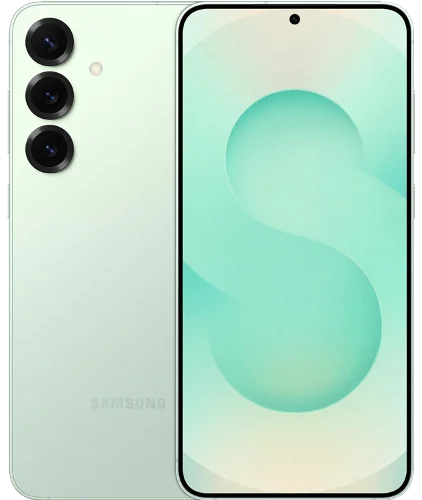
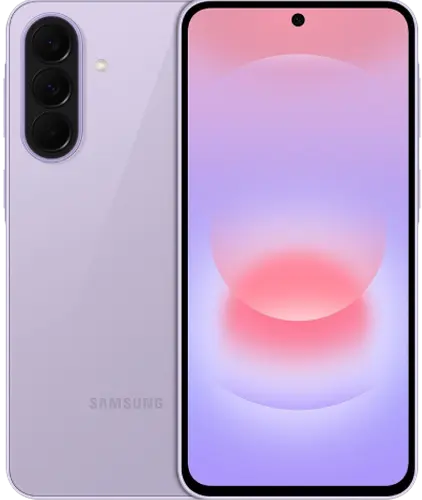
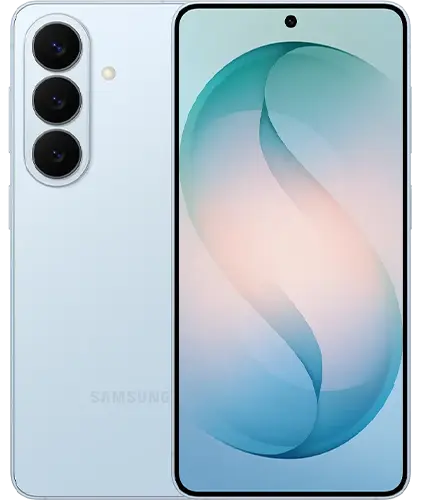
The Galaxy S25+ occupies the awkward middle of Samsung's flagship range. It is neither the pocket-friendly option nor the everything-included Ultra. On paper, that sounds like the easiest model to overlook. In practice, it may be the one that makes the most sense—provided you know exactly what the extra money buys.
In his launch-era hands-on video, Wade from TechDaily argues that the Plus is the best-value S25. His case rests on four things: a bigger, sharper screen; twice the base storage; a larger battery; and faster wired charging. He is also unusually clear about what you do not get: a better camera system or more RAM than the standard Galaxy S25.
That distinction is the entire buying decision. The S25+ is not an S25 with secret Ultra capabilities. It is the familiar flagship experience with fewer compromises in screen size, storage and charging.
This article analyzes Wade's early hands-on demonstration and Samsung's published specifications. Belliste has not independently tested battery life, cameras or sustained performance on the S25+.
The $200 Question
At launch in the United States, Samsung positioned the Galaxy S25 at $799.99, the S25+ at $999.99 and the S25 Ultra at $1,299.99. Wade considers the Plus a reasonable middle ground. That is a fair argument at launch pricing, but the arithmetic deserves closer attention.
The extra $200 does not buy a faster processor. It does not unlock an additional telephoto camera. It does not increase the 12GB of RAM shared by the S25 models. What it buys is a different physical experience and a more generous starting configuration.
The standard S25 began at 128GB in the US; the Plus began at 256GB. A buyer who needs that storage would have to compare the Plus against an S25 configured with 256GB, not only the cheapest S25 listing. That narrows the meaningful price gap.
The opposite is also true: if you prefer a compact phone and barely fill 128GB, the Plus asks you to pay for advantages you may not use.
And because the video was recorded around the 2025 announcement, its pre-order offers and trade-in promotions are historical context—not verified deals in October 2026. The correct comparison now is the actual delivered price of each phone, in the same condition and storage configuration.
A Larger Screen That Is Actually Sharper
Wade's strongest argument is the display. The S25+ has a 6.7-inch Dynamic AMOLED 2X panel with 3120 × 1440 QHD+ resolution and an adaptive refresh rate up to 120Hz. The regular S25 uses a 6.2-inch FHD+ screen, also with up to 120Hz.
The difference is more than a larger canvas. The Plus packs more pixels, making it attractive for reading fine text, reviewing photographs and watching high-quality video. QHD+ may need to be selected in the display settings to take full advantage of the panel.
But a higher resolution is not automatically visible to every person in every situation. At normal viewing distances, the standard S25 already looks sharp. The bigger advantage may be physical space: a more comfortable keyboard, larger documents and a less cramped video timeline.
Wade jokes that the Plus is not unusually big by modern Android standards. He has a point about the market, though size is still personal. The S25+ is substantially wider and taller than the S25, and that matters in one-handed use, pockets and small hands.
A display is the part of a smartphone you interact with constantly. Paying extra for a screen you genuinely prefer can be more rational than paying for performance you will never notice. Just make sure you prefer the size as well as the resolution.
The Design Is Familiar, and That Is Both Good and Bad
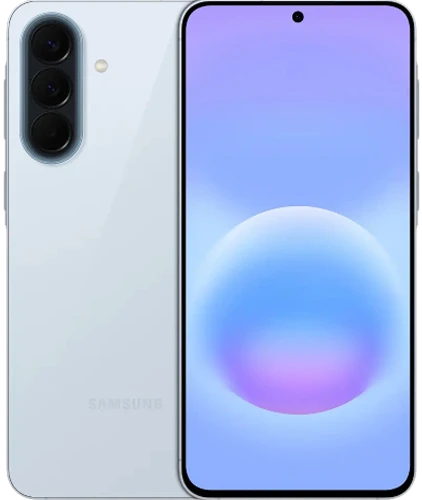
Samsung kept the S25 and S25+ visually close. Wade highlights the Icyblue, Mint, Navy and Silver Shadow finishes, plus Samsung-exclusive options including Coralred, Pinkgold and Blueblack at launch.
He wishes the standard colors were more adventurous. That criticism is minor but telling: the Plus is not designed to look more prestigious than the smaller S25. It is intentionally the same design language in a larger frame.
That consistency is appealing if you like Samsung's flat-sided, understated style. It is less exciting if you expect a $1,000 phone to look noticeably different from its less expensive sibling.
The S25+ weighs around 190g, uses an aluminum frame and carries IP68 dust- and water-resistance certification. IP68 offers protection under specified laboratory conditions, not a guarantee against damage from swimming, saltwater or repeated submersion.
The practical question is not whether the phone looks premium—it does—but whether the larger body is worth carrying every day.
Storage Is a Real Upgrade; RAM Is Not
The Plus starts at 256GB, with a 512GB configuration offered in supported markets. For people who keep games, offline films or years of photographs on their phones, that starting point is useful.
The S25 and S25+ both carry 12GB of RAM. Wade correctly notes that the Plus therefore loses a traditional advantage some larger phones once held over their smaller counterparts.
Both also use the Snapdragon 8 Elite for Galaxy. It would be misleading to sell the Plus as inherently faster in ordinary tasks simply because it costs more.
Thermal behavior can differ with chassis size and workload, but Wade's video does not provide a controlled, sustained-performance comparison between the S25 and S25+. Belliste therefore makes no claim that one consistently outperforms the other.
If your priority is speed, the regular S25 already gives you the same flagship-class chipset and RAM. The Plus makes its case elsewhere.
A Bigger Battery Is Helpful, Not a Battery-Life Test
The S25+ houses a 4,900mAh battery, compared with 4,000mAh in the regular S25. It also supports up to 45W wired charging, versus 25W on the smaller phone.
Samsung advertised approximately 65% charge in 30 minutes for the Plus under specified conditions with a compatible adapter. That is a manufacturer claim, not a charging measurement performed in Wade's video.
The extra 900mAh is substantial on paper. It does not translate automatically into a fixed number of additional hours because the Plus must power a larger, higher-resolution display. Real endurance depends on signal strength, brightness, apps and how the phone is used.
Wade explicitly says the new chipset's efficiency benefits would need to be tested. That restraint matters: this was an early overview, not a four-week battery diary.
The charging difference is easier to appreciate. For someone who frequently plugs in for 20 or 30 minutes before leaving, the Plus has a practical advantage—provided they use a suitable charger.
Neither figure alone proves the Plus lasts longer in every scenario. But together, larger capacity and higher supported charging power are meaningful reasons to choose it.
Identical Cameras Are the Biggest Argument Against Paying More
Here is where Samsung's segmentation becomes frustrating. The Galaxy S25 and S25+ share the same rear-camera hardware: a 50MP main camera, 10MP 3x telephoto and 12MP ultrawide, with a 12MP selfie camera.
You do not receive the Ultra's more ambitious camera setup by stepping from S25 to S25+. There is no extra optical zoom range and no higher-resolution ultrawide.
Wade mentions Samsung's claims of improved low-light video and the new Audio Eraser feature, which can help reduce unwanted sound in recordings. But he had not completed the tests needed to establish how much better the results are than the previous generation.
It is important not to confuse a new processing feature with new camera hardware. The chipset and image-processing pipeline may improve output, but this video alone cannot quantify gains.
For a buyer who mostly takes family photos, the standard S25 offers the same core camera toolkit in a smaller package. For someone seeking a significant photography upgrade, the real comparison is with the Ultra—or a different camera-focused phone.
This is the Plus's clearest weakness: its extra cost is almost entirely unrelated to image-making capability.
Galaxy AI Is Not a Plus Exclusive
The video spends time on One UI 7 and Galaxy AI, including song recognition through Circle to Search, contextual summaries and multi-step requests involving supported apps.
Wade is optimistic about the potential. He imagines asking the assistant to find an event, add it to a calendar and message a friend. But the video is a launch overview, not evidence that every proposed action worked reliably across every app and region.
Crucially, these AI features are not a special reason to buy the Plus over the S25. The two phones belong to the same generation and share the same core software platform.
There is also a timing correction for readers in 2026. Early Samsung materials discussed Galaxy AI availability and possible future terms; Samsung's current support guidance says basic Galaxy AI features provided by Samsung are free, while enhanced Samsung AI and third-party services may have different terms or fees. Availability and capabilities vary by feature, software version and region.
AI should be judged by what it can reliably do for you today, not by a launch-stage promise of future integrations.
The Ultra Comparison Is About Priorities, Not Just Price
The S25 Ultra adds a built-in S Pen, a more advanced camera system and a larger, more specialized design. It also cost about $300 more than the Plus at US launch.
For people who annotate documents, use the stylus or regularly shoot long-range photographs, the Ultra's additions can justify that premium. For others, those features are expensive extras.
The Plus delivers a high-resolution display and 45W charging without the Ultra's size and cost. That is the sensible middle ground Wade is defending.
But it is not a universal sweet spot. If camera quality is your main reason for upgrading, the Plus does not close the gap to the Ultra. If portability is the priority, the smaller S25 is easier to live with.
The most useful buying question is not 'Which model is best?' It is 'Which expensive feature would I actually miss?'
S25+ vs S24+: The Comparison a 2026 Buyer Should Make
An important limitation of the original video is that it focuses on the three S25 launch models. By 2026, buyers should also consider a discounted Galaxy S24+.
The older Plus already offered a large QHD+ AMOLED display, 4,900mAh battery, 45W charging and 12GB RAM in many markets. The S25+ improves the chipset generation and introduces its updated software experience, but the physical proposition is familiar.
Regional chipset differences matter here: S24+ configurations varied by market. A blanket claim that every S25+ outperforms every S24+ by the same percentage would be unjustified without model-specific testing.
If the S24+ is substantially cheaper in comparable condition, it deserves consideration. If the price gap is narrow, the newer chipset and longer remaining support horizon make the S25+ more appealing.
A used or refurbished device should also be assessed for battery health, warranty, repair history and storage. A low sticker price can hide meaningful trade-offs.
Verdict: The Middle Model Makes Sense When You Value the Middle Features
Wade's thesis is persuasive, with an important qualification. The Galaxy S25+ is not the best-value S25 for everyone. It is the best-balanced choice for people who want a large QHD+ screen, 256GB of base storage and faster wired charging without paying for the Ultra's specialized camera and stylus features.
Its greatest strength is that those benefits are tangible. You can see the screen, use the storage and benefit from shorter charging stops. Its weakness is equally clear: the processor, RAM and camera system are fundamentally shared with the cheaper S25.
Choose the S25+ if screen size, display resolution, storage and charging matter more than compactness.
Choose the S25 if you want the same core speed and cameras in a smaller, less expensive device.
Consider the S25 Ultra if you will actually use the S Pen and upgraded camera hardware.
Compare the S24+ and newer models before buying in 2026. Launch-era pricing is a historical reference, not a current recommendation.
The overlooked middle flagship is not a compromise by accident. It is a deliberate set of priorities. Whether it is the smart buy depends on whether those priorities match yours.
Source and methodology: This article draws its hands-on and launch-context observations from [Wade's TechDaily video](https://www.youtube.com/watch?v=dRpQ0G52JUk). Hardware details are cross-checked against [Samsung's Galaxy S25 series announcement](https://news.samsung.com/global/samsung-galaxy-s25-series-sets-the-standard-of-ai-phone-as-a-true-ai-companion) and [Samsung's Galaxy AI support guidance](https://www.samsung.com/us/support/answer/ANS10001639/). Belliste did not perform independent hands-on tests.