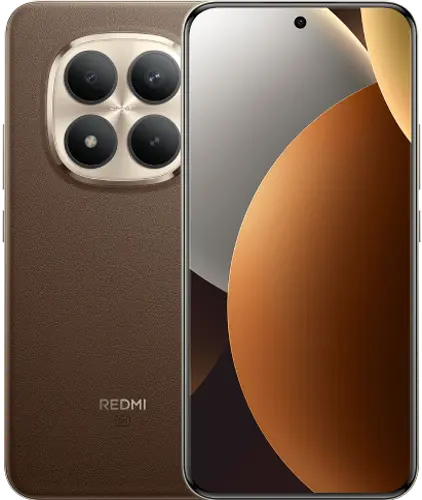
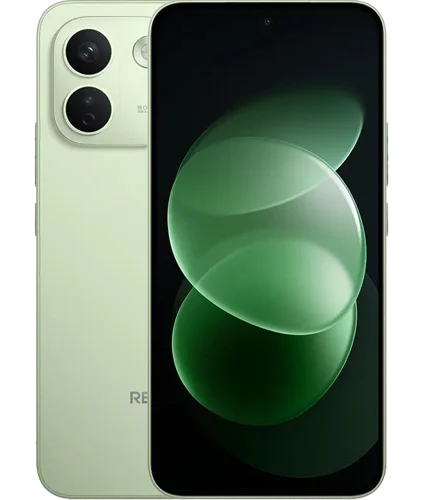
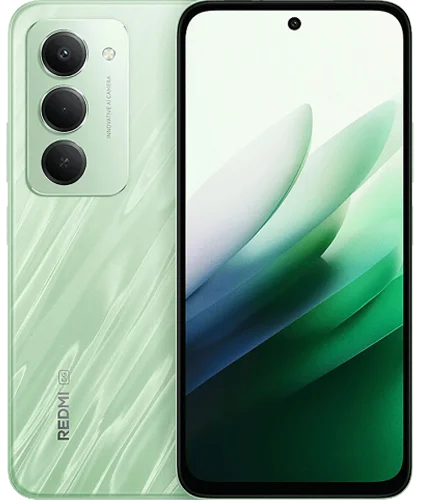
The Redmi Note 15 Pro+ 5G puts its money into a 6,500mAh battery, 100W charging and a big AMOLED screen. Look at the rear camera island, though, and you might expect more lenses than the global phone actually has. That mismatch is worth knowing before you buy.
This article draws on Wade's TechDaily hands-on video of the global model, not independent Belliste testing. The China-market version differs in important ways, especially its camera hardware.
Price and Availability: Attractive, With Import Caveats
Wade places the global phone at roughly $400–$500 in US-dollar terms during his review, with regional pricing around £340 in the UK and €400–€500 in Europe. Those were prices at the time of filming; local offers, taxes and exchange rates will change the calculation.
In the US, this is largely an import purchase. Wade discusses third-party sellers and potential compatibility with T-Mobile-family networks, but buyers should check bands, activation and warranty terms for their exact unit before ordering.
His box contains a protective case, screen protector already applied to the handset, USB-A-to-USB-C cable and a 100W HyperCharge adapter. Accessories can differ by region and retail package.
Global vs China Version: Check Which Phone You Are Buying
The China-market phone has different front glass, memory options, battery capacity and camera hardware, including a telephoto lens missing from the global version. A listing that mixes their specifications could lead to a costly surprise. The rest of this review concerns the global handset.
Design: A Flat Screen and a Misleading Camera Island
The global Note 15 Pro+ has a 6.83-inch display, slightly larger than the previous Note 14 Pro+. Its borders look thin and even, and the front is effectively flat with a small taper at the edge of the glass. Wade finds the larger size noticeable in the hand, though he likes getting this much screen for the price.
The Glacier Blue unit shown has a fiber-reinforced plastic rear with a metallic-looking finish. Black is another option; the Mocha Brown finish uses a silicone-polymer material often marketed as eco leather. The large camera island does not protrude as far as its appearance suggests, and the phone does not feel top-heavy to him.
An optical fingerprint reader sits under the display, with face unlock also available. The global unit has dual physical SIM support and eSIM, but no microSD expansion. An infrared blaster can control compatible TVs and other equipment.
Wade's unit comes with numerous third-party apps, including games and shopping or social apps. He removes them easily, but their presence is still an inconvenience. His suggestion that preinstalls help subsidize the price is an inference, not a verified commercial arrangement.
AMOLED Display: The Clearest Everyday Strength
The 6.83-inch AMOLED panel has a 2772 × 1280 resolution and a 120Hz refresh-rate option, along with HDR10+ and Dolby Vision support. Text looks sharp in the footage, colors are vivid and the reviewer considers the screen one of the phone's strongest features.
Xiaomi advertises brightness reaching 3,200 nits. That peak is an advertised figure, not a measurement from the review. Color calibration settings let users adjust the image to their preferences.
Separate top and bottom speakers provide stereo sound, with Dolby Atmos and Hi-Res Audio support listed in the review. Wade particularly likes the dedicated upper speaker; the video includes a listening sample rather than measured audio results.
Snapdragon 7s Gen 4: Enough Speed, Not a Major Leap
The global phone uses a Snapdragon 7s Gen 4 processor and Adreno 810 graphics. Compared with the Snapdragon 7s Gen 3 in the Note 14 Pro+, Wade describes the CPU uplift as modest—approximately 7–10% in his discussion. Treat that figure as the creator's estimate, not a Belliste benchmark.
His main point is practical: everyday navigation and typical apps feel fast enough that many users would struggle to justify flagship prices on speed alone. Sustained gaming and editing performance remain untested in this video.
The video discusses 8GB and 12GB RAM options, with a virtual-memory feature that borrows storage space. Virtual RAM is not equivalent to additional physical RAM. Storage options are 256GB and 512GB.
HyperOS 2: Smooth Software, Too Many Extras
The review unit ships with HyperOS 2 based on Android 15. Wade finds the interface smooth and visually polished once unwanted apps are removed.
He reports a Xiaomi commitment of four major Android version updates and six years of security patches for the Note 15 series. Check the support schedule for your regional variant before relying on that commitment.
Features discussed include Circle to Search, Gemini, AI writing tools, wallpapers and translation. Some depend on region and software availability. The reviewer does not consider AI the main reason to buy this phone.
Battery and Charging: The Headline Advantage
A 6,500mAh silicon-carbon battery is the global model's standout hardware specification. The technology allows a high stated capacity without making the device unusually thick. Wade characterizes it as comfortably capable of all-day use and beyond.
There is no timed battery rundown to put that impression into hours of screen use.
The phone supports 100W HyperCharge, and the reviewer says a full charge takes less than 35 minutes. He shows a matching adapter included with his unit. Charging speed can vary with conditions and regional packaging. Reverse wired charging is also supported, letting the phone provide power to another compatible device.
For users who routinely run low before evening, the battery-and-charger combination is a stronger selling point than a small generational processor upgrade.
Cameras: 200MP Main Sensor, No Global Telephoto
The camera island appears to contain three or four lenses. In reality, Wade explains that the global version has two rear cameras: a 200MP main sensor with optical image stabilization and an 8MP ultrawide.
The 200MP camera supports in-sensor cropping for 2x and 4x views. Xiaomi describes these as optical-level results, but there is no separate telephoto lens in the global model. Cropping and computational processing are not the same as dedicated telephoto optics, especially when lighting becomes difficult.
Wade considers the main camera versatile for the price and describes the ultrawide as adequate rather than exceptional. The 32MP front camera is an upgrade over the 16MP selfie camera on the preceding Pro+ model. He recommends reducing aggressive beauty filtering for a more natural look.
His favorable comparisons with Samsung and Motorola midrange phones are personal judgments from the footage, not a controlled camera shootout.
Redmi Note 15 Pro+ vs Note 14 Pro+: Where the Upgrade Lands
Compared with the Note 14 Pro+, the screen is a little larger and flatter, the front camera gains resolution and the battery grows to 6,500mAh. The Snapdragon upgrade is modest. If your current phone still feels fast, the more persuasive reasons to switch are battery capacity and charging, not raw performance.
Verdict: Buy for Battery and Screen, Not the Camera Count
The global Redmi Note 15 Pro+ makes the most sense for someone who values battery capacity, quick charging and a spacious display over camera versatility. Wade's unit even includes the 100W adapter, although regional box contents need checking.
Don't buy it expecting the China version's telephoto camera or a dramatic jump in processing power. The global phone has a capable 200MP main camera, a basic ultrawide and some removable software clutter. For photography-first buyers—or anyone importing it into the US—the lens arrangement and network compatibility deserve a closer look than the headline megapixel count.