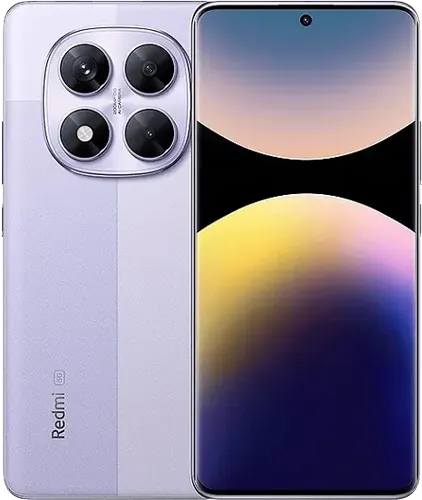
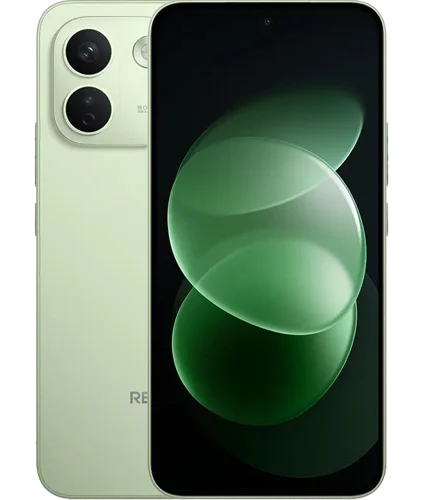
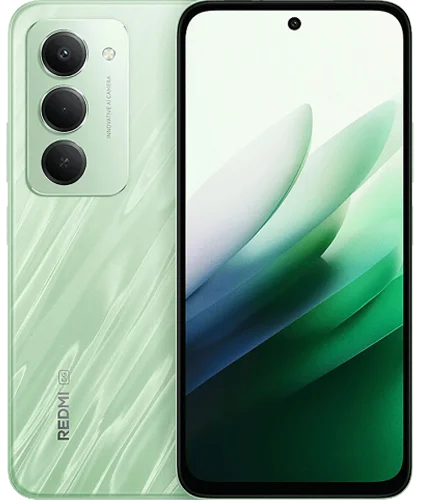
Xiaomi made the Redmi Note 14 Pro 5G tougher to damage, then took away two things its predecessor offered: faster charging and a headphone jack. In GSMArena's review, the global version survives a tougher durability brief and produces excellent night photos from its main camera. Yet its battery life remains average, and the new chipset barely changes the performance story.
This Belliste article is based on GSMArena's hands-on review, not independent Belliste testing. Its measured figures apply to the global version shown; the Chinese and Indian variants can have different batteries and cameras.
Design and Display
The curved body has a slim plastic frame and either a matte plastic or synthetic-leather back. GSMArena handled the plastic version, whose silky finish makes the design feel less utilitarian than its materials suggest. Xiaomi also describes a shock-absorbing internal structure, though the video does not independently drop-test it. Gorilla Glass Victus 2 protects the front; the global version carries IP68 dust and water resistance, with IP69 claimed in some markets. These ratings are not a guarantee against water damage.
The 6.67-inch OLED has a 1220p-class resolution, a 120Hz refresh rate and support for HDR10+ and Dolby Vision. GSMArena measured roughly 530 nits with the manual slider and more than 1,130 nits in automatic high-brightness mode. The screen is sharp and bright enough for everyday outdoor use, even though the older model achieved a higher maximum in the review's testing. Scrolling runs at 120Hz; when interaction stops, the panel drops to 60Hz to conserve power.
Audio and Hardware
The stereo speakers earned GSMArena's Very Good loudness rating, with clear vocals, pleasant highs and a little bass. The optical fingerprint reader responds quickly, and the infrared blaster remains useful for controlling compatible appliances.
Two omissions matter more than the specifications table might suggest. Xiaomi removed the 3.5mm headphone jack, and storage cannot be expanded by microSD. Available capacities vary by market, so anyone keeping large offline video or game libraries should choose the storage configuration carefully.
Software and Dimensity 7300 Ultra
The review unit ran Android 14 with HyperOS 1.0.4 at the time of filming. Xiaomi promised at least three major Android updates; the video does not establish which updates are available today.
The Dimensity 7300 Ultra replaces the Snapdragon processor used in the Note 13 Pro 5G. GSMArena's CPU and GPU benchmarks place it comfortably in the midrange, but not among the strongest options for demanding games. Browsing, messaging and lighter titles are unlikely to expose much weakness. The more interesting result is thermal stability: the phone barely throttles in the review's sustained-load tests. It holds on to its available performance, even if its peak speed is unremarkable.
Battery Life and Charging
GSMArena recorded an 11-hour, 39-minute Active Use Score. That is an improvement over the previous global model despite unchanged battery capacity, but it still falls around the class average. It is a standardized test result, not a promise of 11 hours and 39 minutes of screen-on time for every owner.
Charging moves in the wrong direction: 45W replaces the Note 13 Pro 5G's 67W support. With the charger included in the reviewed package, GSMArena reached 63% in 30 minutes and 100% in 64 minutes. The measured time matters more than the wattage label; a Note 13 Pro 5G owner should not expect quicker top-ups from this upgrade.
Main Camera: Good Colors, Uneven Detail
The global version retains a 200MP main camera alongside an 8MP ultrawide and 2MP macro. By default, pixel binning turns the main sensor's output into 12.5MP photos. In daylight, exposure, colors and contrast look convincing at normal viewing size. Zoom in, however, and the processing becomes less flattering: Xiaomi applies heavy sharpening without preserving equally strong fine detail. Faces can look unnaturally processed.
Portrait blur works well, especially at 2×, and cropped shots keep much of the main camera's balanced color. They also reveal more noise under close inspection. Night mode is a better showcase. GSMArena finds detailed low-light images with little visible noise, pleasing saturation and wide dynamic range. The difference between attractive full-screen photos and imperfect pixel-level texture is worth understanding before buying on the strength of the 200MP badge.
Ultrawide, Macro and Selfie
The 8MP ultrawide is noticeably weaker. Daylight shots lose detail and contrast, while night scenes look soft despite acceptable color and dynamic range. The 2MP macro produces noisy close-ups and makes precise focus difficult. Neither lens gives the 200MP main camera much competition.
The 20MP selfie camera is usable, with adequate detail, but GSMArena notices soft rendering of facial features. People who regularly take portraits or ultrawide night photos should inspect samples from those cameras rather than judge the whole system by the main sensor.
Video: Strong 4K, Limited Stabilization
The main camera's 4K video is one of the better results in the review. GSMArena praises daylight footage for detail, accurate colors, contrast and dynamic range. Low-light clips also balance sharpening and noise reduction well. The ultrawide's 1080p footage is merely decent.
Stabilization tells a more complicated story. Holding the phone relatively still produces steady-looking footage, but walking introduces shake the system cannot fully remove. That distinction matters for travel clips and handheld filming, where a good-looking static sample can give an overly optimistic impression.
Is It Worth Upgrading from the Note 13 Pro 5G?
The Note 14 Pro 5G offers Victus 2 glass, stronger water resistance and slightly longer battery endurance. Against that, the Note 13 Pro 5G charges faster, retains a headphone jack and offers a broadly familiar camera experience. The new Dimensity chipset does not create a dramatic performance gap. For an existing owner, durability is the clearest reason to switch; otherwise, keeping the older phone makes sense.
Verdict
Buy the Redmi Note 14 Pro 5G for its durable design, sharp OLED and capable main camera, particularly if you shoot at night. GSMArena's measured brightness and stable sustained performance support those strengths.
Think twice if fast charging, wired headphones or versatile secondary cameras matter to you. The 64-minute charging result and weak ultrawide and macro photos are concrete compromises. For a new midrange buyer, the phone is worth comparing with similarly priced alternatives. For a Note 13 Pro 5G owner, this is a selective refinement rather than a necessary upgrade.